
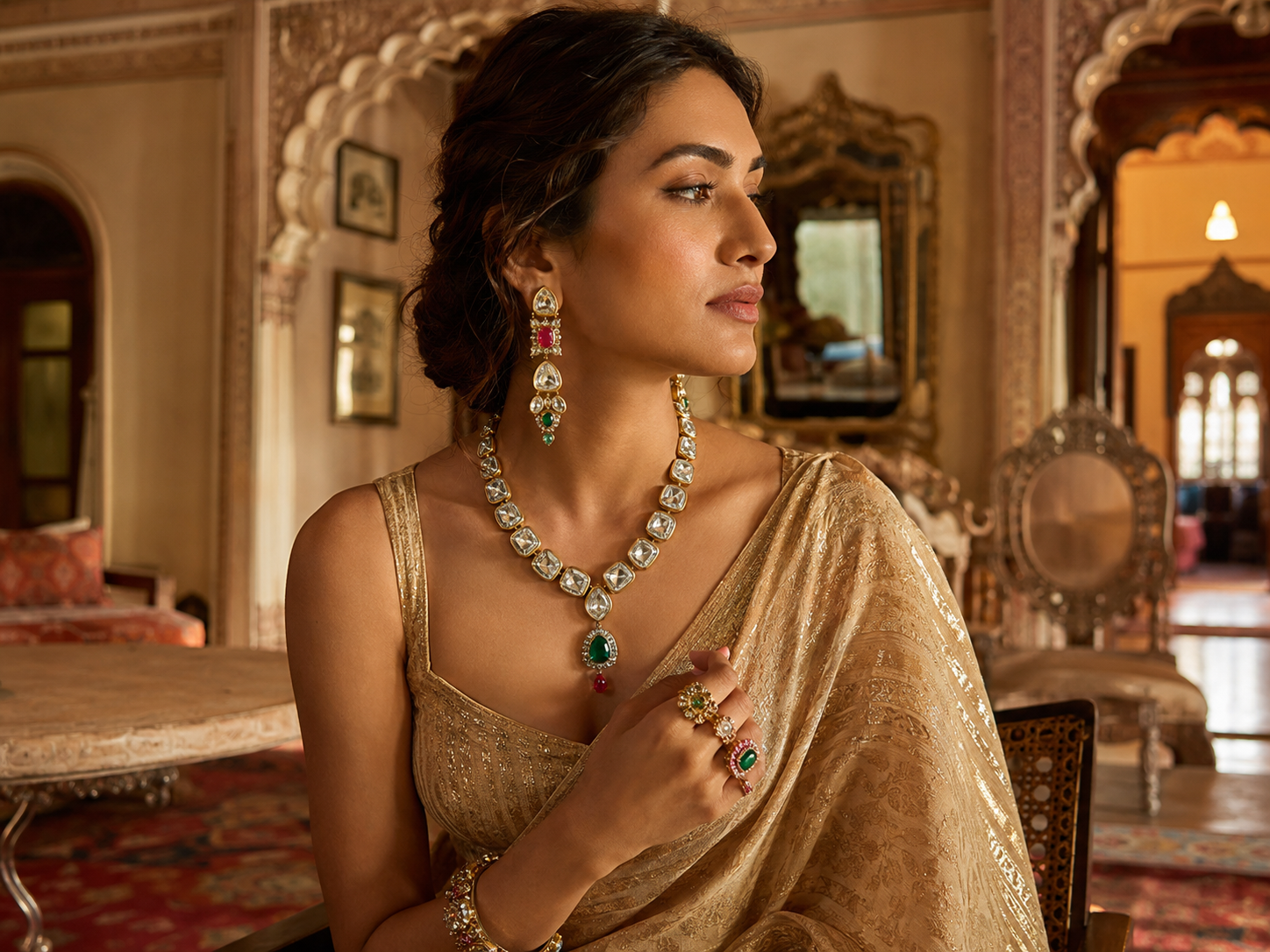
On a narrow lane in Jaipur that has not changed much since the city was founded, there is a haveli whose rooms hold objects of a particular kind. Not expensive objects, though they are that too. Objects with memory. A jadau necklace whose gold was beaten by a karigar who learned from his father, who learned from his. A pair of earrings set with flat-cut diamonds and enamel so fine it looks like something painted on breath.
The Gem Palace has occupied the same address since 1852. The Kasliwal family court jewelers to the Maharajas of Jaipur, then to a generation of international royalty and celebrity have never moved, never rebranded, never needed to. Their argument is made not in campaigns but in objects that outlive the people who commission them.
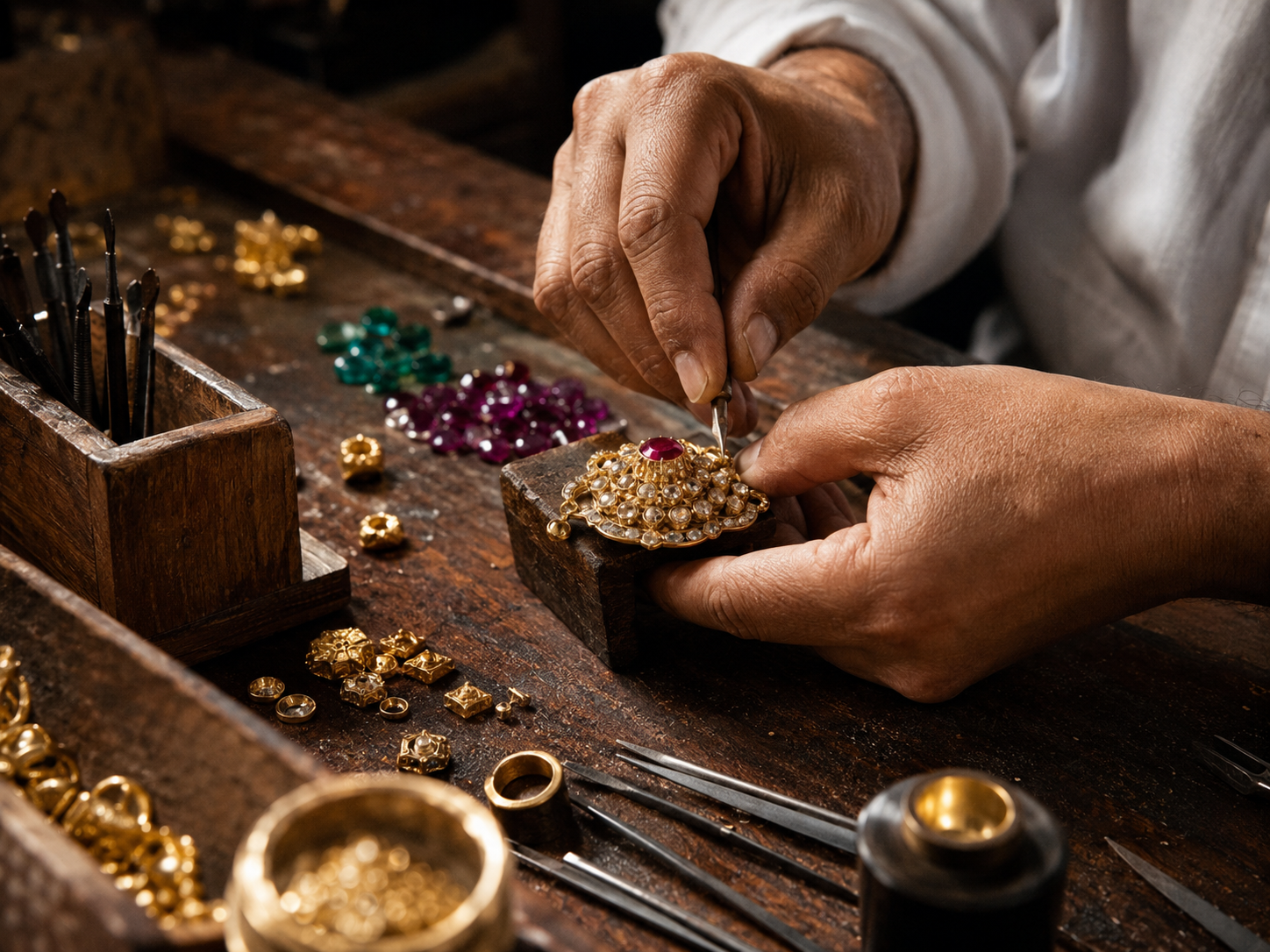
The techniques practiced in their workshops are among the most demanding in the world of fine jewelry. Kundan, the Mughal-era goldsmithing method, requires a piece to be built in layers. First a base of lac the hardened resin secreted by the lac insect, warmed until pliable is pressed into a formed gold setting to give the piece structural weight. Then pure gold foil, beaten to near-translucency, is pressed between the gemstones and the setting walls using a thin burnishing rod, filling every gap with microns of gold until the stone appears to float within a seamless field of warm yellow.
Meenakari is more unpredictable. The artisan first cuts channels into a gold surface using chisels and engraving tools a technique called champleve then fills each channel with ground mineral pigment mixed with a glass flux. The piece is fired in a small kiln, the enamel melting and fusing to the gold at temperatures that shift the colour in ways no recipe can fully predict.
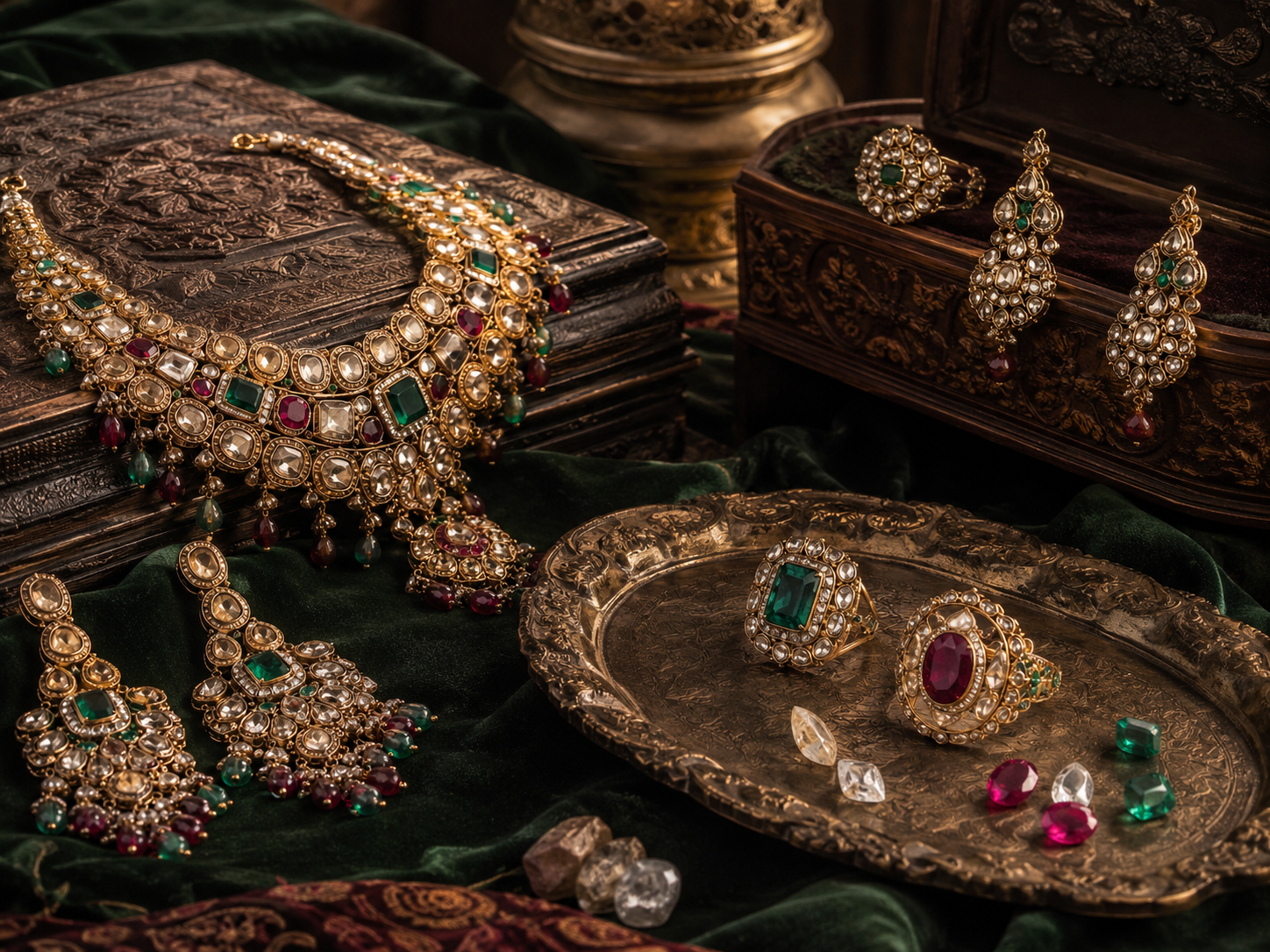
Tarang Arora, who leads the house today, speaks about jewelry the way architects speak about buildings: in terms of what holds and what does not, what endures and what the world was simply not ready for. Under his direction, the Gem Palace has continued what the Kasliwal family has always done taken these classical techniques and worked them into forms that feel neither historical nor contemporary, but simply true.
Most of the two thousand craftsmen in the workshops come from families where jewelry-making is not a career but a lineage. The transmission of knowledge here happens not through instruction but through proximity years of sitting beside someone who already knows, absorbing the angle of a chisel, the temperature of a flame, the barely audible sound that gold makes when the kundan foil has been correctly seated.
The names in the Gem Palace guest book span continents and centuries Princess Diana, Oprah Winfrey, Jackie Kennedy, Nicole Kidman. The photographs on the wall are displayed the way a family displays photographs: because these are people who were here, who held these objects and understood, without requiring explanation, what they were.
That is the quietest form of luxury. Not the object itself, but the certainty of it the knowledge, when you hold something made in this house, that it was made for keeps.