
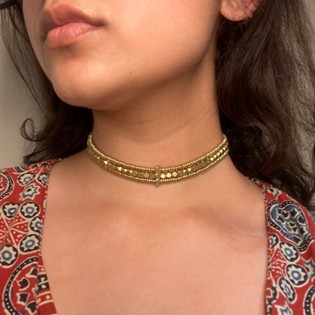
Brass has a particular honesty to it. It does not pretend to be gold, does not apologise for its warmth, does not ask permission to oxidise at the edges in a way that only makes it more interesting over time. Studio Anviksha begins from this material truth and builds upward from it into a jewellery language that is, in the best possible sense, entirely its own. The pieces are handcrafted. They carry the trace of the hand that made them. And they arrive on the body with the weight and the ease of something that was always supposed to be there.
THE NECK AS LANDSCAPE
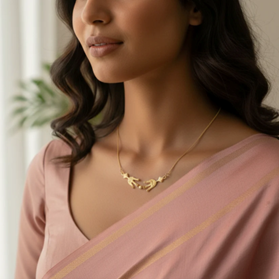
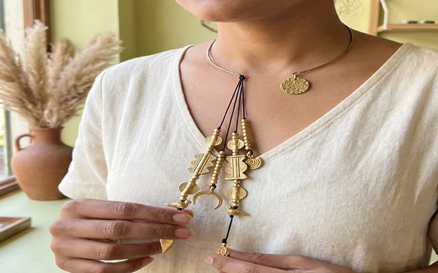
There is a long tradition in Indian adornment of treating the neck not as a surface but as a site a place where something is placed with intention, where the body begins its conversation with ornament. The Kanak Choker Necklace understands this. It sits high, close, with the particular presence of a piece that has decided where it belongs and settled there completely. Below it, the Meera Necklace with Pearl Embellishments falls into a different register softer, longer in its reach, the pearls carrying that cool, almost lunar quality against the warmth of the brass. Together, they layer the way the best Indian dressing layers: with internal logic, not accident.
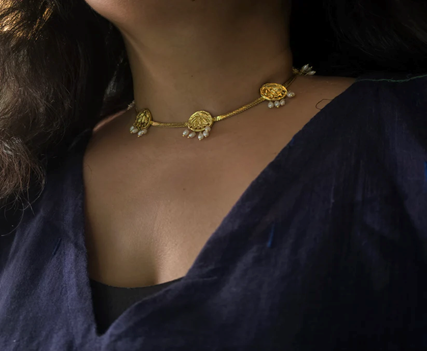
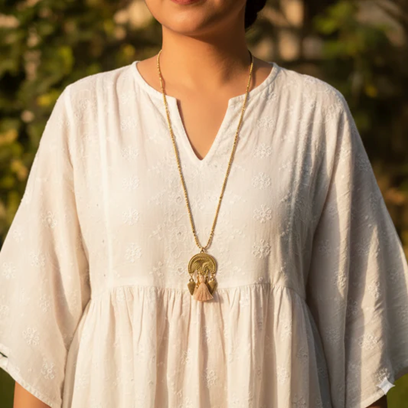
The Chandrika Long Necklace extends the conversation further down the body a piece made for the kind of day that is open at the collar, when the neckline is low enough that something long and quietly elaborate makes sense. It moves. It catches the light at different points as the wearer moves, which is to say it is alive in the way that layered chain work is alive: responsive, light-seeking, never quite the same twice.
SMALL THINGS, HELD CLOSELY
Not every Studio Anviksha piece announces itself at a distance. The Lumi Studs work differently they are jewellery for the person standing close enough to notice. Small, handcrafted, precise: they sit at the ear the way a full stop sits at the end of a sentence that did not need anything more. And yet their presence changes the face. This is the intelligence of the stud as a form it is the most intimate piece of jewellery, the one worn closest to the place where expression lives.
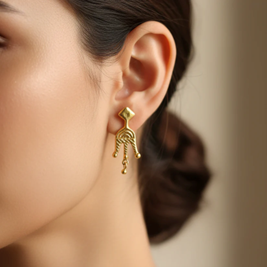
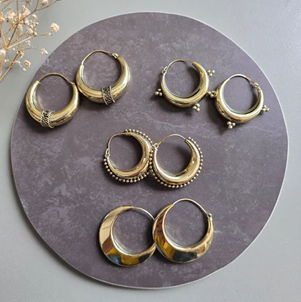
The Vintage Vibes Hoops move in a different direction outward, wider, louder in their geometry without being loud in their material. There is a studied reference in their proportions to something older, something that the grandmother's jewellery box might have held, but recut for a face that wears it to a Monday. The Rose Necklace, meanwhile, is where Studio Anviksha's hand feels most directly the brass shaped into something botanical, tender, almost improbable, and yet completely resolved. It is the kind of piece that makes you think about the making of it. Which is the point.
THE WRIST, THE FINGER, THE WHOLE OF IT
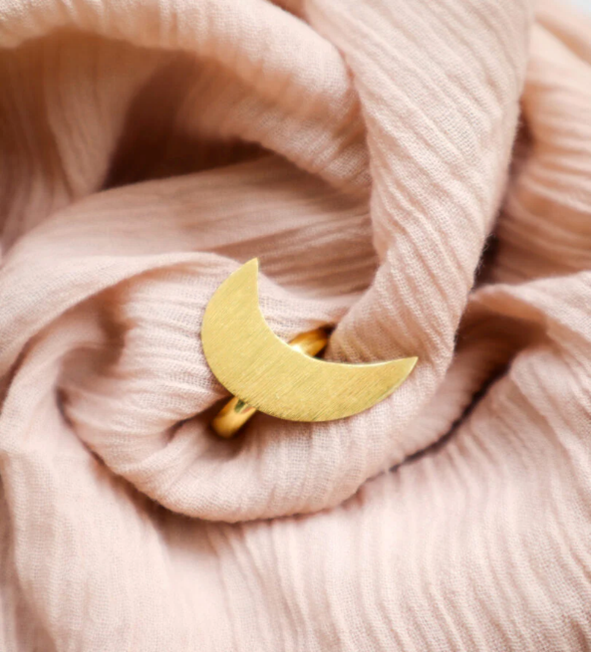
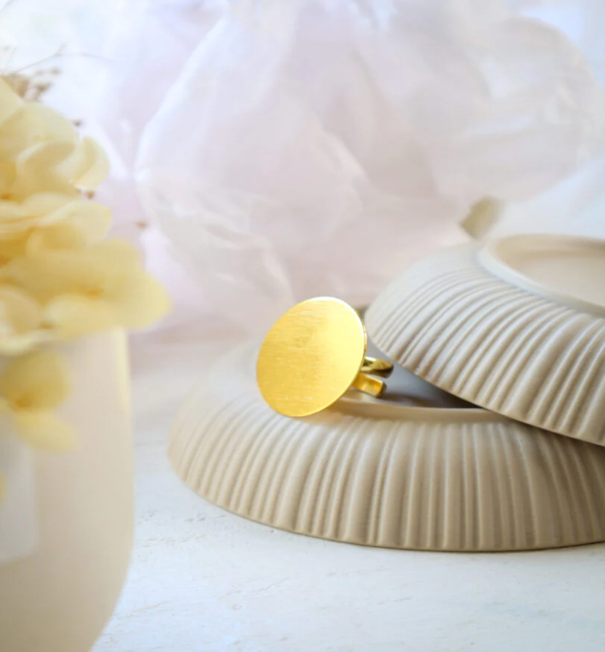
The Moon Ring is a piece about surface the way light falls across a curved plane of hammered brass and makes it look different from every angle. Worn on a single finger, it reads as a complete statement. The Hansli with Handcrafted Charms is something else entirely: a piece that carries a small world on it, each charm a punctuation mark in a longer sentence the wearer writes herself.
It is the most personal object in the Studio Anviksha edit. It is also, worn correctly, the most surprising because it sounds, slightly, as the wearer moves, which is a quality very few pieces of contemporary jewellery have the confidence to offer.
What Studio Anviksha is ultimately making across the Kanak, the Meera, the Chandrika, the Lumi, the Moon, the Hansli, and everything between is an argument that the handmade object carries a quality that no other process can replicate: the quality of being chosen, carefully, by the person who made it. Every hammer mark is a decision. Every solder join is a commitment. And the person who wears the piece inherits those decisions, carries them forward, adds their own. The jewellery is not finished when it leaves the studio. It is finished, slowly and over time, by the life lived wearing it.