
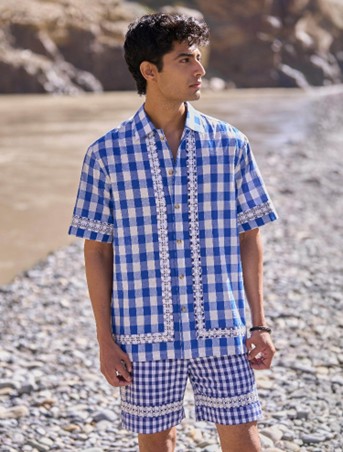
Before it was a trend, it was a temperature. The open weave of cotton, the grid of colour laid down by hand in the weaving towns outside Chennai ochre crossing indigo, coral meeting forest green Madras check was always first about air. About the particular mercy of a fabric that breathes when the afternoon will not. Summer, in other words, already knew about Madras checks. The rest of fashion is only catching up.
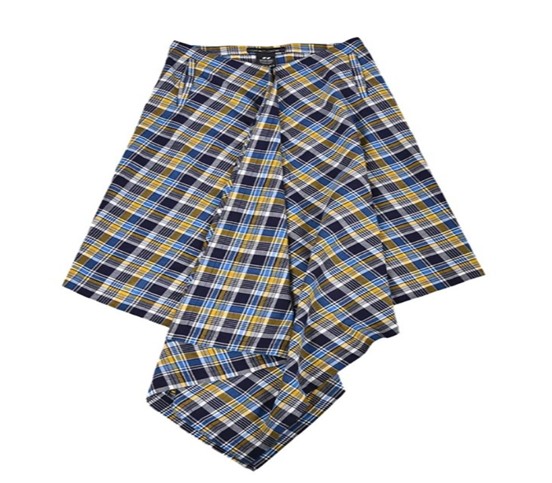
The textile's lineage runs deep: hand-woven in the narrow lanes of Madurai and Thanjavur, block-printed with vegetable dyes that bled and blurred in the wash, the check became a staple of South Indian everyday life long before any Western buyer gave it a name. The lungi, worn low at the hip and knotted with the particular confidence of
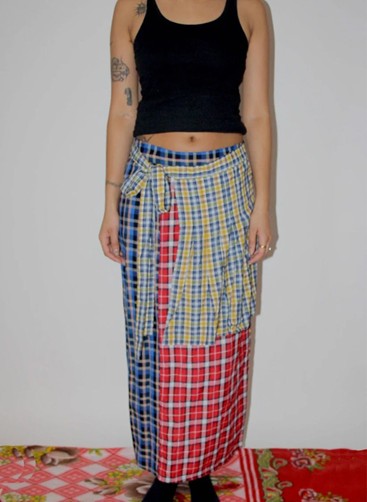
men who understood that ease is its own kind of authority, was perhaps the original silhouette. Colonisers exported it and called it 'Madras.' The subcontinent always knew it simply as cloth.
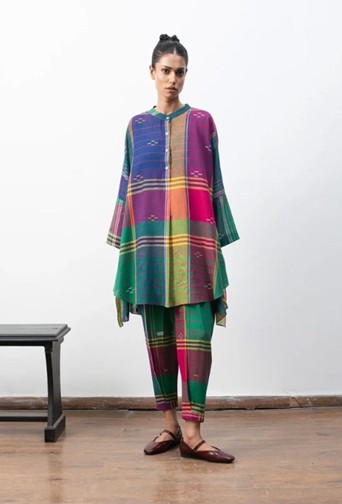
What contemporary fashion has done is not reinvent the check so much as return it to the body in new ways. The wrap skirt knotted at the hip, printed in dusty marigold and deep teal reads like a direct descendant of the lungi and does not pretend otherwise. The oversized shirt, left open over a slip dress or tucked loosely into wide-legged trousers, carries that same studied nonchalance. And the sarong dress, bias-cut and barely structured, moves the way the best summer clothes should: as though the heat itself arranged the folds.
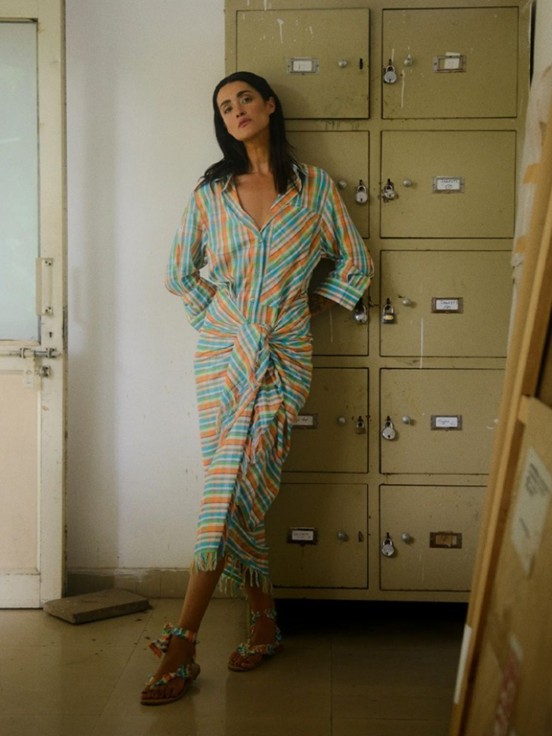
Indian designers have been quietly insistent on this conversation. Labels like Raw Mango and Abraham & Thakore have long understood that textiles are not neutral they carry geography, memory, and political weight. At Lakmé Fashion Week 2025, Abraham & Thakore presented dhotis and lungis recut into androgynous contemporary silhouettes, making the argument that the most radical thing Indian fashion can do is know itself. AFEW, meanwhile, corseted Madras into ready-to-wear that read at once like archive and today. The check arrived on those runways not as nostalgia but as fluency.
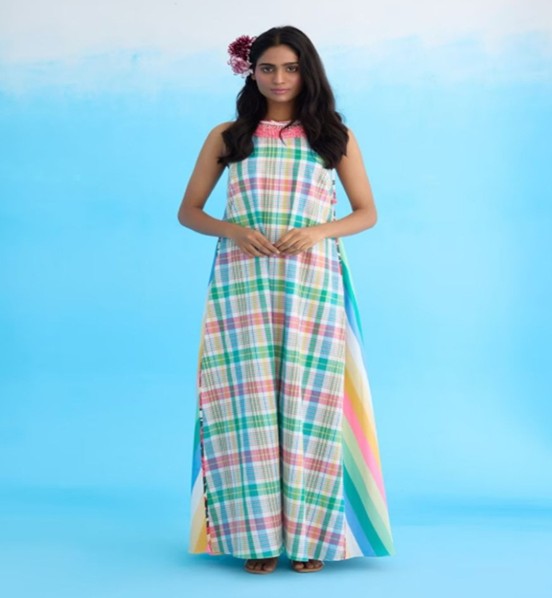
The timing is not accidental. In a moment when fashion is reckoning slowly, imperfectly with what it means to dress ethically and honestly, the handwoven check offers something that trend cannot manufacture: provenance. You can trace this cloth back to a loom, to a weaver, to a town. Its imperfections the slight variation in colour block, the way the dye reads differently in different lights are not flaws. They are the signature of the hand that There is a particular pleasure in wearing a fabric that has already survived.
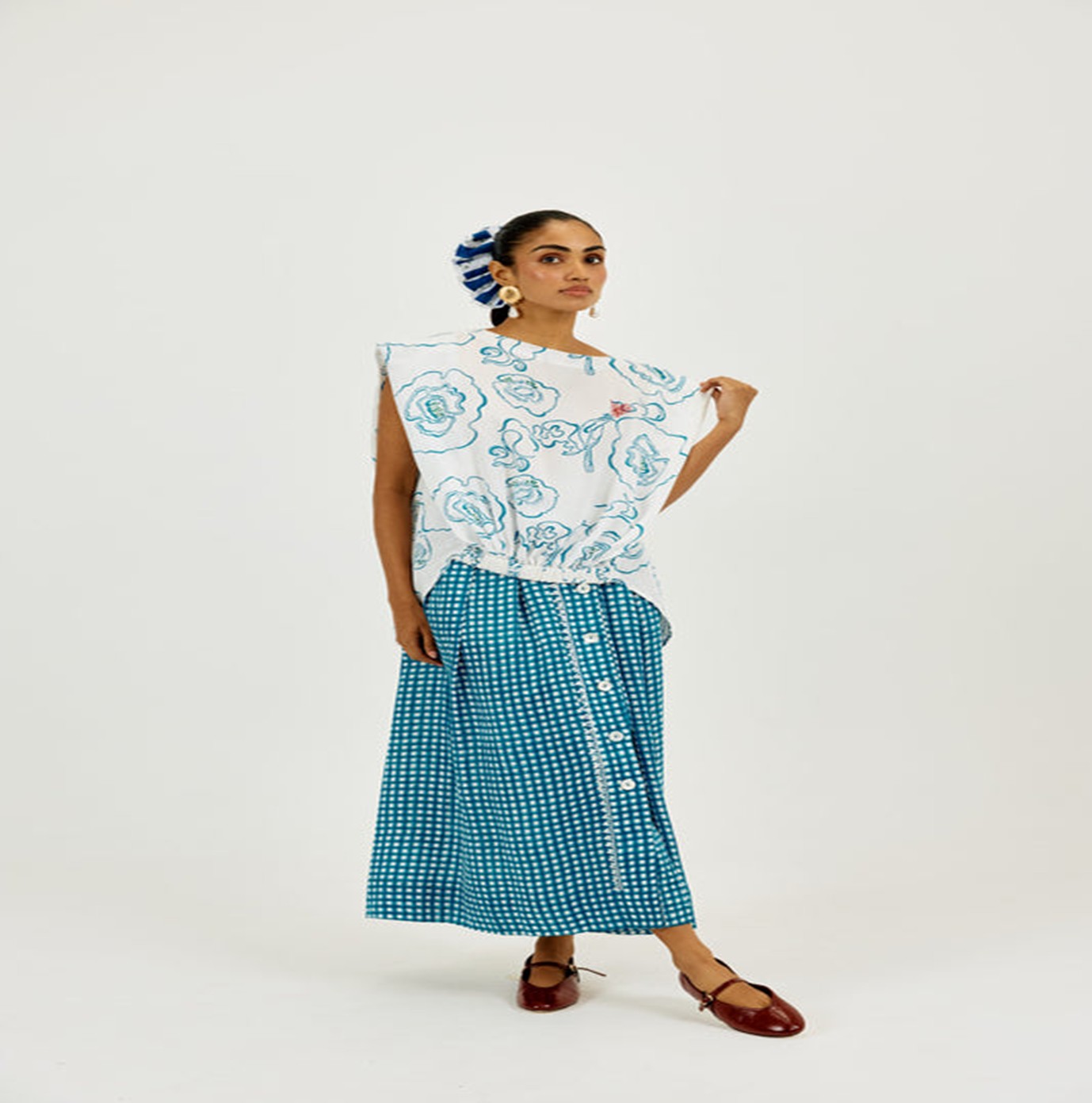
Madras checks have outlasted every trend cycle that tried to contain them the preppy Eighties, the resort-wear Nineties, the cottagecore co-ord moments of the last decade.
They will outlast this one too. But right now, in this summer, in this particular hunger for clothes that are real and cool and rooted in something worth holding onto, Madras checks feel exactly right. Not because they are back. Because they never really left.