
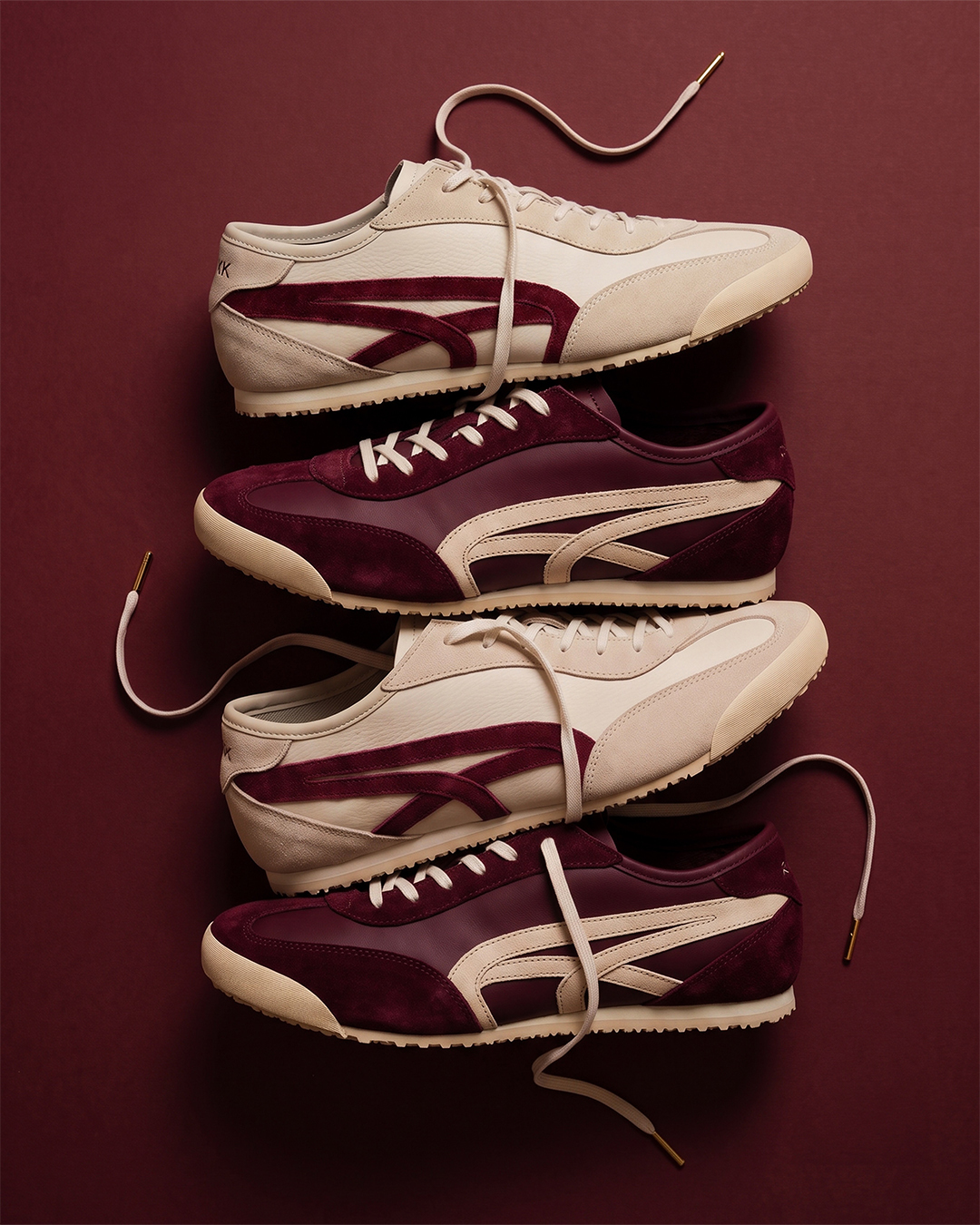
There's a particular mood CHK is going for, and it isn't subtle once you notice it: rotary phones, the smell of an old paperback, a Sunday afternoon with absolutely nothing scheduled. The sneakers themselves (soft creams, contrast piping, a shape lifted straight from vintage tennis courts) are basically props in that larger daydream. You're not just buying a shoe. You're buying into a slightly slower, softer version of the past that probably never looked quite this good in real life but feels true anyway.
That's a strange thing for a sneaker brand to sell, and it works better than it has any right to.
Where the retro court trend is heading, and CHK's place in it
Retro court sneakers have had a long, slow build. What started as a niche interest among people digging through vintage tennis archives turned into one of the more durable trends in footwear, probably because the silhouette itself is just genuinely good design. Low top, clean lines, a shape that was built for lateral movement on a court and happens to look effortless doing absolutely nothing athletic at all.
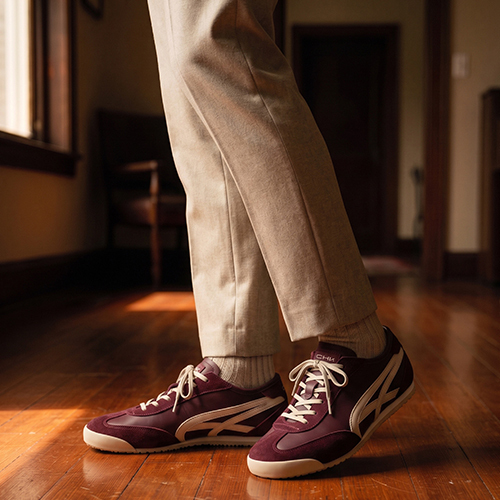
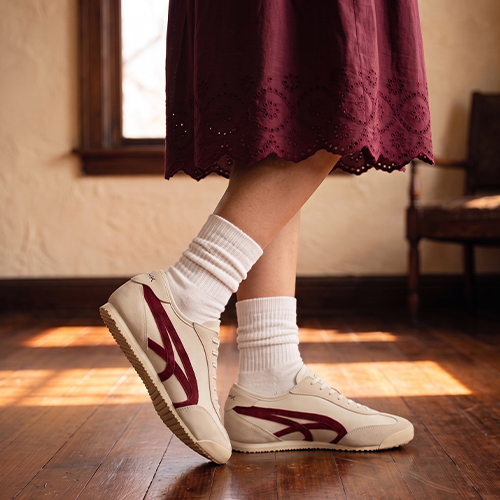
CHK isn't the brand that started that trend, but it's found a distinct lane inside it. Where a lot of retro court sneakers lean sporty (bold logos, sharp contrast, a slightly aggressive edge), CHK goes softer. The whole point of view feels more like flipping through an old photo album than watching an actual tennis match.
Cream, contrast, and the discipline of understatement
Cream is a deceptively hard colour to get right in a sneaker. Go too stark and it reads clinical, more medical shoe than fashion object. Go too warm and it starts looking dirty before it's even been worn once. CHK's cream sits in a narrow, well-chosen middle ground: soft enough to feel nostalgic, clean enough to still look intentional.
The contrast accents are where the design earns its keep. A muted burgundy stripe, a small navy tab at the heel: details, not statements. Nothing here is trying to be the loudest part of the shoe. It's a cream sneaker brand built on the idea that restraint can be just as expressive as boldness, which is a harder trick to pull off than throwing five colours at a panel and hoping it works.
Styling CHK for the weekend you wish you had
CHK sneakers were pretty clearly designed with a specific weekend in mind: the one where you have brunch with someone you actually like, wander through a bookstore for no reason, and end the day without checking your phone more than twice. The styling that suits them follows that same energy: linen shirts, wide-leg trousers, a tote bag instead of a backpack.
They also work with something a little more polished: a soft-shouldered blazer, tailored shorts, the kind of outfit that reads put-together without looking like effort went into it. The trick with a nostalgic footwear pick like this is not over-styling around it. Let the cream and contrast detailing carry the vintage mood; everything else just needs to stay out of its way.
Why nostalgic footwear keeps having a moment
Nostalgic footwear tends to resurface whenever the present starts feeling a bit too fast, too algorithmic, too much like everything is optimised within an inch of its life. There's real comfort in a shoe that looks like it's from an era before push notifications, even though, like CHK, it's a brand-new pair made with modern comfort tech quietly built into the sole.
That's the honest trick behind most successful nostalgic design. It's not actually old. It's new, dressed carefully in the visual language of old, giving you the emotional comfort of the past with none of the actual inconvenience of it. Vintage tennis shoes in India are having a moment for exactly this reason: they let people opt into a slower aesthetic without opting out of anything practical.
The unisex appeal of the court silhouette
One quiet strength of the court-sneaker shape is that it never really needed a gender assigned to it in the first place. The low profile and clean lines look equally at home under a floral dress or a pair of straight-cut trousers, which is presumably why CHK doesn't bother splitting its range into rigid "men's" and "women's" categories the way a lot of footwear brands still insist on doing.
That unisex approach isn't a marketing angle so much as it's just accurate to how the shoe actually gets worn. Couples end up sharing sizes. Friends borrow pairs off each other. It's one of the few sneaker categories where the "one shoe, everyone wears it" pitch genuinely holds up in practice instead of just sounding good in a press release.
The small details that reward a closer look
Pick up a pair of CHK sneakers and the nostalgia holds up under scrutiny, which isn't always true of vintage-inspired design. The stitching sits where you'd expect it to on an actual decades-old pair, not smoothed over into something too tidy. The eyelets have a slight worn-metal finish instead of glossy new hardware. Even the box leans into the mood, with the kind of typography you'd expect on an old sports catalogue rather than a modern e-commerce insert.
None of that changes how the shoe performs, obviously. But it does change how it feels to own one: less like a purchase, more like finding something in a drawer that was always meant to be yours.
A brand built on a feeling, not a feature list
Most sneaker marketing leads with specs: cushioning, breathability, durability ratings. CHK leads with a mood, and trusts that the materials and construction will hold their own once you're actually looking at the shoe up close. It's a slightly riskier bet, because a feeling is harder to defend than a spec sheet. But it's also a lot more memorable.
If you've ever wanted a sneaker that looks like it belongs in a slightly better, slower version of your own life, CHK has more or less built its entire identity around handing you exactly that.