
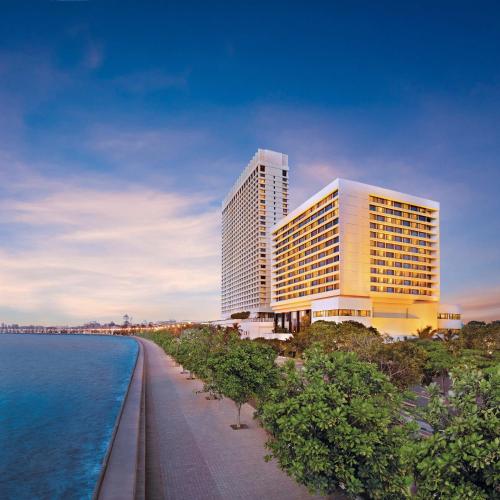
EIH Limited and Bhartiya Hospitality say they intend to build 20 high-end lifestyle resorts across India and a few international destinations. The first three have been named: Coorg, Kabini, and Hampi. Those projects are targeted to open by 2030. The announcement was made on 5 August 2026, and it is, by any reading, one of the larger resort commitments stated by an Indian hotel company in recent years.
It is also, at this stage, a statement of intent. Twenty resorts is a portfolio ambition. It is not a confirmed list of 20 construction-ready projects with land, money, drawings, and clearances behind each one. Only the first three locations have been identified in public, and even for those, the sites, room counts, investment, and operating brand have not been disclosed.
That last point deserves attention early. EIH Limited is the flagship company of The Oberoi Group, so the announcement has been read in many places as an Oberoi expansion. EIH also operates Trident Hotels and Maidens Hotel. Until the operating brand is disclosed, these are EIH-operated resorts, not Oberoi resorts. The difference is not pedantic. It decides the room rate, the service ratio, the size of the property, and what a guest will reasonably expect on arrival.
What EIH and Bhartiya have confirmed so far
Partnership: EIH Limited and Bhartiya Hospitality Announcement date: 5 August 2026
Stated plan: Develop and operate 20 high-end lifestyle resorts
Geography: India and selected international destinations First identified locations: Coorg, Kabini and Hampi. Target for first identified projects: By 2030
Operating brand: Not disclosed
Investment and ownership: Not disclosed
Room counts and design teams: Not disclosed
Project status: Long-term portfolio plan. Full signed and funded project list not available
Confirmed, proposed and still unknown
Topic: Current position: Brand EIH will be the hospitality operator, but the property brand or brands have not been confirmed. Locations: Coorg, Kabini, and Hampi are identified. Remaining locations undisclosed. Timeline: Initial projects targeted by 2030. Full rollout schedule unknown. Ownership/partnership announced. Project-wise ownership and investment structures unknown Approvals No project-level environmental, wildlife, land or heritage approvals disclosed in the reports reviewed International expansion is planned in principle. Countries and sites not disclosed
Twenty resorts is a vision, not yet a pipeline
In hotel development, a pipeline has a specific meaning. It refers to projects where the site is under the developer's control, agreements are signed, financing is arranged or identified, approvals are being processed, designs exist, and construction has a schedule attached. Analysts count pipelines because they can be tracked, delayed, or cancelled in public.
What has been announced here is different. Two companies have said they will work together and have set a number. Numbers of this kind are useful internally. They tell the market the scale of intent, and they help attract land partners and capital. They do not, on their own, tell a traveller when a room will exist.
The honest position is that three destinations have been named with a 2030 target, and the remaining seventeen are, for now, a plan. That is not a criticism of the announcement. It is simply the state of the public record.
Why Coorg, Kabini and Hampi make commercial sense
The three choices are not sentimental. Each one already has affluent demand that exceeds the supply of well-run rooms.
Coorg, formally the Kodagu district, sits within a comfortable drive of Bengaluru. That drive-market access matters because it supports two-night and three-night stays booked at short notice, which is the most reliable revenue pattern in Indian leisure travel. The district administration's tourism material describes a landscape built around coffee estates, hills, and forests, and estate stays have been a paying category there for two decades.
Kabini draws a different guest. Wildlife-led travel commands high rates because the trip is organised around a scarce and unpredictable event, and guests pay for access, guiding and comfort in a location where good rooms are limited. Premium lodges in that area have been able to hold rates through the off-season in a way that general hill-station properties cannot.
Hampi is the most interesting of the three commercially and the most delicate. It has architecture and a boulder landscape that photograph unlike anywhere else in the country, a UNESCO World Heritage listing, and a visitor base that has historically been underserved at the top end. There is real unmet demand for a well-designed high-rate property near Hampi. There is also more to get wrong.
The Oberoi name is relevant, but not yet the confirmed brand
EIH operates Oberoi Hotels and Resorts, Trident Hotels, and Maidens Hotel. Each sits at a different price point and runs on a different service model. An Oberoi resort implies high staff-to-room ratios, small key counts in the resort format, and rates that place it among the most expensive stays in the country. Trident operates at a lower rate with a leaner model. A new lifestyle brand, if that is the route, would come with none of the inherited expectations and all of the cost of building recognition.
The brand decision, therefore, shapes almost everything downstream: how many rooms each site needs to be viable, how many people are employed, what a night costs, and whether the property is aimed at the Indian long-weekend traveller or at an international guest planning six months ahead. Until EIH says which brand, or brands, will operate these resorts, calling them Oberoi properties is guesswork.
What does "lifestyle resort" mean in practice?
The phrase is doing a lot of work in the announcement, and very little of it is defined. In current usage it can mean a smaller property with 40 to 80 keys; a design that is specific to the site rather than to a manual; food that is treated as a reason to visit the menu; wellness that goes beyond a spa menu; and programming built around what is outside the property: walks, estates, birding, ruins, crafts, and cooking.
It can also mean a conventional resort with better furniture and a louder bar.
Neither reading can be confirmed here. Room counts, design intent, food and beverage plans, and activity programming have not been disclosed for any of the three named projects. Travellers should treat "lifestyle" as a positioning word until a floor plan and a rate exist.
Seclusion is difficult to scale
Here is the tension worth watching. The appeal of a resort in Coorg or Kabini rests on low density, distance from other guests, quiet, and a sense that the place could not be anywhere else. Those qualities come from restraint: fewer rooms, more land, a slower build-out, local material, and staff who are from the area.
A 20-property strategy pulls the other way. Portfolios reward repeatability. Central procurement lowers costs. Standard operating procedures protect service consistency across locations. A design language applied across sites reduces risk and speeds up approvals and construction.
Scale does not automatically flatten character. Several operators have run small nature properties well across many locations. The question is structural: Does each resort have enough independence in design, sourcing, staffing, and programming to feel like it belongs where it stands, or does the group template arrive first and the destination get fitted around it? Nothing announced so far answers that.
Coorg's challenge is not simply more rooms
Kodagu is a district, not a resort zone. Coffee plantations, cardamom and pepper cultivation, forest tracts, small towns, and a permanent local population share the same hills that tourism uses. The district's own tourism pages present it that way.
Development questions in such a landscape are practical rather than ideological. Where does the water come from in the dry months, and who else draws from the same source? How much cut-and-fill does a hillside site require, and what happens to the slope in a heavy monsoon? What does additional vehicle movement do to roads that were not built for it? Where does waste go? How many of the jobs are year-round and how many disappear in the off-season? How much of the food, material, and craft is bought within the district?
None of this alleges harm by this project, which has no disclosed site yet. It is the standard list any serious operator in Kodagu already works through, and it is the list against which this one should eventually be read.
Kabini development cannot be separated from wildlife pressure
Kabini is associated with the Nagarahole landscape, an ecologically significant tiger and elephant habitat with an established reserve administration. Tourism there is already regulated in parts, and the reserve's own material sets out how access is managed.
The site for any new resort has not been disclosed, so it cannot be said to be inside a protected area, and this article does not suggest it is. What can be said is that resort development in that broader landscape is judged on a known set of factors: position relative to buffer zones and animal movement corridors; the volume of safari vehicle traffic generated; night lighting spill; noise; water extraction; waste treatment; and the cumulative effect of several properties rather than any single one.
Carrying capacity is the term that matters. It is rarely decided by one operator, which is exactly why a project of this profile invites the question early.
Hampi requires a clear distinction between destination and protected heritage zone
Hampi is two things at once. It is a living region with villages, farmland, and a growing visitor economy, and it is a protected cultural landscape inscribed by UNESCO as the Group of Monuments at Hampi. The inscription covers a defined property with regulated surroundings, not the entire area a traveller thinks of as Hampi.
Because no site has been named, this article makes no claim about development within or adjacent to the World Heritage property. The distinction still needs stating plainly, because reporting that says "a resort in Hampi" can easily be read as a resort among the monuments. Any project here will be assessed on where it sits relative to regulated zones, how visible it is within the landscape, what it does to visitor flow through the monuments, and how it treats the villages that share the road.
The partnership joins hospitality expertise with development capacity
The commercial logic is easy enough to read from the two companies' public backgrounds. EIH runs hotels. It has service systems, trained staff, distribution, and half a century of operating history in high-rate properties. Bhartiya Group's disclosed interests are in real estate, integrated urban development, and fashion and apparel, with hospitality being more recent. Building at scale across multiple sites is a land, capital, and construction problem before it is a hospitality problem.
A pairing of an operator with a developer is therefore a sensible structure for a multi-site plan. That said, the reports reviewed do not set out a formal division of responsibilities between the two companies. What is written above is an interpretation of their known capabilities, not a disclosed arrangement.
Owned, managed, joint venture, or something else?
How these resorts are structured will determine who carries the risk and who takes the return, and it changes how quickly the portfolio can grow.
How hotel development structures differ
Owned hotel: The operator or its group owns the property and carries the capital risk.
Managed hotel: A property owner funds the asset while a hotel company operates it for fees.
Joint venture: Two or more partners share ownership, investment, and risk according to an agreed structure.
Franchise: The owner uses a hotel brand and system under license while retaining more operational responsibility.
The project-wise structure for these resorts has not been disclosed. Managed and franchised models allow faster expansion with less capital tied up. Ownership and joint ventures concentrate both the risk and the upside. Twenty properties built on any single one of these models would look very different on a balance sheet and, often, on the ground.
What we are still verifying
Final operating brand or brands
Exact sites in Coorg, Kabini and Hampi
Land ownership and site-control status
Room counts and development density
Investment by project
Ownership, management and joint-venture structure
Architects, landscape designers and conservation advisers
Environmental, forest, wildlife and heritage approvals
Water, energy, waste and mobility plans
Local hiring and sourcing commitments
International destinations
Full development schedule
Whether all 20 properties are contracted or remain a long-term ambition
What success should be measured against
The announcement is commercially credible. Two capable groups have identified three destinations where demand for good rooms genuinely outruns supply, and they have given themselves a realistic window for the first of them. The incompleteness is normal at this stage of a development plan.
The measures that will matter later are unglamorous. How many of the 20 actually open? Where they sit and how visible they are. How much water and energy they use and what happens to their waste. How many people from Kodagu, from the villages around Nagarahole, and from the Hampi region hold permanent jobs rather than seasonal ones? Whether the food and material are bought nearby. Whether a guest in Kabini can tell, without reading the signage, that they are not in Coorg.
The rooms will be very good. That part is rarely in doubt with EIH. What is worth watching is whether the places around them are still recognisably themselves in 2030.
Frequently asked questions
What have EIH and Bhartiya Hospitality announced?
On 5 August 2026, the two companies announced a partnership to develop and operate 20 high-end lifestyle resorts across India and selected international destinations. It is a long-term portfolio plan rather than a list of contracted projects.
Where will the first EIH and Bhartiya resorts be located?
Coorg, Kabini, and Hampi have been identified as the first locations. Exact sites have not been disclosed.
Will the new resorts operate under the Oberoi brand?
Not confirmed. EIH Limited is the flagship company of The Oberoi Group and also operates Trident Hotels and Maidens Hotel. The operating brand for these resorts has not been announced.
When are the Coorg, Kabini, and Hampi resorts expected to open?
Those three identified projects are targeted to open by 2030. No schedule has been published for the remaining properties.
Are all 20 resorts already approved and under construction?
No. There is no public confirmation that all 20 are signed, financed, approved, or under construction. Only the first three locations have been identified.
Who is Bhartiya Hospitality?
Bhartiya Hospitality is part of Bhartiya Group, whose disclosed business interests include real estate, integrated urban development, fashion and apparel, alongside hospitality.
Why are Coorg, Kabini, and Hampi sensitive development locations?
Kodagu is a hill district where tourism shares the landscape with plantations, forests, and local communities. Kabini is associated with the ecologically important Nagarahole tiger and elephant landscape. Hampi is a UNESCO World Heritage Site with regulated zones around its monuments. Each requires careful siting, and no project-level approvals have been disclosed.
Will the partnership include international resorts?
International destinations are part of the stated plan, but no countries or sites have been named.
What details have not yet been disclosed?
Operating brand, exact sites, land ownership, room counts, investment, project structure, design teams, approvals, sustainability plans, local hiring commitments, international locations, and the full development schedule.