
The Changing Meaning of Luxury: How Indian Sarees Are Redefining Heritage Fashion
Ask a serious collector what makes a garment worth keeping, and the answer rarely starts with a logo. It starts with provenance: who made it, where, and how many hours it took. Few garments embody this idea of lasting luxury as fully as the handwoven Indian saree, where regional weaving traditions, intricate craftsmanship and generations of inherited skill come together.
Each of those traditions is rooted in a specific place and community of makers. That is why Indian textile heritage has become such a powerful reference point for luxury, at home and abroad.
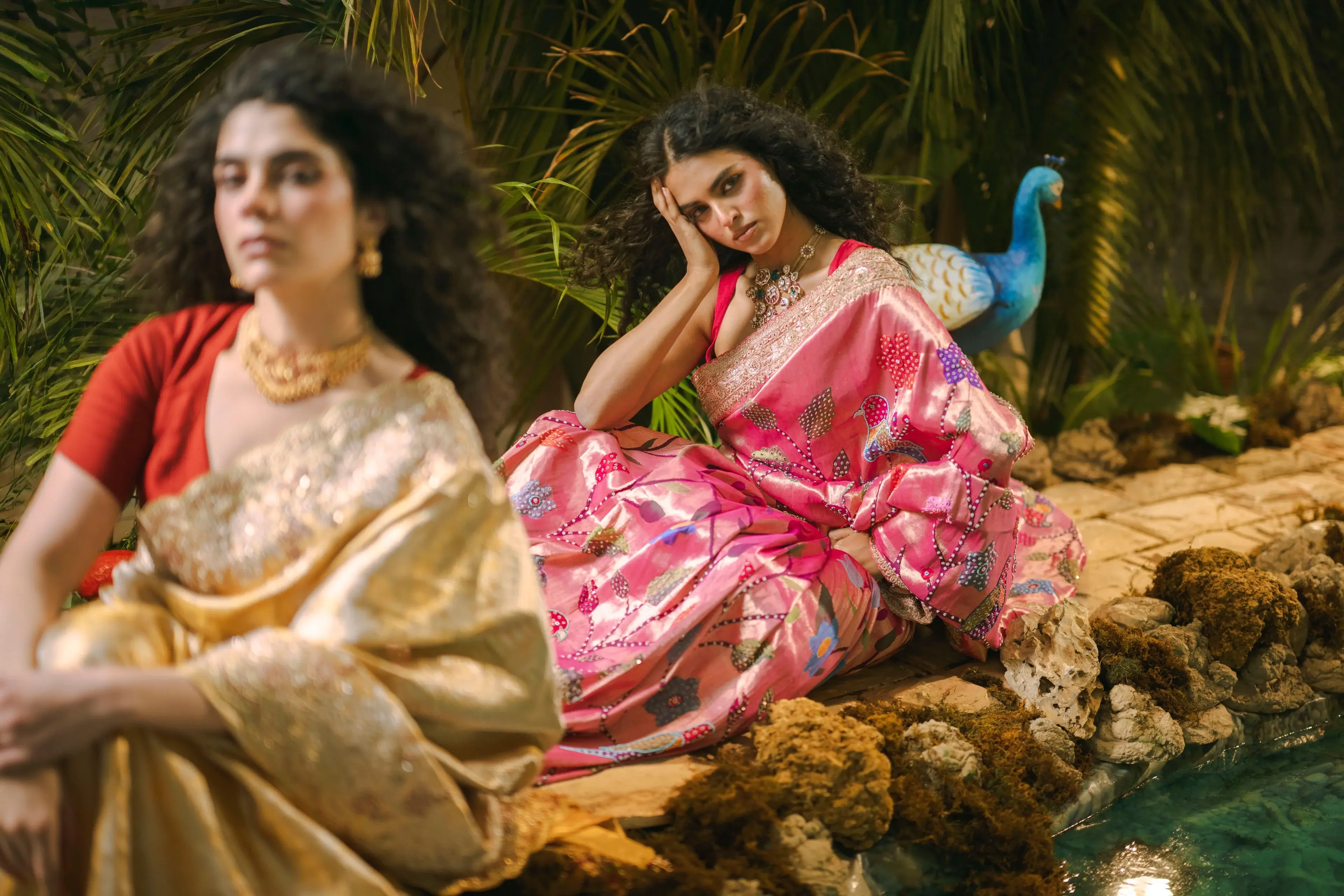
Tatwamm by Abhishek & Vinita, a Kolkata-based saree house, has spent close to two decades bringing these weaves onto the luxury stage. Its approach pairs traditional Indian textiles sourced from across the country with the hand embroidery of Bengal, and treats the saree as a garment of lasting value rather than seasonal novelty.
Tatwamm: A Kolkata Luxury Saree House
Tatwamm is led by husband-and-wife founders Abhishek Agrawal, co-founder and principal designer, and Vinita Agrawal, co-founder and creative director. The label began in 2006, selling first through multi-designer stores, and takes its name from the couple's son. Its first flagship opened in Kankurgachi, Kolkata, in 2017, followed in 2024 by a larger store on Shakespeare Sarani.
Neither founder trained formally in design, a point they have discussed openly in interviews. Speaking to The Telegraph's t2, the couple described themselves as "women's heritage wear designers".
The ambition, however, reaches beyond Kolkata. The founders want the Indian saree to hold a recognised place in the global luxury conversation, valued for its construction in the way couture gowns or tailored suits already are.
India's Heritage Sarees and Traditional Weaving Techniques
India does not have one saree tradition; it has dozens, each tied to a region and a method. The weaves Tatwamm works with fall into two broad families: silk woven with metallic zari, and textiles patterned through resist dyeing.
Silk and Gold: Kanjivaram, Banarasi, and Paithani
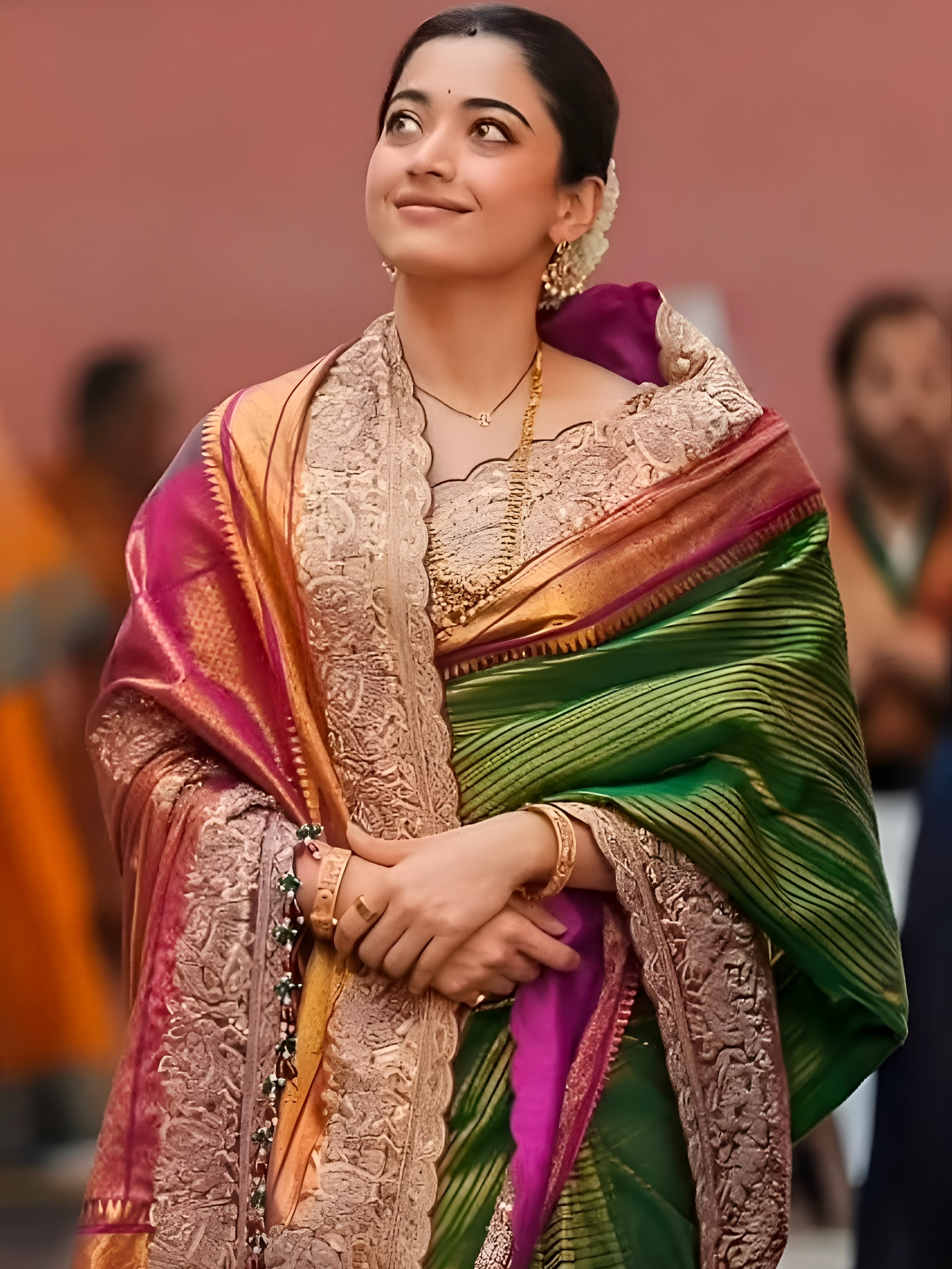
Kanjivaram sarees come from Kanchipuram in Tamil Nadu. They are known for dense mulberry silk and wide, temple-inspired borders. Traditionally, border and body are woven separately and interlocked, so contrasting colours meet in a firm join. Tatwamm's signature Kanjivarams use real gold zari; Vinita Agrawal has told t2 that around two to four grams of gold go into a single saree.
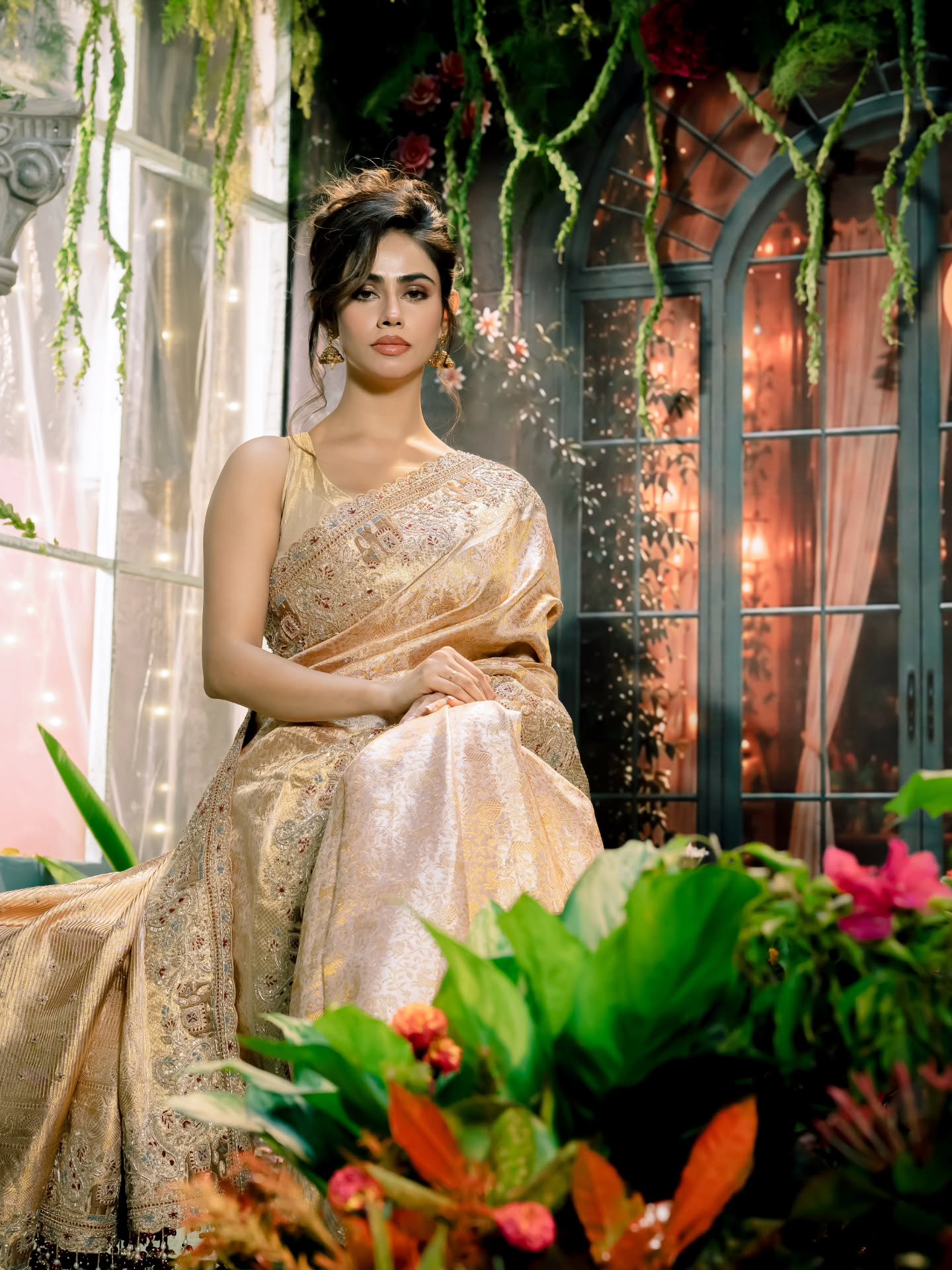
Banarasi sarees, from Varanasi in Uttar Pradesh, belong to a brocade tradition shaped by centuries of royal and Mughal patronage. Floral creepers, jaal patterns and paisley-like kalga motifs are woven in with extra weft threads, often in zari.
Paithani takes its name from Paithan in Maharashtra and is also woven in Yeola. Its signature is the pallu, woven in a tapestry technique and filled with peacocks, parrots and lotus forms. Like Kanchipuram silk and Banaras brocade, Paithani carries a Geographical Indication (GI) tag.
The Art of Resist Dyeing: Bandhani, Ikat, Pochampalli and Patan Patola
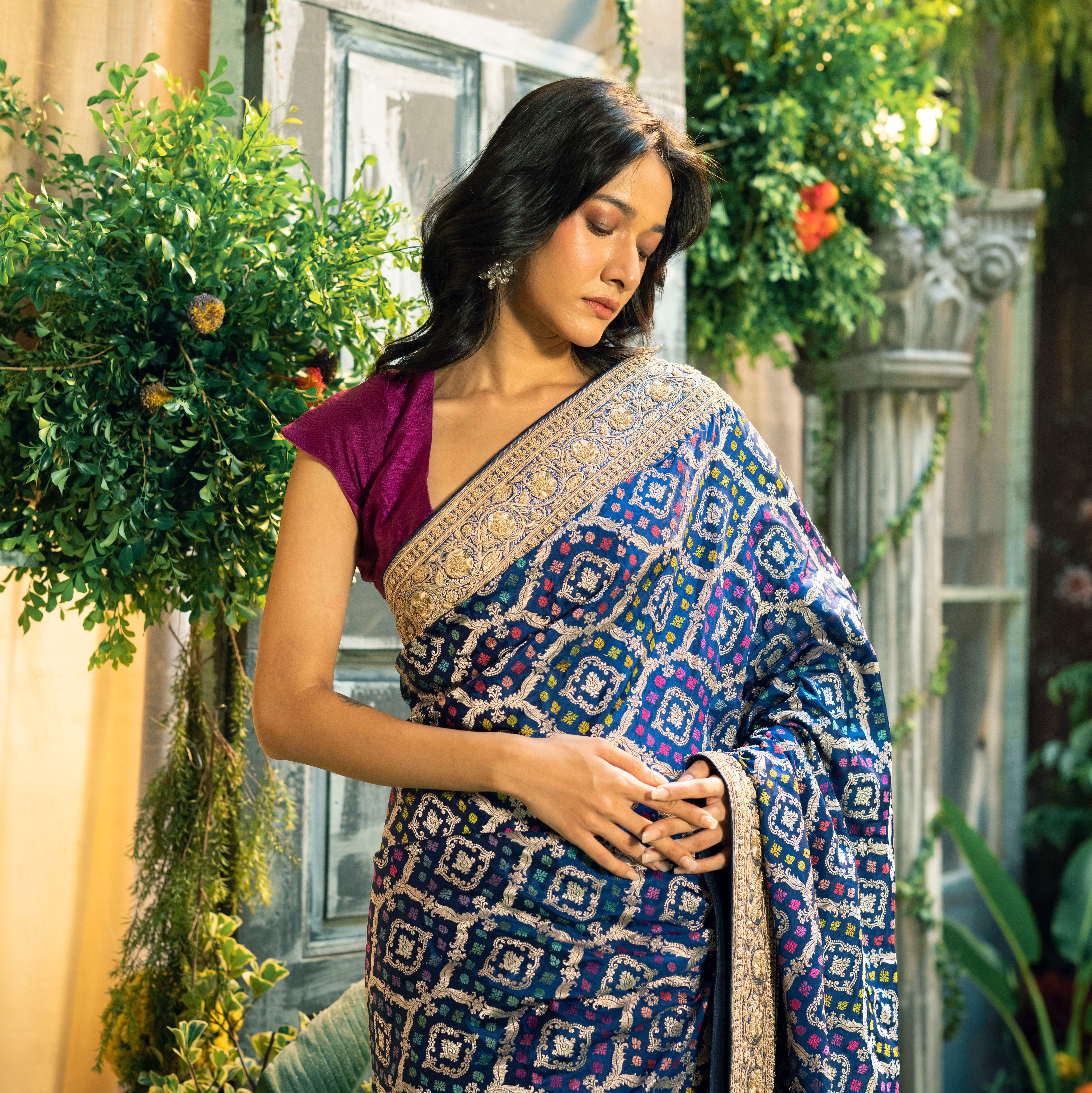
Bandhani sarees are made in Gujarat and Rajasthan, with Kutch among the best-known centres. Tiny points of fabric are pinched and bound with thread before dyeing, and the protected spots form dotted patterns.
Ikat reverses that logic. The yarn itself is tied and dyed before it reaches the loom, so the pattern emerges as threads interlace. The slightly feathered edge of each motif is the mark of the hand.
Pochampalli ikat, from Bhoodan Pochampally in Telangana, is known for bold geometric designs and is GI-tagged.
Patan Patola sarees, from Patan in Gujarat, are perhaps the most demanding of all. Both warp and weft are resist-dyed to a precise plan, a technique called double ikat, so the design appears identically on both sides. Only a few families still practise it, and one saree can take several months.
These are not interchangeable labels. Each technique sets different limits on colour, motif and drape, and Tatwamm's collections are designed around those limits rather than against them.
The Art of Handcrafted Indian Sarees
A handcrafted saree moves through several sets of hands, often across several states, each stage led by a different specialist.
Traditional Indian Handloom Techniques
Tatwamm works with master weavers in weaving clusters across India. The label develops each fabric around what the local technique does best, from the weight of a Kanjivaram to the geometry of an ikat, with texturing and handwork designed in-house.
Work begins well before weaving: yarn is selected and dyed, or tied and dyed for ikat and patola, and the warp is set on the loom. A complex piece may then occupy a weaver for weeks.
Bengal Zardozi: The Art of Hand Embroidery
Once the fabric is ready, much of Tatwamm's work passes to embroiderers in rural Bengal. Zardozi is a form of metal-thread embroidery with Persian roots that flourished under Mughal patronage. Artisans couch fine gold- or silver-toned threads onto the fabric and work in coiled wire, sequins and beads, building raised, light-catching motifs stitch by stitch.
Motif placement has to respect the woven structure underneath, so the embroidery reads as part of the saree rather than an addition to it. Abhishek and Vinita Agrawal oversee the process from textile selection through to the final embroidered details.
Why Human Skill Defines Value
A machine can copy a motif, but it cannot reproduce the small irregularities of a hand-tied ikat or the depth of hand-couched zari. Those marks of the maker are what separate a heritage textile from an imitation, and they are why handcrafted sarees hold their value over decades.
Preserving Tradition Through Contemporary Design
The saree has outlasted almost every prediction of its decline. Younger women now wear it to receptions, cocktail evenings and festive gatherings, often with structured blouses, minimal jewellery or modern styling.
Tatwamm's response is to keep the technique traditional and let colour, motif and composition carry the contemporary note. Its "Rajwadi" collection, listed by the Fashion Design Council of India, drew on the peacocks and elephants of Rajasthan's palace courtyards. It combined Kanchipuram and Pochampally weaves with Bhuj bandhanis and Bengal zardozi in a single, vivid palette.
Heritage does not require constant reinvention; a double-ikat patola is valuable precisely because its method has not changed. Respecting the technique, while refreshing palette and styling, keeps the saree relevant without turning it into a costume or a fad.
Why Handwoven Indian Sarees Become Family Heirlooms
In many Indian families, the most important sarees are never really bought for one person. A mother's wedding Kanjivaram or a grandmother's Banarasi is stored in muslin, aired before festivals and handed down when a daughter marries. Bridal trousseaus are often built around such pieces, mixing inherited sarees with new ones meant to be passed on in turn.
The practice is resurgent in contemporary bridal fashion, with many brides wanting at least one handwoven saree beside the lehenga.
Tatwamm's founders have said they design with this afterlife in mind, aiming for sarees that families keep as heirlooms. Real gold zari adds a material dimension: a saree woven with precious metal is treated as an asset as well as a garment. It is a different idea of luxury from the fashion cycle, measured in generations rather than seasons.
Tatwamm and the Future of Indian Textile Heritage
Today Tatwamm runs flagship stores in Kolkata and Hyderabad and sells through multi-designer stores across India, as well as through platforms such as Pernia's Pop-Up Shop. It has shown at Lakmé Fashion Week and is listed as a participant by the FDCI.
The larger significance lies beyond any single label. India's weaving clusters depend on steady demand for skilled, slow work, and luxury buyers are among the few who can sustain it. Brands that commission authentic Kanjivaram, patola or Paithani, and pay for the hours they take, help keep those skills commercially alive.
The future of Indian luxury fashion depends partly on whether the knowledge held by weavers and embroiderers is passed to the next generation. Tatwamm's work is one answer to that question: a saree made slowly, by many hands, and meant to be kept.