
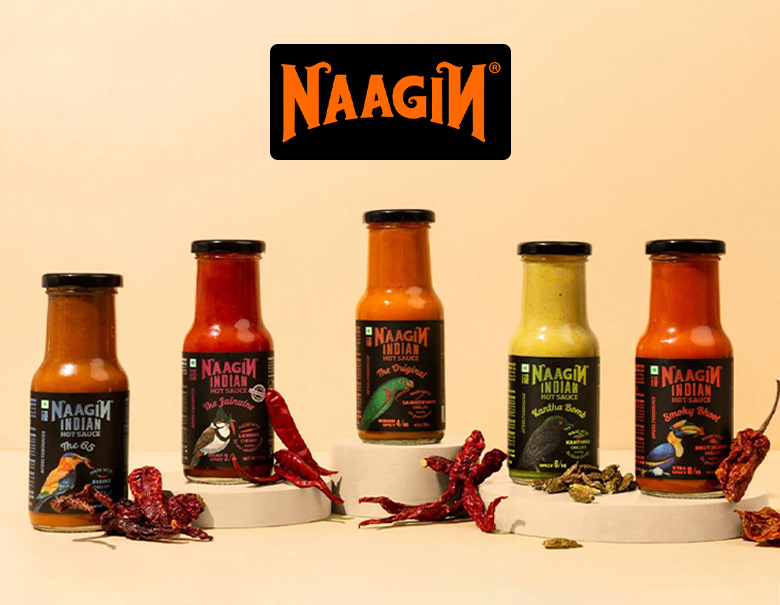
Here's a fact that should embarrass the Indian food industry a little: India grows and exports more chillies than any other country on earth, and for years the best-selling hot sauce on Indian shelves was an American product made with Mexican peppers. Mikhel Rajani, who'd spent years running a pizza chain called Francesco's in Mumbai, kept noticing the gap. Every table he served wanted heat. Nobody was making it with the chillies actually growing a few states away.
In 2019, Rajani teamed up with Arjun Rastogi and Kshitij Neelakantan, both with backgrounds in digital marketing, and started Naagin. The pitch was blunt: an Indian hot sauce, made from Indian chillies, that didn't apologize for either.
The three of them split the work in a way that turned out to matter more than the initial idea. Rajani knew food service and how a sauce actually performs on a real menu, not just in a tasting room. Rastogi and Neelakantan knew how to get a small Indian brand talking to people online without sounding like a corporate account. That combination, someone who understood kitchens and two people who understood the internet, is a big part of why Naagin grew past the usual farmers-market-stall ceiling that traps a lot of Indian condiment brands.
Mapping the chilli belt
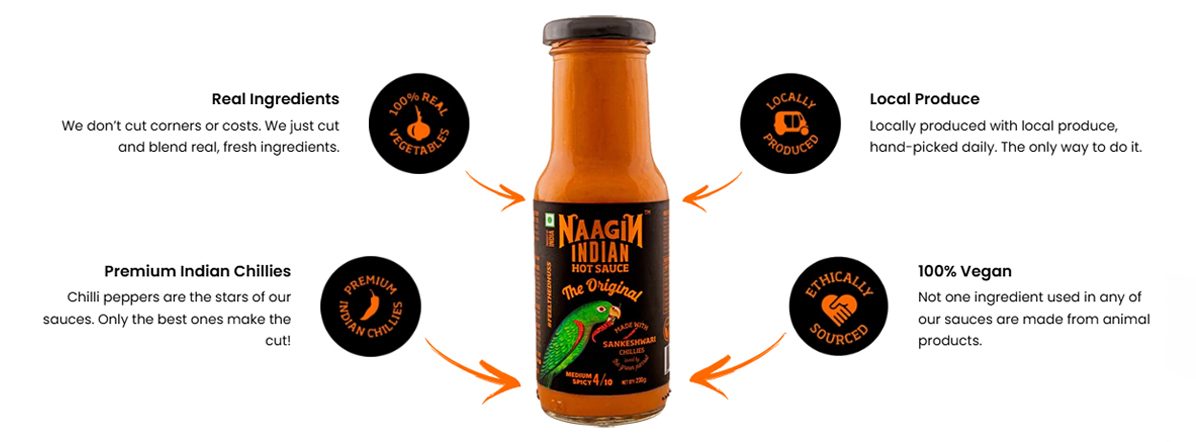
If you've only ever thought about Indian spice in terms of "mild" or "very spicy," Naagin's ingredient list is a decent primer on how much variety the country actually grows. There's Sankeshwari from Karnataka, a chilli most people outside the state have never heard of despite it being a staple in local kitchens. There's ghost pepper, or bhoot jolokia, from the Northeast, one of the hottest chillies in the world and grown almost nowhere else at this scale. There's green kanthari from Kerala, small, sharp, and closer in character to a bird's eye chilli than anything sold as "jalapeño-style" heat.
Put those three next to each other and you've basically got a tour of India's chilli-growing regions, from Mumbai's vada pav stalls to Nagaland's kitchens to Kerala's backwaters. Naagin's flavor range isn't really about hitting different Scoville numbers. It's about representing the actual geography of Indian heat, which most sauce brands, Indian or otherwise, had never bothered to map.
"Naagin or nothing"
The brand's tone is where it separates itself fastest from the sea of "artisanal, small-batch" hot sauce labels. Naagin doesn't do polite. Its packaging leans into desi humor and unapologetic swagger, less foodie-magazine restraint and more the kind of confidence that comes from actually being good at the thing you're selling. "Naagin or nothing" isn't just a tagline, it's the whole personality of the brand condensed into three words, and it works because the sauce backs it up.
It's a useful lesson in branding, honestly. A lot of Indian food startups default to a soft, premium, slightly apologetic aesthetic when they're trying to compete with Western brands. Naagin went the opposite direction and leaned harder into being unmistakably Indian, cheeky included, and it turned out that was the more memorable bet.
Breaking a monopoly nobody questioned
For decades, "hot sauce" as a category in Indian retail basically meant one or two American names on the shelf. Nobody really questioned why a country that grows the ghost pepper was importing its condiment culture from Louisiana and Mexico. Naagin's founders weren't the first to notice this, but they were among the first to actually build a company around fixing it rather than just complaining about it at dinner. The bet paid off commercially too: the brand now partners with KFC India, putting an Indian-chilli hot sauce into one of the biggest fast food chains in the country, a distribution win that would have been unthinkable for a homegrown sauce brand a decade ago.
Three Scovie Awards, and counting
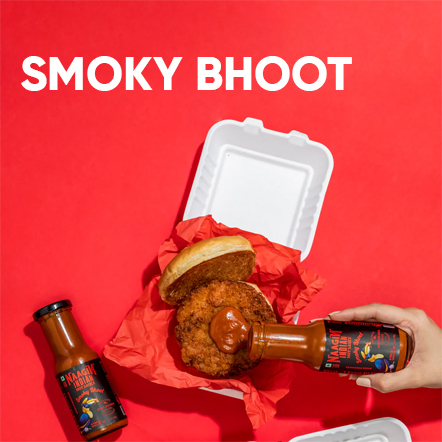
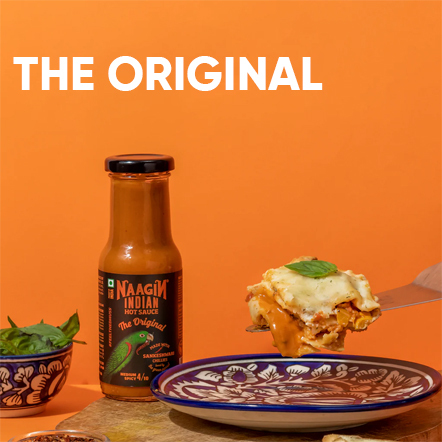
The Scovie Awards are the closest thing the hot sauce industry has to a global benchmark, judged annually in the US and covering everything from salsas to extract-based sauces. Naagin has won three times, and its Original and Smoky Bhoot variants were the first Indian hot sauces ever to take home an International Scovie Award. That's not a regional or feel-good recognition. It's a brand built in Mumbai going up against sauce makers from Texas, Mexico, and the Caribbean, and winning on flavor.
What's notable is how little the brand has changed its identity since. A lot of companies get an international award and immediately start softening their voice to appeal to a wider, blander audience. Naagin kept the humor, kept the heat, and kept the "we're not from Louisiana and we're not pretending to be" attitude that got it there.
Pairing heat with everyday food
The other thing Naagin gets right is that it never positioned itself as a novelty gift-shop sauce, the kind that sits unopened on a shelf because it's "too spicy to actually use." Its flavors are built to go on things people already eat daily: eggs, parathas, momos, biryani, even a simple bowl of dal. That's a deliberate contrast to a lot of the extract-heat sauces that dominate the "world's hottest" conversation, which are engineered for pain rather than flavor.
Sankeshwari brings a fruitier, more rounded heat that works well folded into a curry. The ghost pepper variant is the one for people who genuinely want to sweat a little, best used sparingly on street food. Kanthari, sharper and greener, cuts through fried food the way a good chutney would. None of it reads as a gimmick, which is probably the highest compliment you can pay a hot sauce brand.
The bottle sizes back this up too. Alongside the standard retail bottle, Naagin sells smaller formats built for gifting and for restaurants that want table-side heat without committing a full-size bottle to every setting, plus larger format bottles for the food service side of the business, the same side that now supplies KFC India. It's a small operational detail, but it tells you the founders were thinking about how the sauce actually gets used, at a dinner table, on a QSR counter, in a gift hamper, rather than just how it photographs on a shelf.
A category India didn't know it needed until someone built it
Naagin's real achievement isn't the awards, even though those matter for credibility abroad. It's that the brand made "Indian hot sauce" a category that makes sense on its own terms, not as a spicier version of something American. Given how much of the country's chilli diversity had never been bottled and sold as a condiment before, that's a bigger cultural shift than the marketing lets on. The brand just happens to be too busy being funny about it to say so directly.