
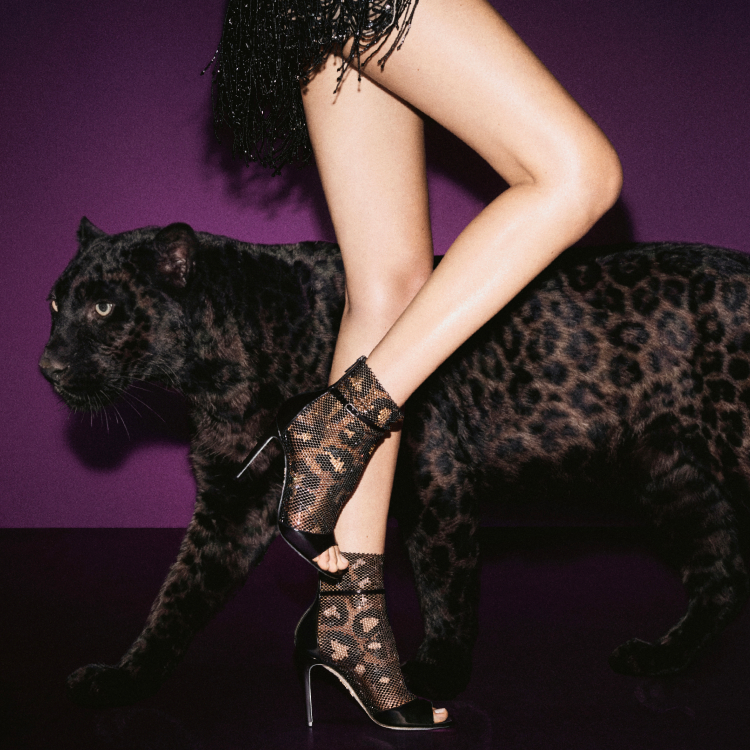
Luxury designer heels are not simply expensive shoes. They're the product of hand-labor that machines still cannot replicate, made in workshops where a single pair can pass through a dozen sets of hands before it ever reaches a shop floor. That distinction hand-applied versus machine-set, atelier versus factory is what actually separates an investment pair from an expensive one.
A luxury heel earns the label through process, not price tag alone
Price is the least reliable signal in this category. A shoe can cost four figures and still be assembled on a production line with glued crystals and stamped leather. What actually defines luxury footwear is the amount of irreducible hand-work in it: hand-lasted uppers, hand-applied embellishment, leather cut and matched by eye rather than by machine template. At René Caovilla, crystals are still set into lace and leather one at a time by artisans in Fiesso d'Artico, just outside Venice, in a technique the house has used since Edoardo Caovilla founded the workshop in 1923. That's not a marketing line. It's the actual bottleneck in production you cannot rush hand-applied crystal work, which is exactly why the good ones take longer to arrive than a mass-market shoe ever would.

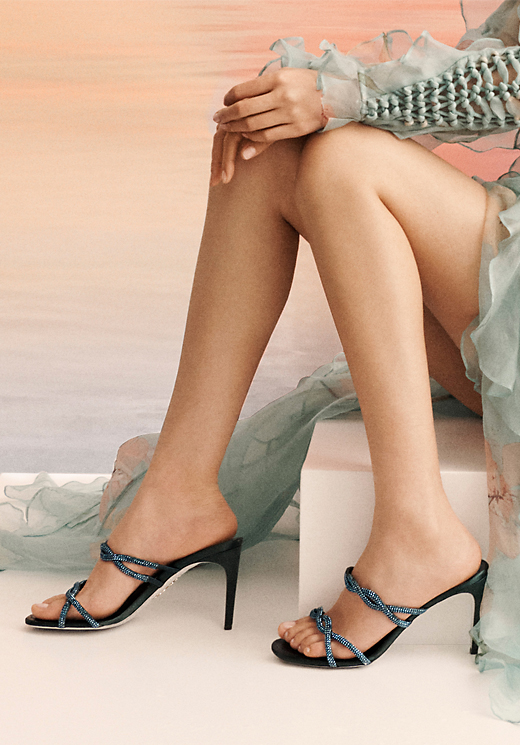
Craftsmanship shows up in specific, checkable details
This is the part most buyers skip, and it's the part that actually tells you what you're paying for. Before you commit to a pair at luxury pricing, look for these markers:
Stitch consistency hand-stitched welts show tiny irregularities under magnification; machine stitching is perfectly uniform, which paradoxically is the tell
Weight distribution a well-constructed heel feels balanced the moment you stand in it, not after a break-in period
Embellishment security crystals or beading should be set into the material, not glued on top of it; run a finger lightly across the surface and you shouldn't feel edges lifting
Leather grain matching on a genuine luxury pair, the grain pattern should flow continuously across seams rather than jumping abruptly
Origin and atelier transparency a house that can name its workshop, its region, and how long a pair takes to make is telling you something a house that can't, isn't
If a shoe fails two or more of these, the price is buying you a name, not necessarily the craft behind it.
It's worth holding a shoe up to a strong light before buying, especially with crystal or beaded work. Hand-set stones catch light unevenly, at slightly different angles, because no two artisan hands place a stone identically. Machine-set crystals sit in a grid, flat and uniform, and under a bright light that uniformity is obvious once you know to look for it. This single test tells you more about a shoe's actual construction than any tag or price point ever will.
Venetian heritage shapes an entire design vocabulary, not just a handful of shoes
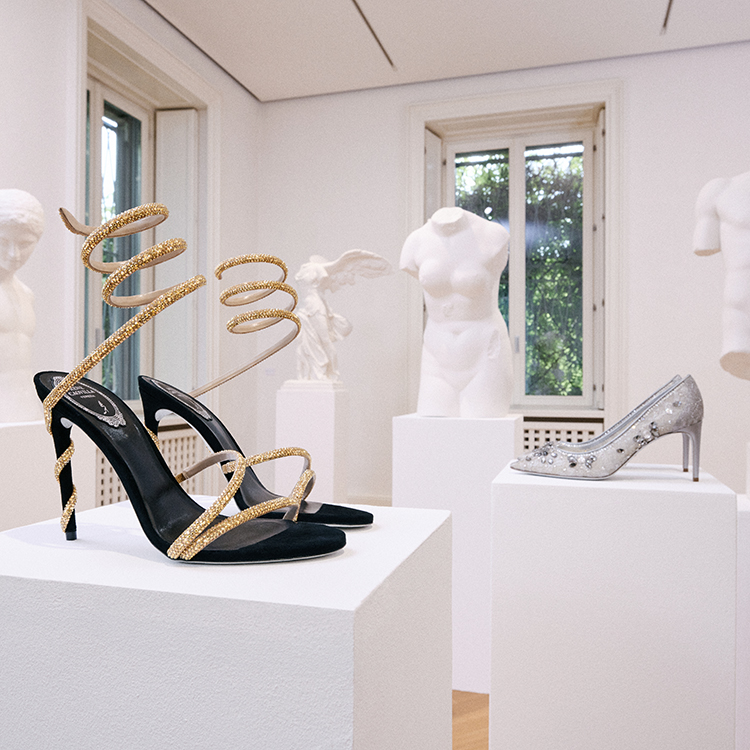
Venice gave Italian shoemaking a specific visual grammar that shows up nowhere else quite the same way. The gold mosaics of San Marco, the intricate needle-lace of Burano, the light refracting off chandelier crystal in a canal-side palazzo these aren't abstract inspirations, they're literal source material for pattern and embellishment. René Caovilla's most recognized design, the Cleo sandal, takes its coiled silhouette directly from Roman bracelets dated to the first century BC, wrapping the ankle the way a serpent bracelet would have wrapped a wrist two thousand years ago. It's been in continuous production since 1969 and now sits in MoMA's permanent collection which tells you something about how a shoe can outgrow the category of accessory and become a design object people actually study.
That kind of longevity is rare. Most heel silhouettes are relevant for two, maybe three seasons before they are read as dated. A design with fifty-plus years of continuous relevance is doing something structurally right, not just aesthetically pleasing.
Investment value depends on scarcity, silhouette, and how the house treats archives
Resale markets have gotten specific about which luxury heels hold value and which don't, and the pattern is consistent enough to name plainly. Limited runs and archive-referenced pieces retain value better than seasonal trend items. A heel tied to a house's signature silhouette think the Cleo, or Manolo Blahnik's Hangisi, or Louboutin's classic red sole pumps holds resale value in a way that a one-off collaboration piece rarely does, because the signature design has proven demand across decades, not one Instagram cycle. Buyers on resale platforms consistently pay a premium for pairs still in original boxes with dust bags, which sounds obvious but gets ignored constantly. People wear the shoes, lose the packaging, and cut their resale value by 20 to 30 percent without realizing it.
Condition matters more with crystal-embellished pairs specifically, since replacing a lost stone on a hand-set design requires sourcing the exact original crystal, not a generic substitute. That's a real cost buyers underestimate when they're comparing a pristine pair against a slightly worn one at auction.
Heel height also plays into resale, though less obviously than color or silhouette. A 100mm heel in a proven signature shape tends to outlast a 120mm statement heel in resale demand, simply because more people can actually wear the lower height for a full evening. Extreme heights sell well as display pieces and red carpet loans, but the buyer pool for a shoe nobody can walk in for more than twenty minutes is smaller than most people assume when they're pricing a resale listing.
Fit should never be sacrificed for the silhouette, regardless of price
Here's an unpopular but necessary opinion: a beautiful heel that doesn't fit properly is not a good purchase, no matter what it costs or who made it. Luxury houses size differently from each other and often differently from mainstream sizing entirely Italian luxury shoemakers frequently run narrow through the toe box, which suits a sculptural silhouette but punishes anyone with a wider foot. Get measured properly, ideally in-store, before ordering a statement pair online. A shoe you can't wear for more than an hour isn't an investment, It's a display object, and there's nothing wrong with buying display objects, but be honest with yourself about which one you're getting.
From the René Caovilla Atelier to you
We've spent a century building shoes in the same workshop outside Venice, and the argument we keep coming back to is a simple one: a heel worth calling luxury should still mean something to look at closely, stitch by stitch, decades after it was made. That's the standard the Cleo was held to in 1969, and it's the standard every piece leaving Fiesso d'Artico is held to now. Explore the current collection at renecaovilla.com, or visit us to feel the difference between a shoe that was assembled and one that was made.
That difference is why we still call the workshop an atelier and not a factory, and why every pair still leaves Fiesso d'Artico with a story attached to it rather than just a barcode.