
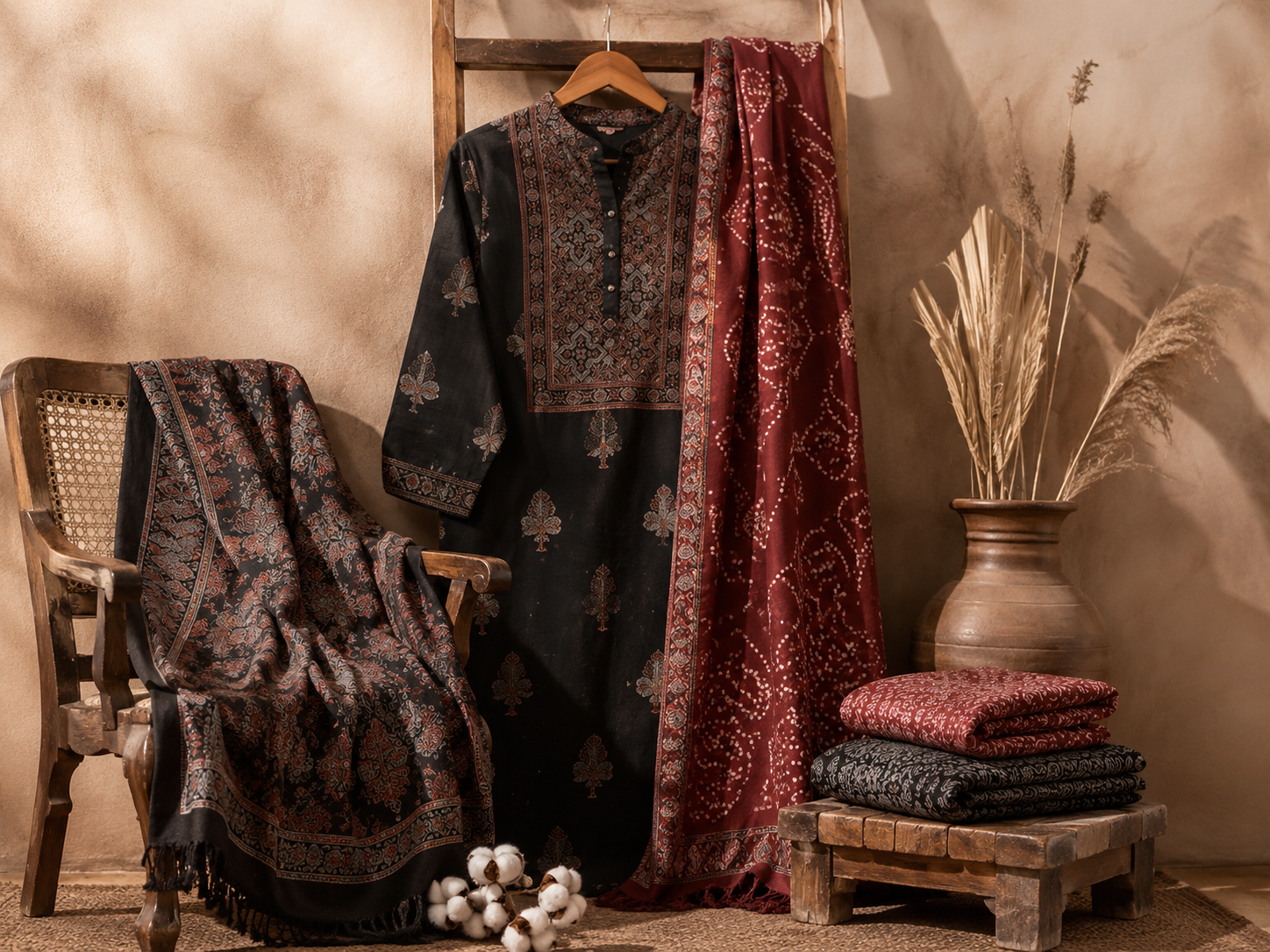
The raw fabric cotton, most often, occasionally wool is first washed in water mixed with castor oil and soda ash, then beaten against stone to open the fibres and remove the sizing applied during weaving. This mechanical opening is essential: a cloth that has not been properly prepared will accept dye inconsistently.
This preparatory sequence takes two full days. It does not appear on any label.
The resist paste comes next: calcium hydroxide, gum arabic, and binding agents, applied to the cloth by carved teak blocks to create areas that will repel the dye. The lime acts as an alkaline barrier; the areas it covers will emerge, after dyeing and washing, as the white or cream grounds characteristic of Ajrakh's visual vocabulary.
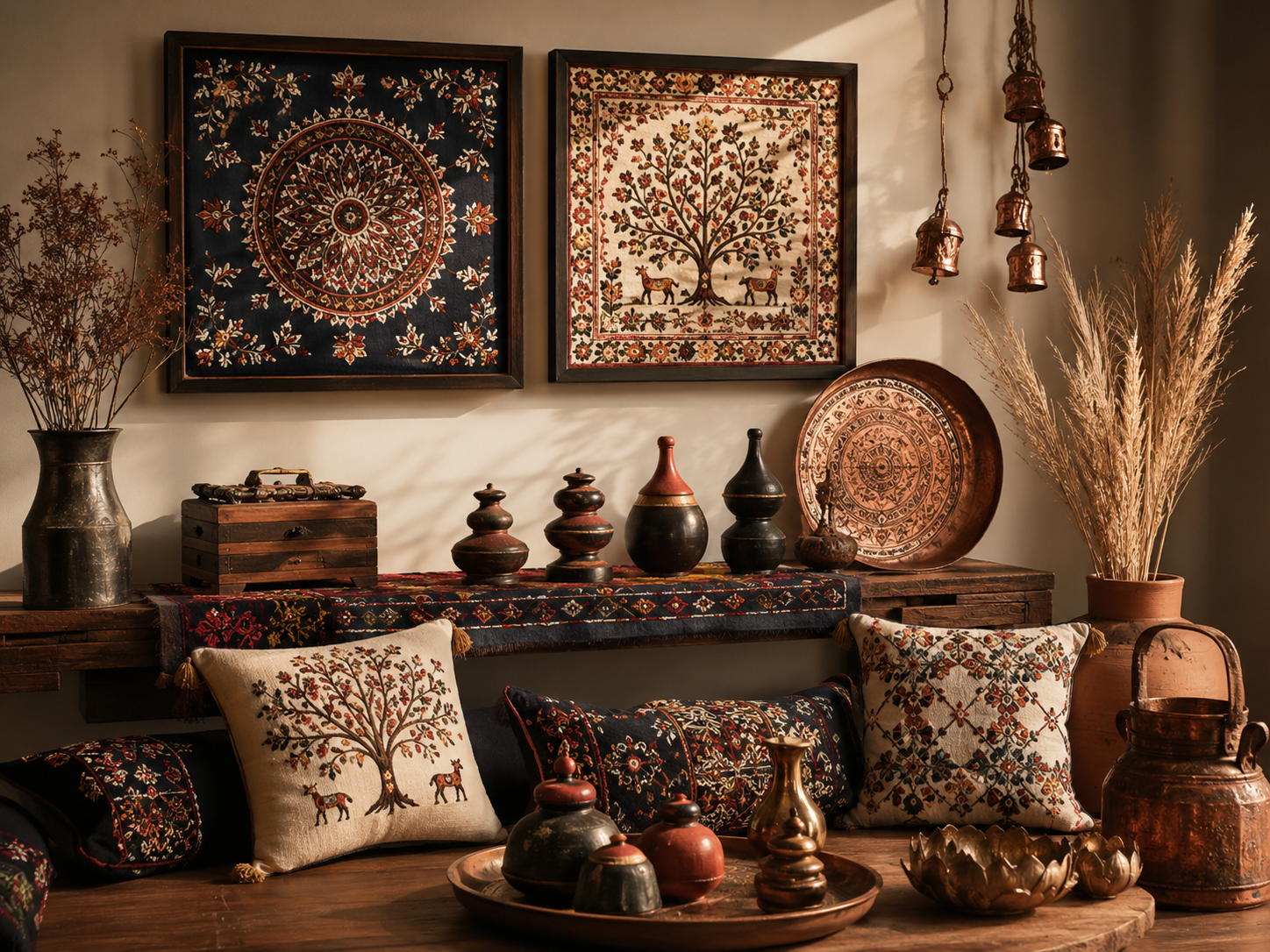
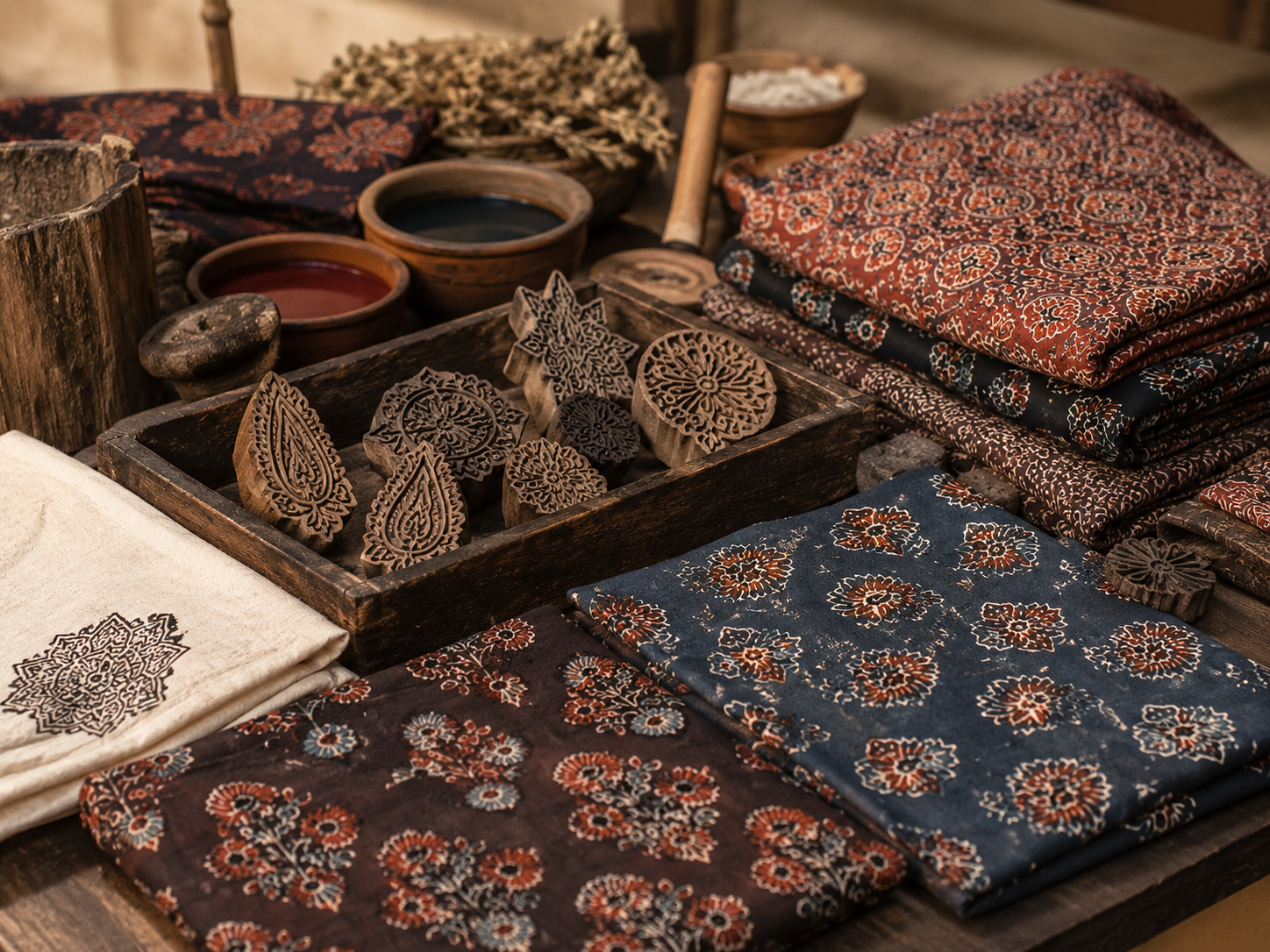
Then the first dye bath: harda and alizarin and pomegranate rind, combined in a vessel over controlled heat and held at temperature while the cloth is immersed. The alum mordant, applied in an earlier step, now performs its function: the mordant areas take the red; the resist-covered areas repel it entirely.
The indigo vat requires its own days of preparation. Indigo powder is combined with a reducing agent traditionally lime and fermented wheat bran and left to ferment until the vat reaches a chemically reduced state. The cloth is immersed, removed, held in air: the indigo oxidises from yellow-green to its final blue on contact with oxygen. The cloth must be immersed twelve times.
After the final dye bath come the fixatives: tamarind seed powder and fuller's earth, then the washing, then the drying in the open sun. The sun simultaneously brightens the red and stabilises the blue in a final act of chemistry that belongs to the light rather than to any craftsman's hand.
What you are holding, when you hold an Ajrakh textile, is the record of all of this: every wash, every careful block placement, every slow hour in the dye vat. The cloth carries what went into it, whether or not the person holding it knows.