

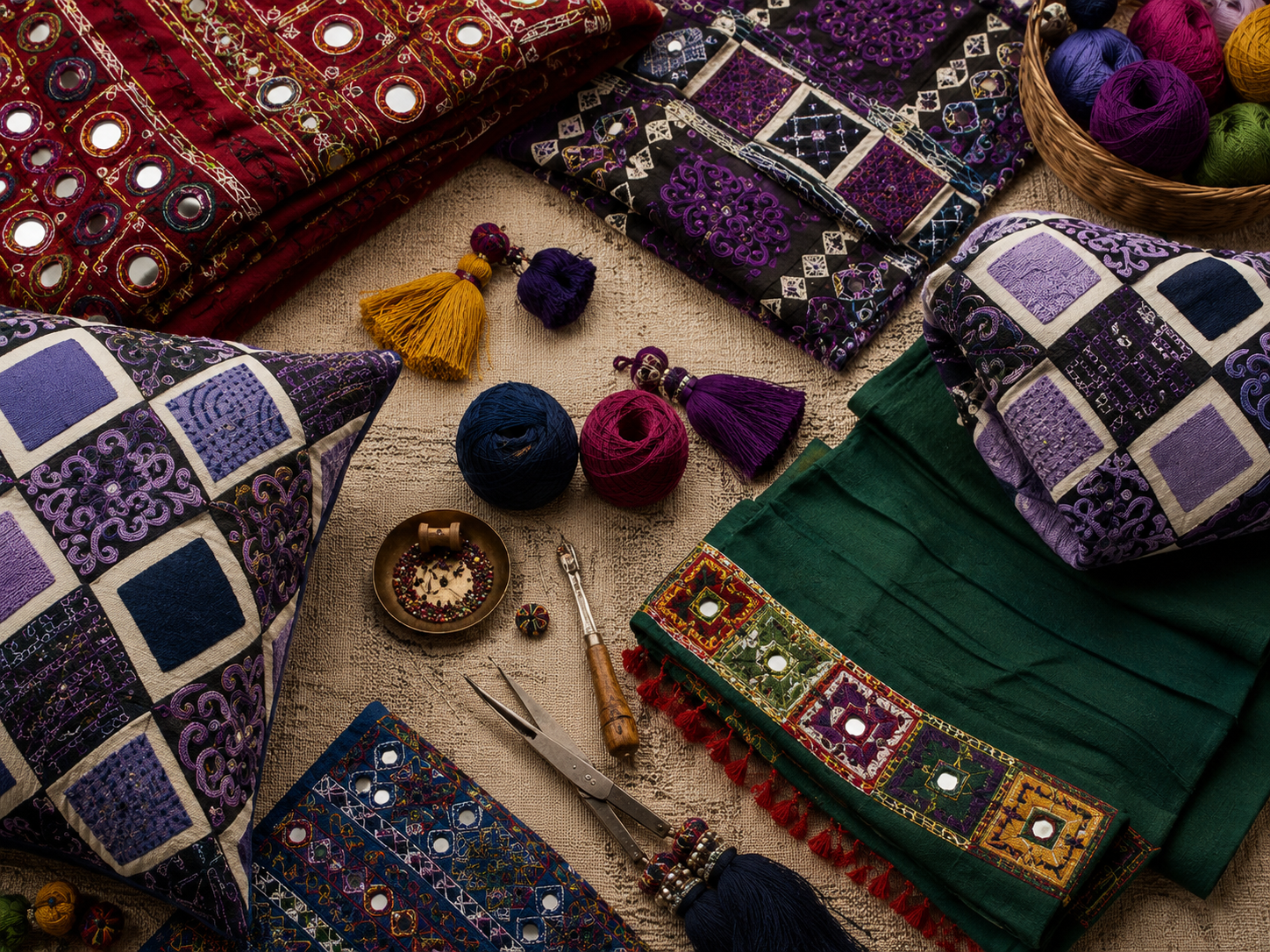
The stitch is called pakko firm, permanent, not meant to be undone. It is worked with a needle so fine it barely registers in the hand, pulling thick silk thread through cotton cloth in a series of tiny interlocking loops that build, over hours, into the geometric and floral patterns for which Kutch embroidery is known. A practised embroiderer makes perhaps twenty of these stitches a minute. A square centimetre of finished work may contain a hundred.
In the Banni grasslands of Kutch, in the salt-edged villages between the Rann and the sea, this stitch and dozens of others have been practiced by women for centuries. Each community in Kutch developed its own embroidery vocabulary: the Rabari use chain stitch and satin stitch in bold geometrics; the Mutwa work in extremely fine cross-stitch, so dense the ground cloth is barely visible beneath; the Ahir use shisha mirror work, embedding fragments of mica and later glass in the embroidery.
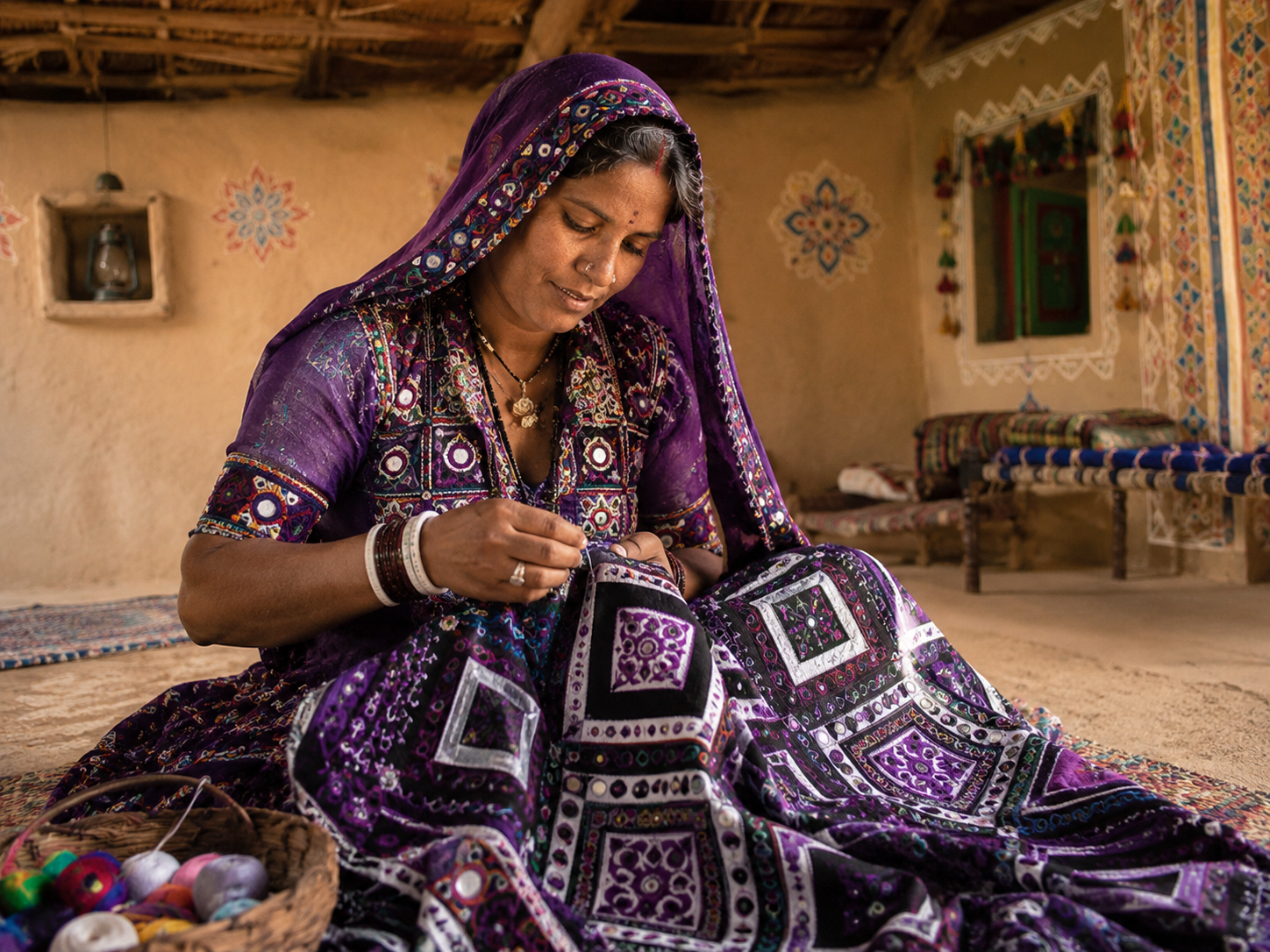
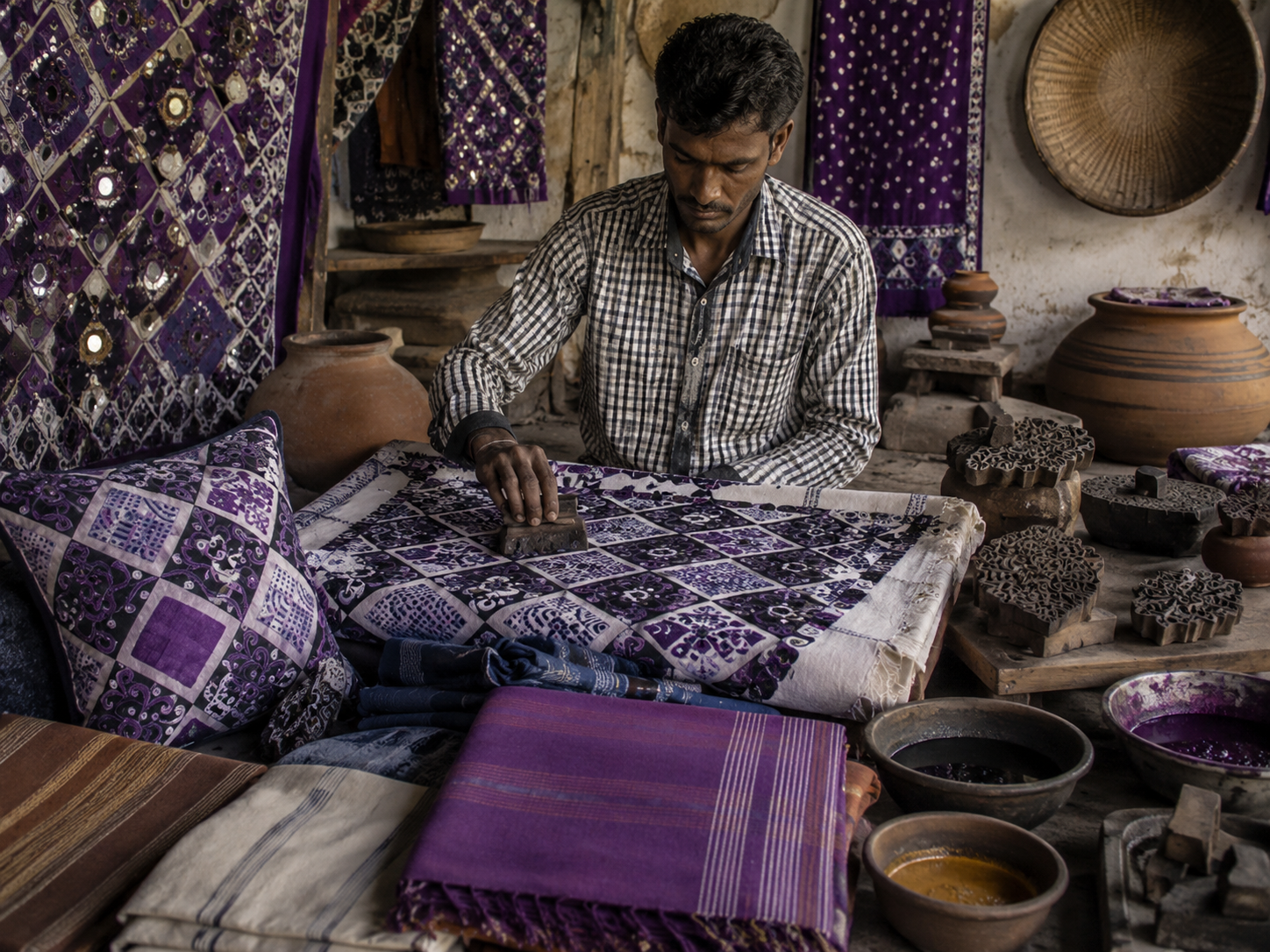
In 1969, when drought left the Kutchi artisan community in acute need of livelihood, Chanda Shroff began Shrujan a Gujarati word meaning creation with the conviction that what the women of Banni already knew was worth more than what any outside industry could import.
Today, Shrujan works with more than ten thousand women artisans across Kutch. The embroideries they produce Rabari, Ahir, Mutwa, Meghwal, Sodha are not reproduced by machine, not simplified for volume, not standardised for ease.
The organisation has also built, in Bhujodi, a trust museum that archives more than five thousand pieces of embroidery spanning over a century a material record of a craft tradition that would otherwise exist only in the memory of the women who practice it.
A conversation moving through the international luxury press this year notes, with some discomfort, that Indian craft has for decades underpinned global fashion without credit. Shrujan has never required that conversation to know its own value. Every piece leaf Kutch with documentation of who made it, in which village, using which technique.
That is not merely supply chain transparency. It is authorship.
The women of Banni have always known their work was worth keeping. Shrujan simply built the structure that let the rest of the world find out.