
A decade in Indian couture teaches you things that no design school will. It teaches you the precise weight at which a lehenga hem begins to drag the grams per metre of fabric that separate a skirt that moves with the wearer from one that moves against her. It teaches you how embroidery distributes weight across a bodice, and how that distribution changes the silhouette of the garment in motion. It teaches you the relationship between a stiff dupatta and a soft body, and how the right stiffness in exactly the right place can create a silhouette that unfolds as the wearer walks.
Gazal Gupta has been accumulating this knowledge for over ten years. The label she founded carries her name a decision that makes her accountable, in the most personal way possible, for every piece that leaves the atelier. The Spring/Summer 2025 Tana Bana collection, which takes Kutch as its source material, demonstrates what a decade of this learning produces.
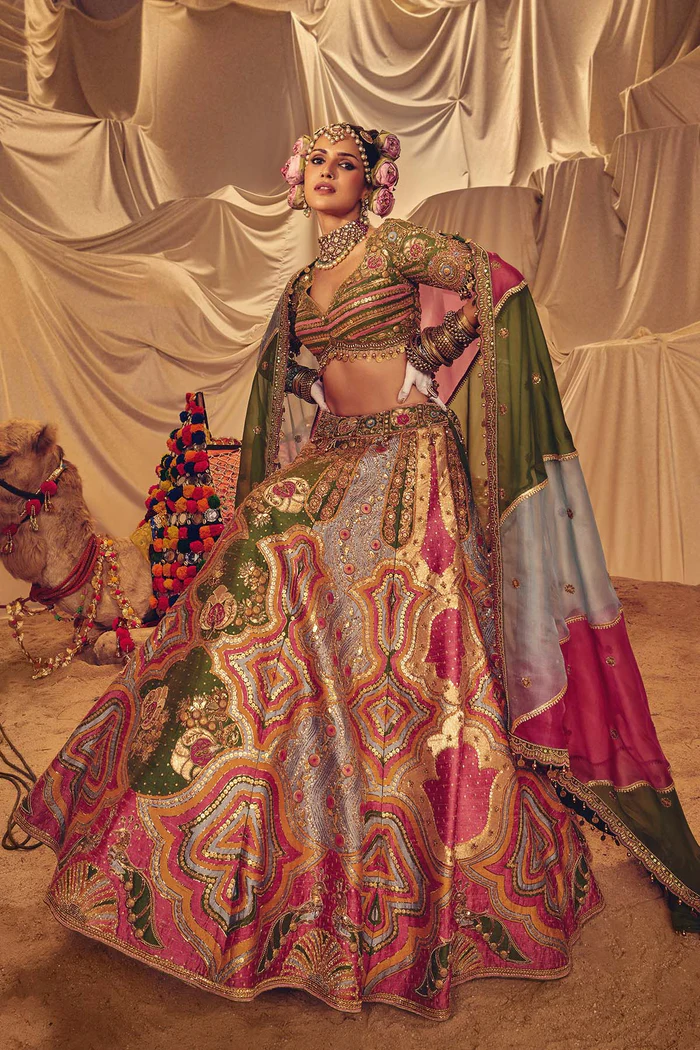
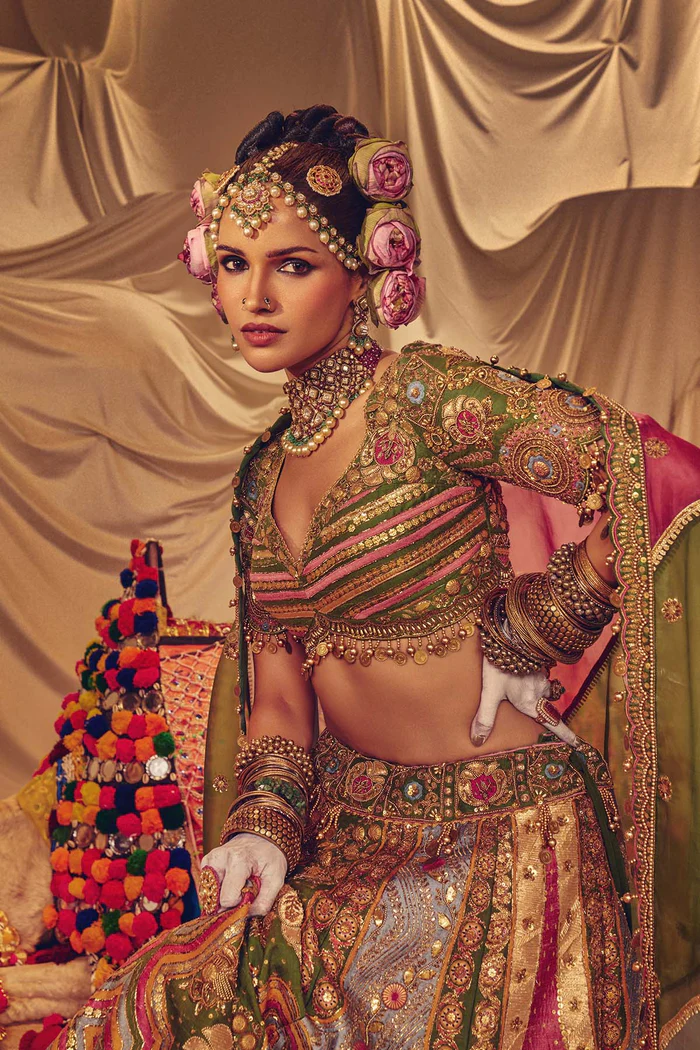
Tana Bana warp and weft in Hindi, the two directions of weaving is both a textile reference and a structural philosophy. The collection approaches Kutch not as an aesthetic reservoir to be mined for its colours and patterns, but as a weaving culture to be understood from the inside: the logic of how Kutchi embroiderers work their stitches into cloth, the mathematics of how geometric patterns tile across a surface, the particular density of embellishment that Kutchi textiles carry and how that density translates to a garment designed for a dinner rather than a museum.
The embroidery tells its story. The construction lets it and the body moves through both.
The silhouettes in Tana Bana are fluid in a specific way they carry the richness of embellishment without being overwhelmed by it, because the underlying garment construction does the structural work that allows the embroidery to live on the surface as itself rather than as load-bearing architecture. This is a couture problem most luxury Indian labels solve by making the embroidery so dense it becomes the garment. Gupta solves it differently: the base construction is precise enough that embellishment can be generous without becoming structural. The dress breathes. The embroidery tells its story. The body moves through both.
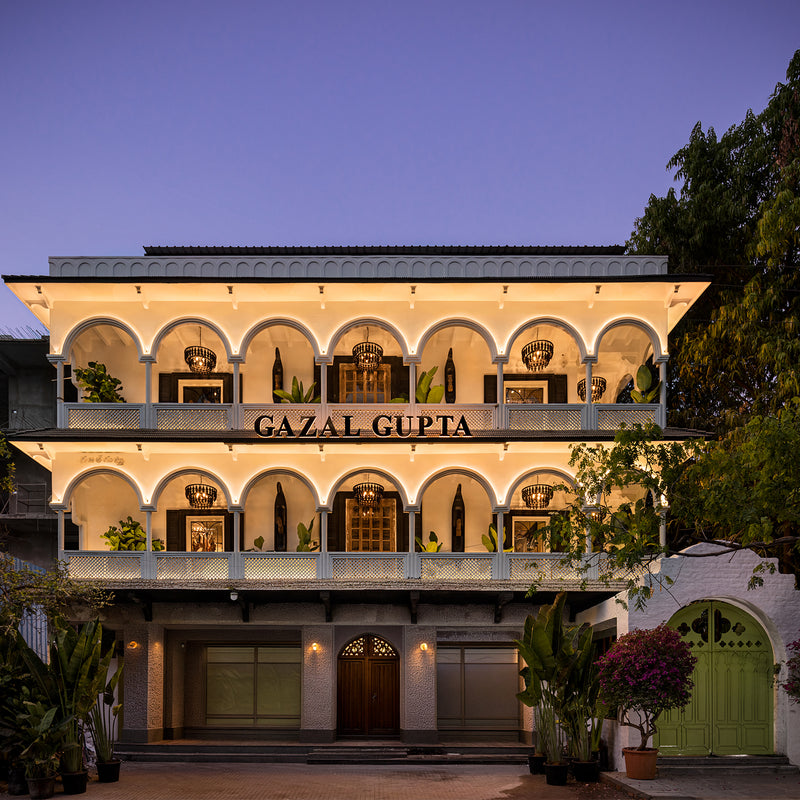
Seven stores across Delhi, Mumbai, and Hyderabad means that Gazal Gupta Couture is available in the cities where the people who wear Indian couture live. The shopping experience in each store is calibrated to the same standard: pieces are shown with the space they need to exist at full scale, staff understand the construction of each garment and can speak to it, and the alterations service is a continuation of the atelier rather than an outsourced afterthought.
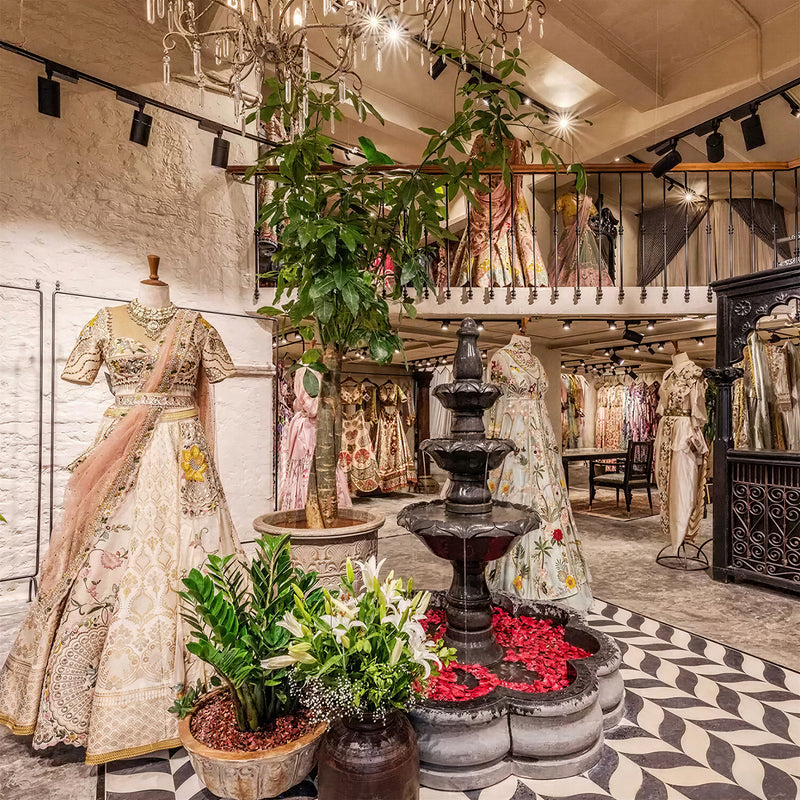
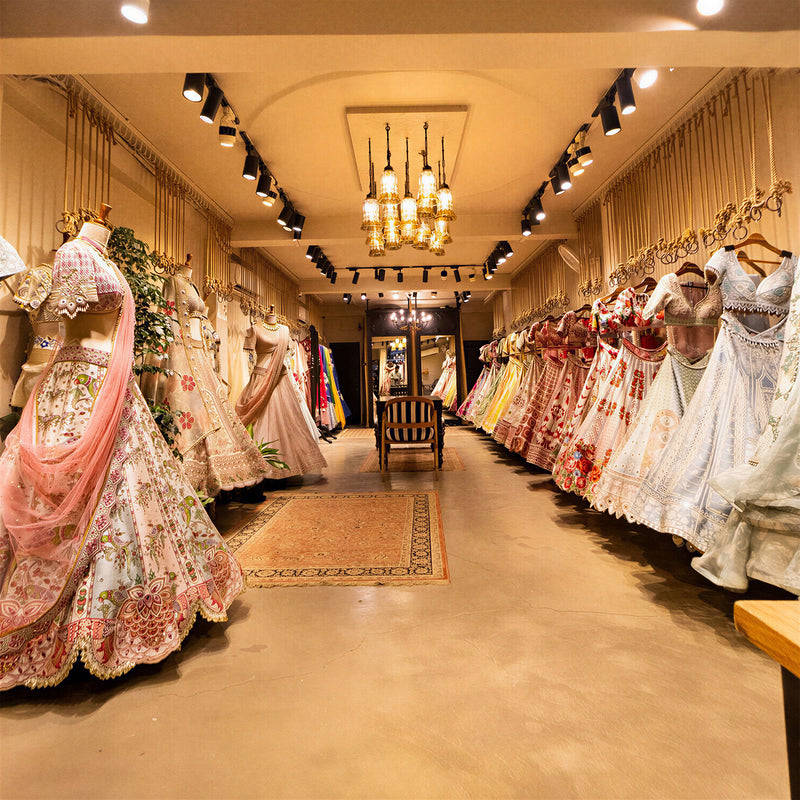
The occasion of the label is, broadly, celebration weddings, festivals, the formal receptions that Indian social life generates throughout the year. But Gupta's design vocabulary resists the occasion-wear trap, which is the mistake of designing garments that exist only for their moment. A Tana Bana kurta set, worn to a wedding and then to a formal lunch and then to an evening that required no reason this is the lifecycle that luxury Indian garments deserve, and that Gupta designs for.
The heritage lives in the cloth and the stitch. The precision lives in the construction. The woman who wears the garment is not carrying a culture. She is extending it adding her body's particular way of moving through the world to a long chain of women who wore things this beautiful and walked forward anyway.