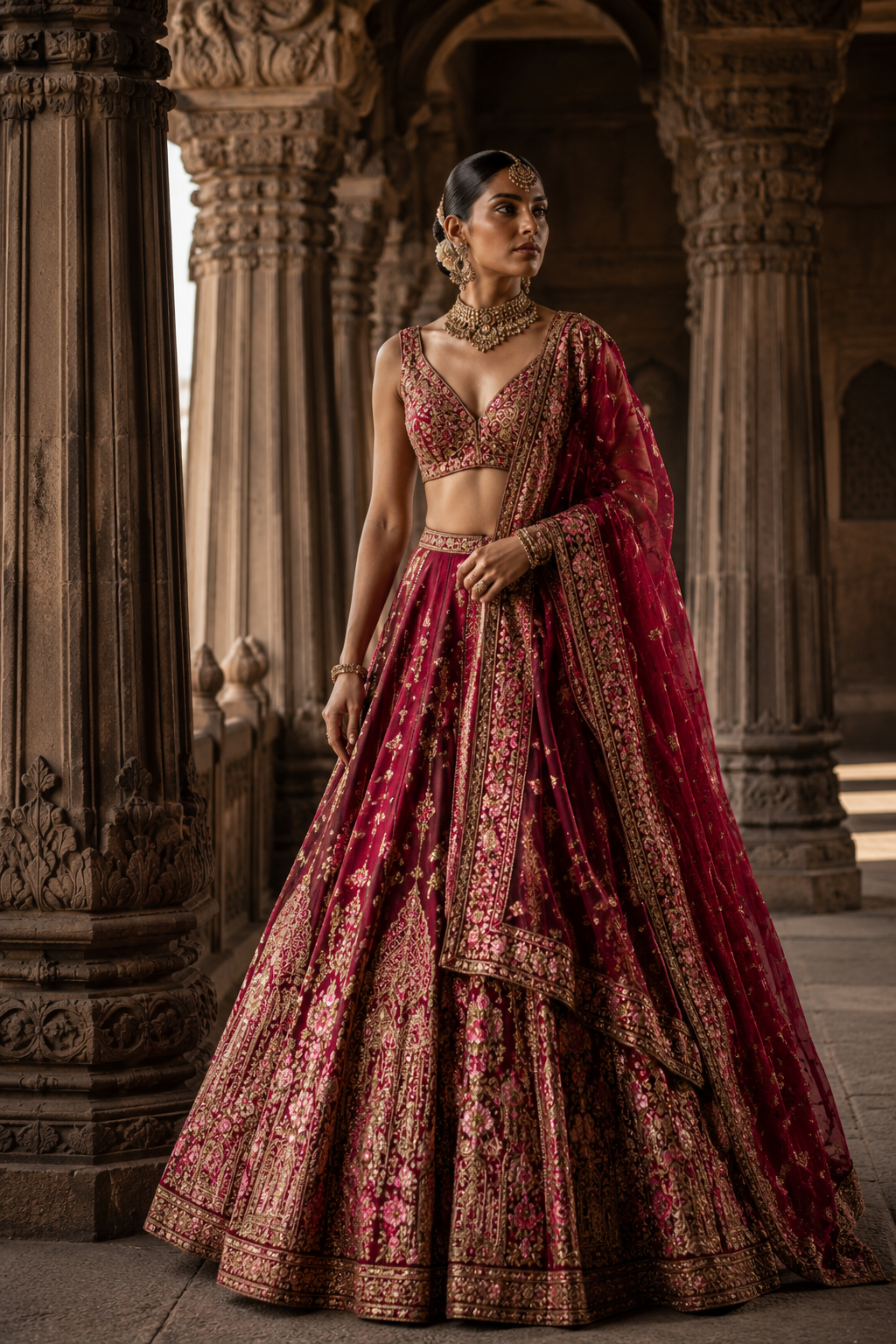
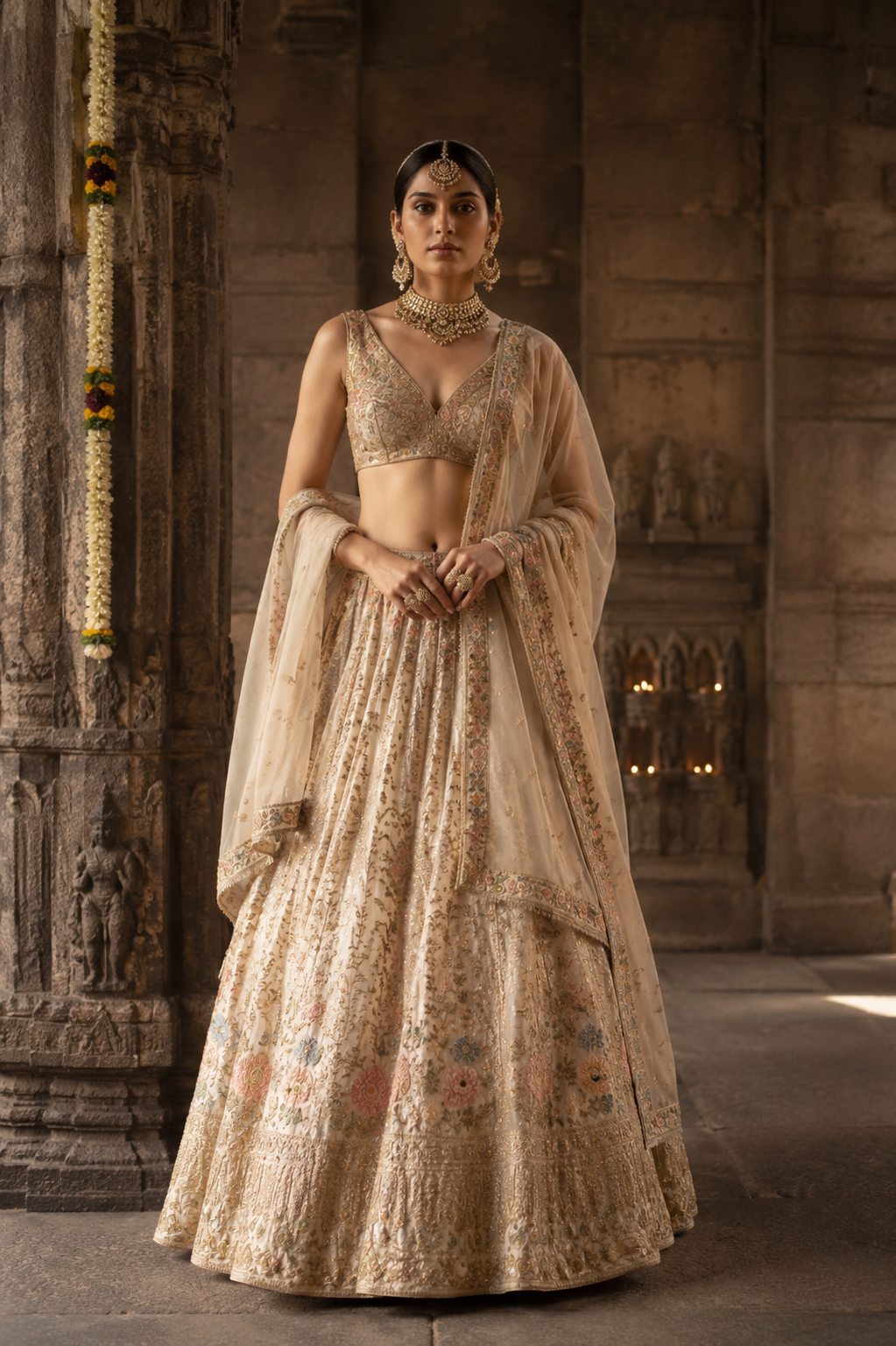
The Indian bridal lehenga is not merely a garment. It is an heirloom in the making, a vessel for family memory, a work of art worn once and preserved for generations. Mrunalini Rao understands this with an unusual depth and designs accordingly each bridal creation not a product but a commission, approached with the seriousness of a portrait painter. Her Hyderabad atelier has become a pilgrimage destination for brides who understand that the most important outfit of their life deserves the most serious creative attention.
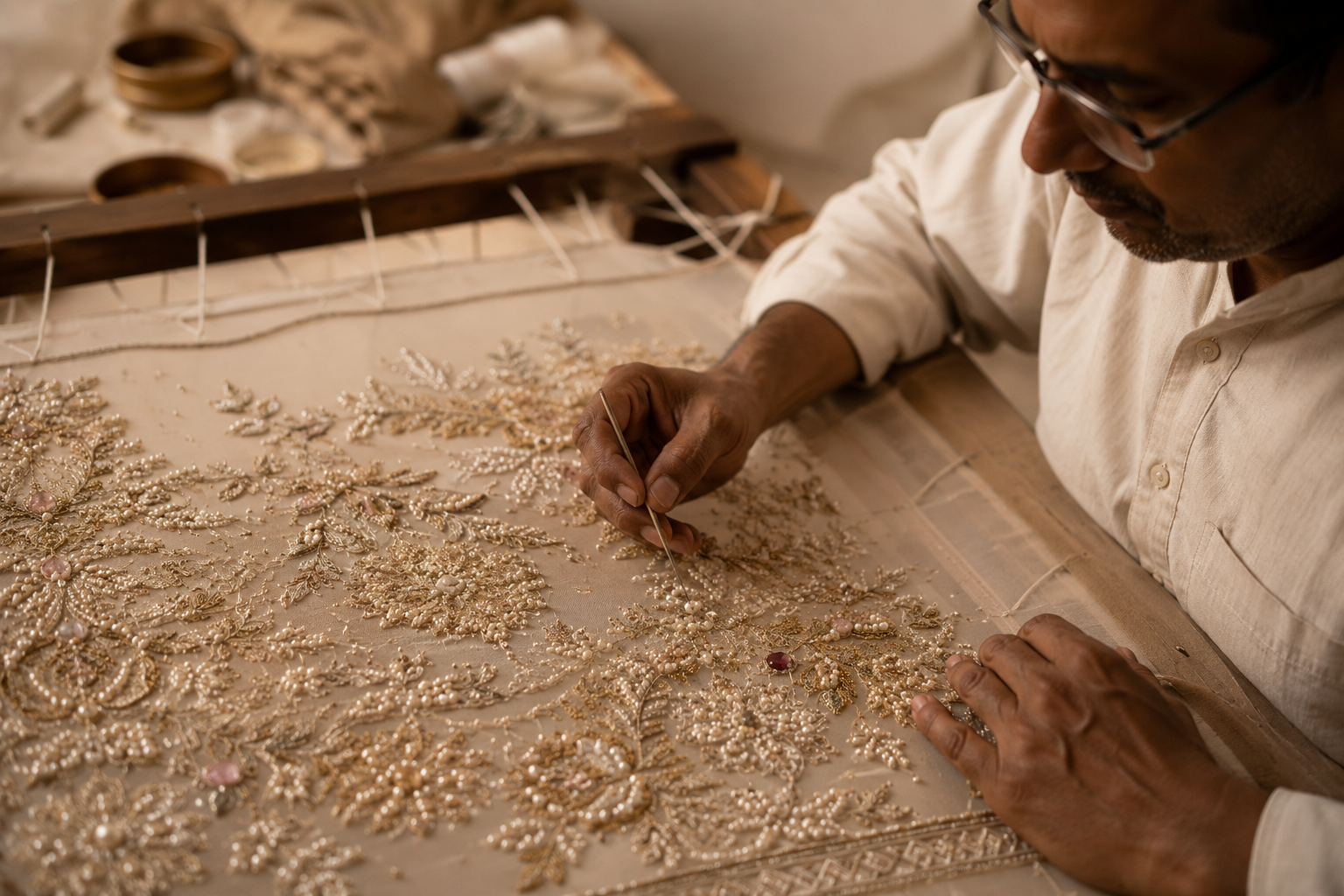
Rao's design philosophy is rooted in the textile wealth of southern India the silk traditions of Kanchipuram and Dharmavaram, the zardozi and pearl embroidery traditions of Hyderabad, the kalamkari of Andhra Pradesh. She does not transplant these traditions into couture; she works within them, extending their vocabulary through her own design intelligence. Embroidery in her atelier is executed by master craftspeople who work from her drawings but bring their own improvised ingenuity to the surface of the fabric. The result is work that carries the specific DNA of its place garments that could only have been made here, by these hands, in this tradition.
Mrunalini Rao's bridal collections unveiled annually and discussed with reverence among India's fashion cognoscenti establish seasonal colour narratives that influence the broader Indian bridal market for years. Her signature: deeply saturated silks in the palettes of south Indian temple flowers, surface embroidery that moves from density to lightness with the logic of music, silhouettes that honour the traditional lehenga while updating its proportions for the contemporary body. Her brides have included some of the country's most prominent families, and her name carries the particular authority of a couturière who has never once compromised on craft.
Mrunalini Rao represents an indispensable strand in Indian luxury fashion's ecology: the regional master, operating outside Mumbai and Delhi, whose work carries a specificity and depth that the metropolitan mainstream cannot easily replicate. She is proof that India's fashion geography is far richer than its fashion weeks suggest.