
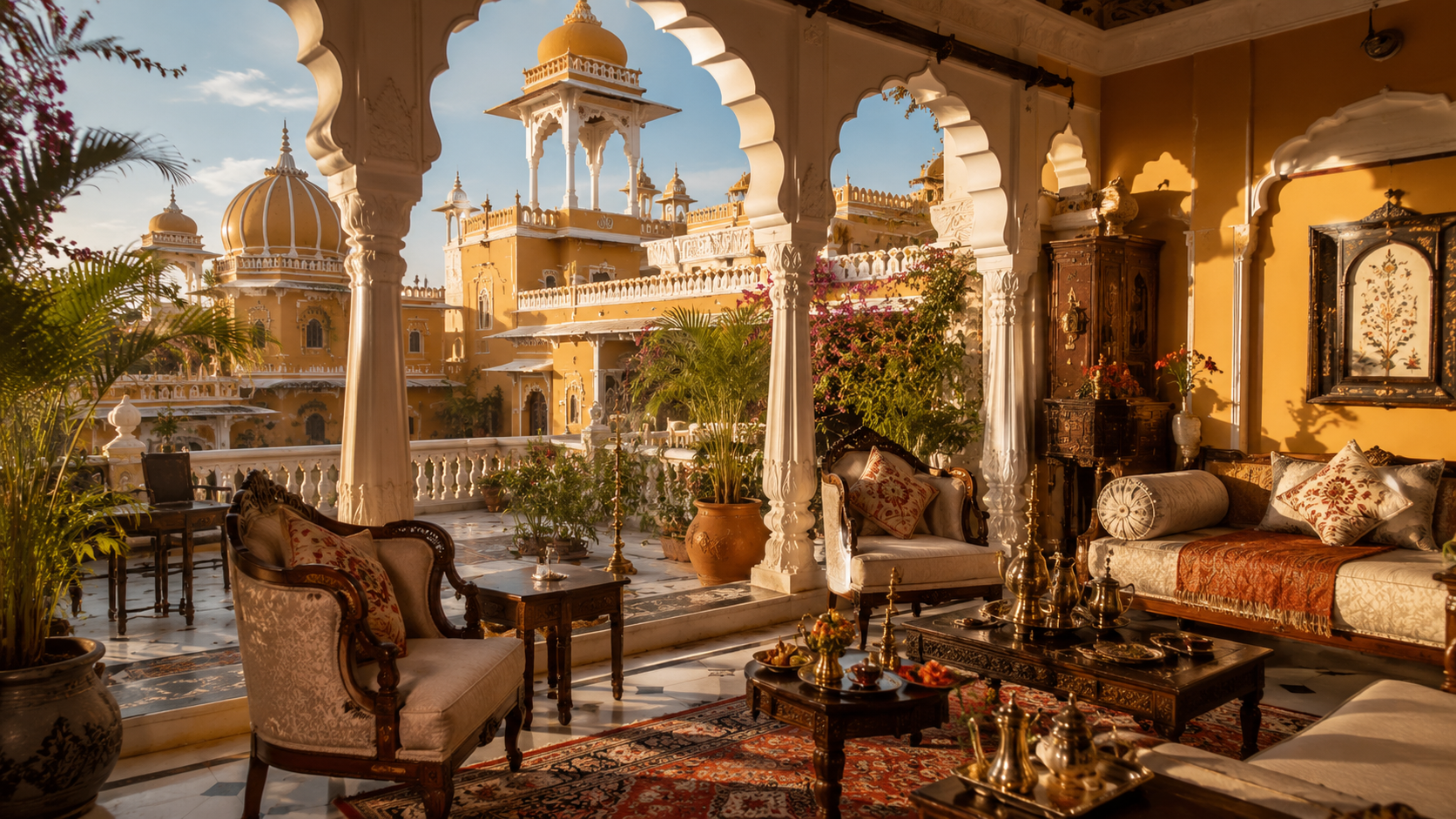
Udaipur refuses the quick reading. Other Rajasthani cities give themselves up to the arriving visitor with some immediacy Jaipur's scale legible from the car window, Jodhpur's drama announced from a distance by Mehrangarh. Udaipur asks for time. The city is structured around three major lakes and several smaller ones and water changes with the light and the season and the hour of observation.
The lakes are the city's organising logic. The older settlements climb the hills above Lake Pichola and Lake Fateh Sagar; the palace complex reaches to the water's edge; the ghats descend toward the surface in which, at certain hours, the sky is returned to itself. The colours of Udaipur are the colours of water-adjacent stone grey-blue haveli walls, the faded ochre of the city palace's exterior, the white of the temples catching morning light across the lake.
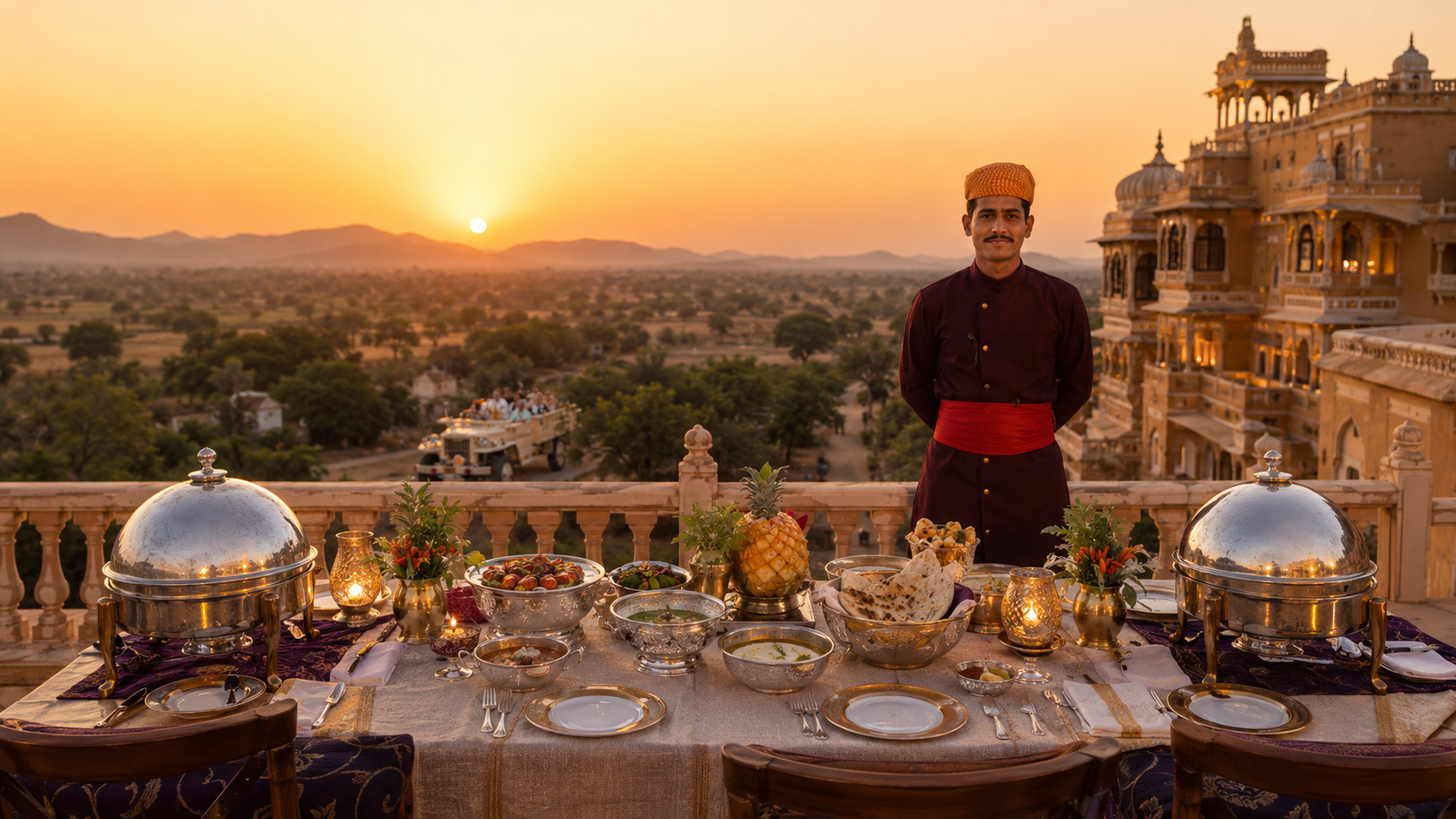
The region around Udaipur contains a density of heritage not entirely visible from the city itself. An hour north on the rail line, at Deogarh, a 17th-century fort-palace sits above the town a property that the Rawat family opened to guests several decades ago and has maintained with a consistency of care that larger palace-hotel conversions do not always achieve.
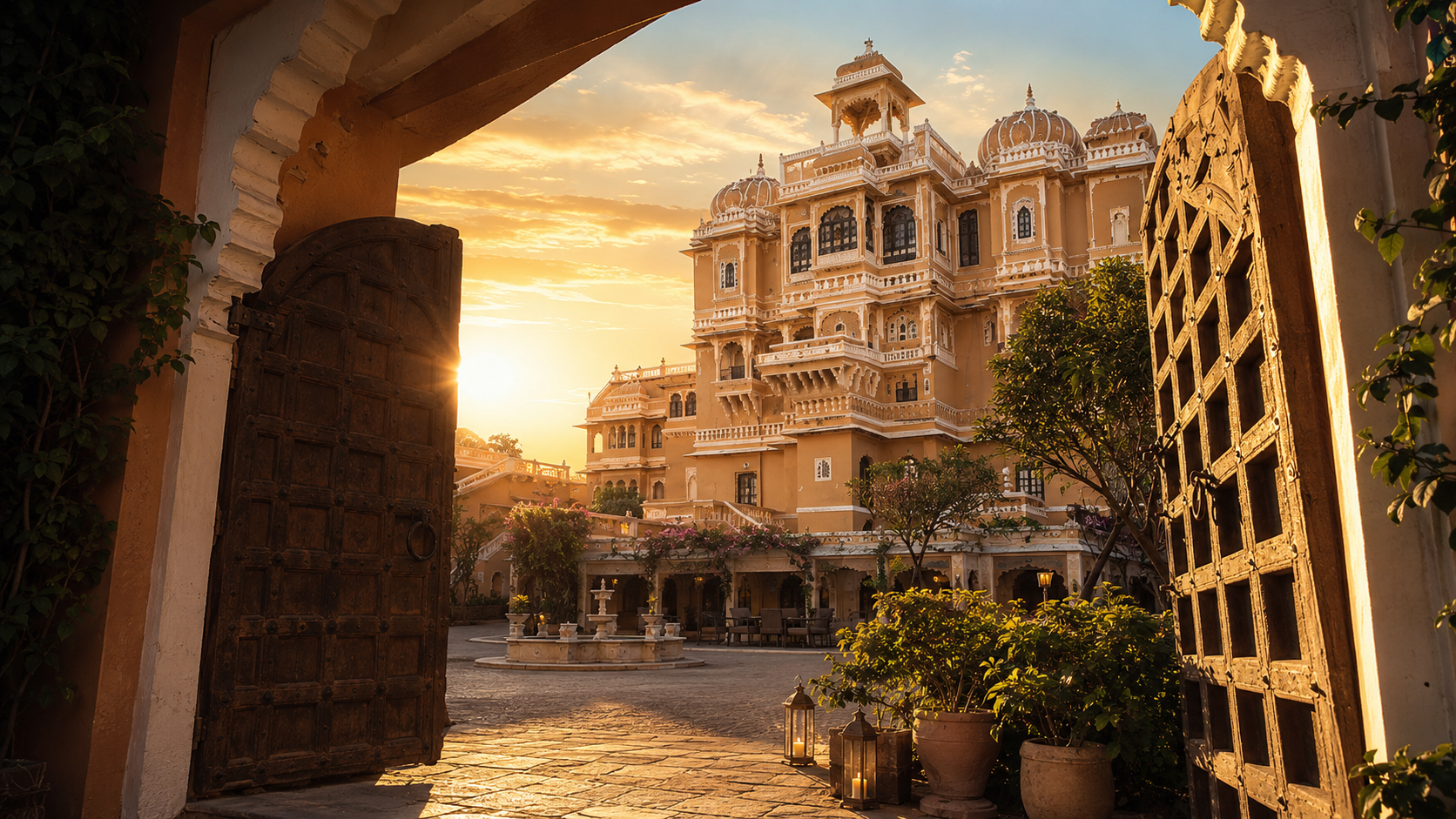
To stay in Deogarh Mahal is to understand something about Rajasthani heritage hospitality: the scale of private occupation. The palace was built for a family, not for a court. It is large enough to be a palace and small enough to be a home. The combination produces a quality of welcome that the managed luxury hotel can approximate but not replicate.
The road from Deogarh back to Udaipur runs through Rajputana countryside that has barely registered in the 21st century: mango orchards, old stone walls, the blue-tiled domes of small dargahs at intervals by the road. The afternoon light does what Rajasthan's afternoon light always does, turns everything amber, lengthens every shadow, and makes the familiar landscape momentarily extraordinary.