
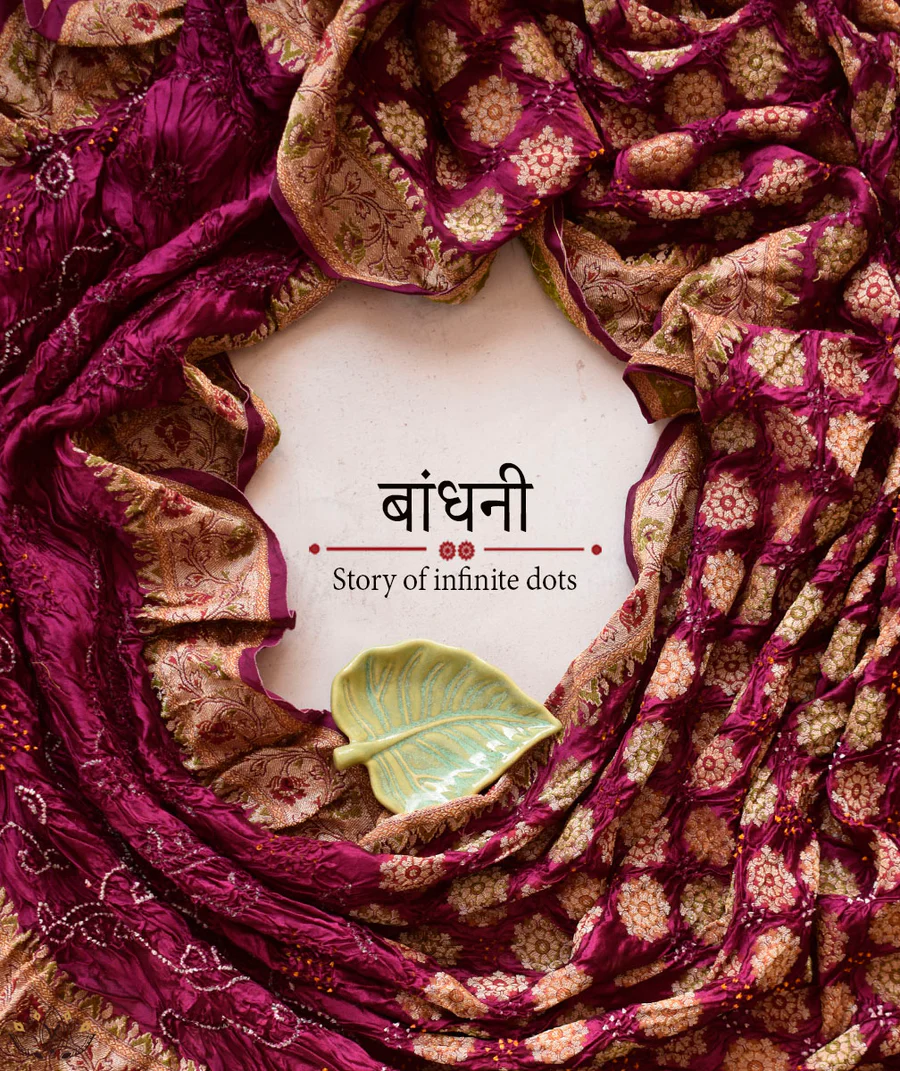
Before the colour comes, there is the binding. A single square of cloth usually fine silk georgette or cotton voile is spread on a wooden table in a workshop in Bhuj or Jamnagar, and the work begins: the maker's thumbnail pressing down at an exact point, gathering the tiniest possible pinch of fabric into the air, the thread wound around the raised fold fourteen or thirty or fifty times depending on the size of the dot required, then knotted off.
Bandhani from the Sanskrit bandh, to bind is the tie-dye tradition of Gujarat, practiced most densely in Bhuj, Jamnagar, Mandvi, and Rajkot by the Khatri community, whose practice goes back at least five centuries. The technique's antiquity is not merely historical. It is visible in the object.
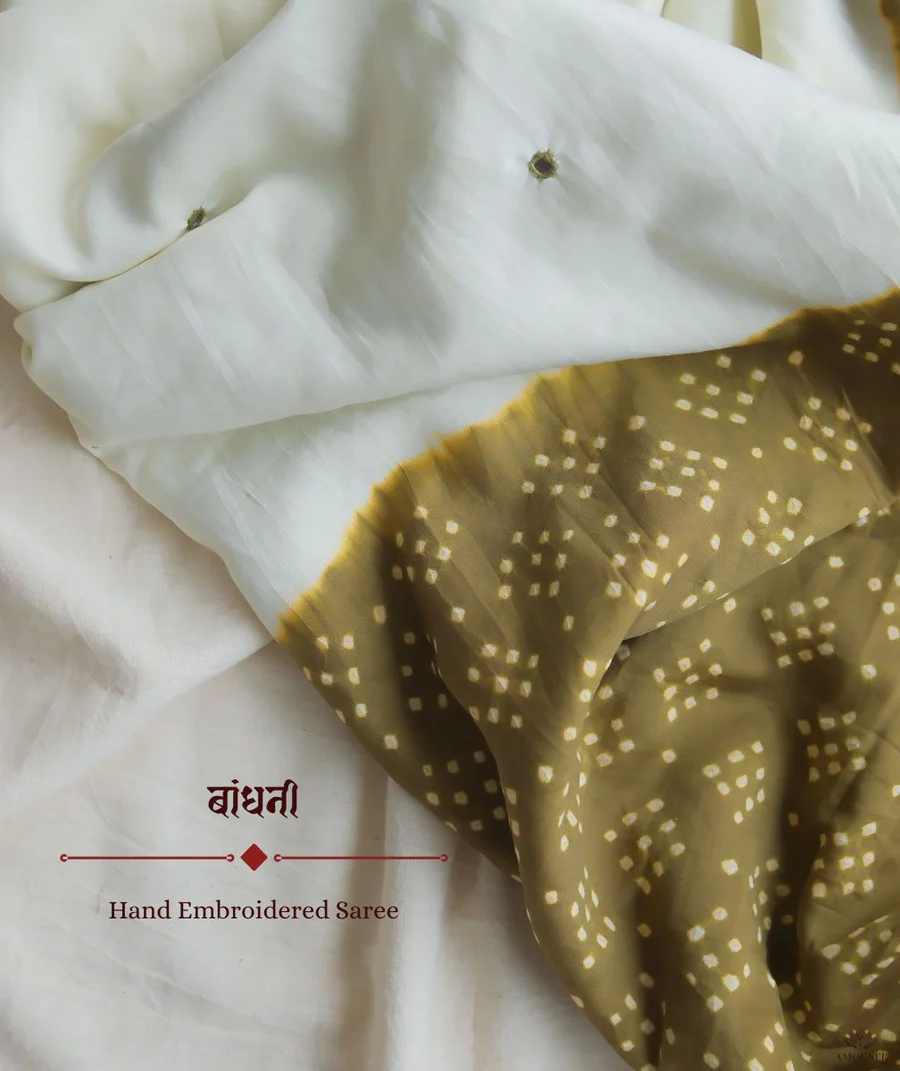
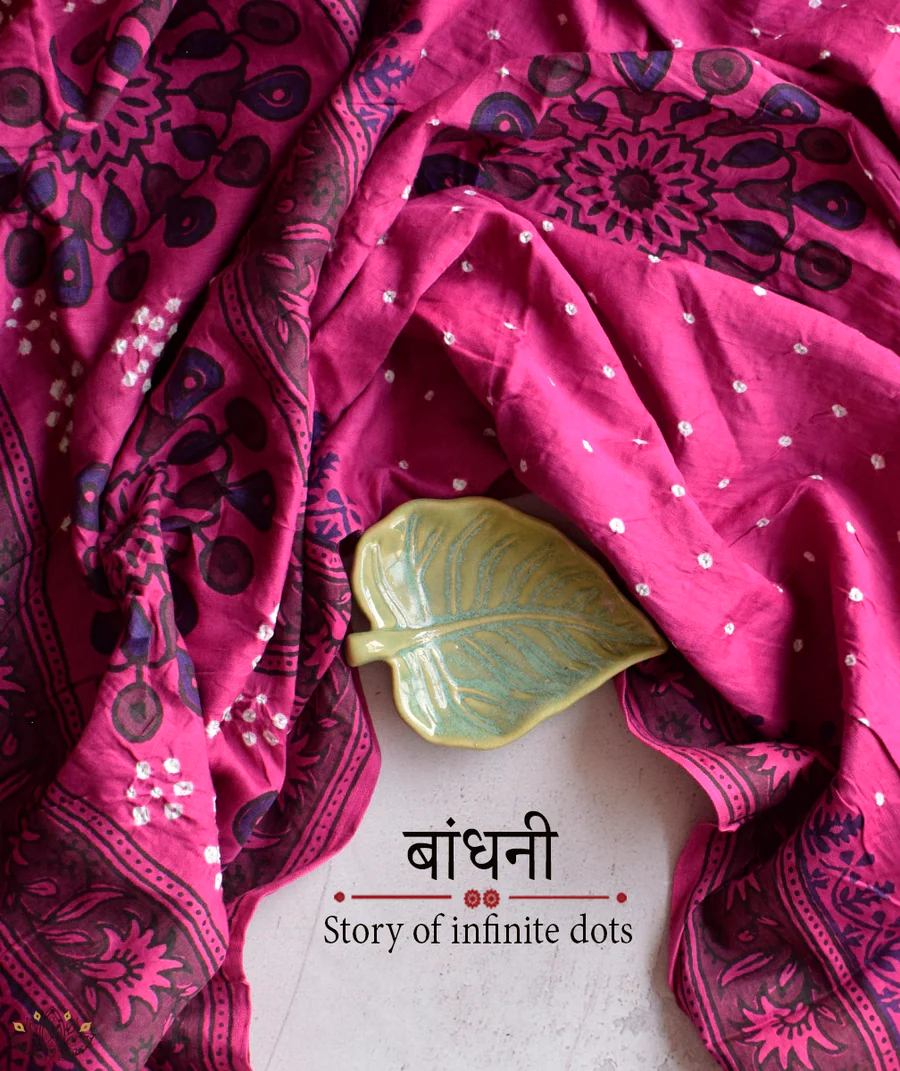
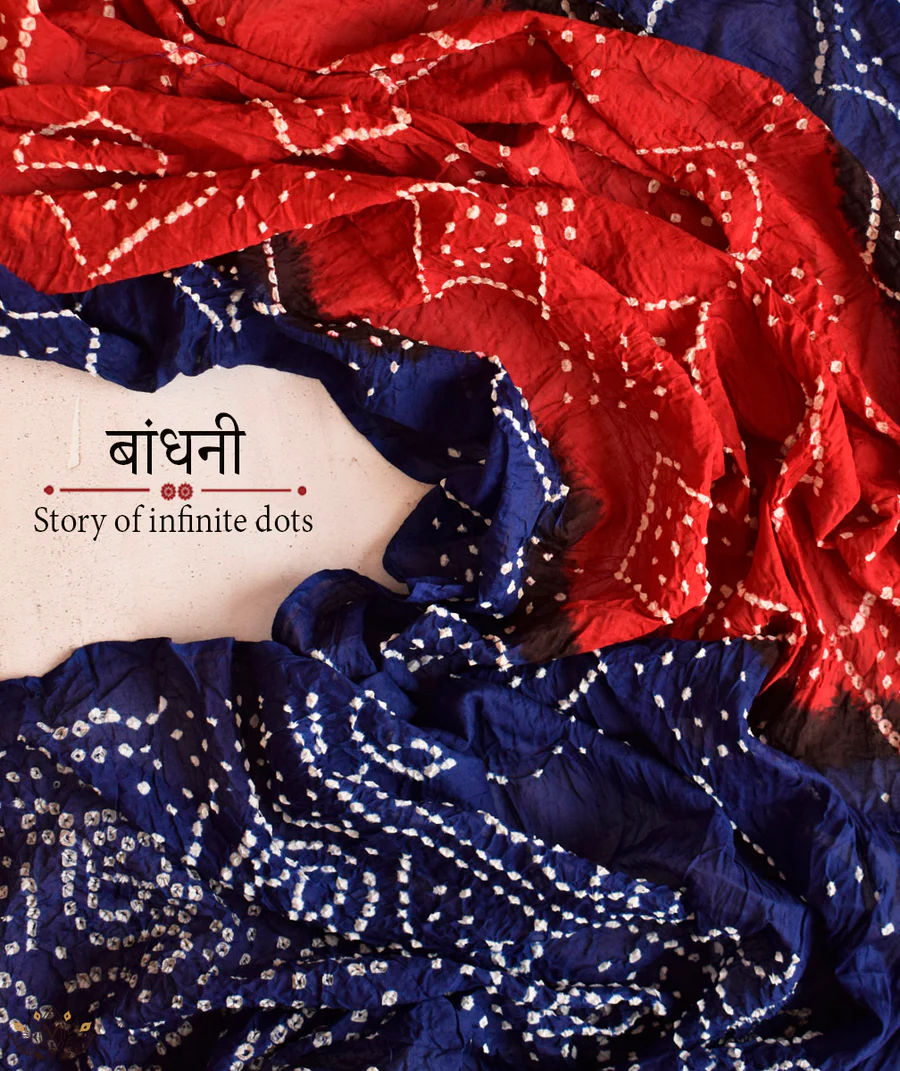
The pattern in bandhani is not drawn before the tying. It is calculated. The maker holds the complete design in her mind and ties accordingly, making no impression on the cloth beyond the accumulated constraints of the thread. The pattern exists, from the beginning of tying to the moment the cloth is opened after dyeing, only as potential.
The dyeing process adds another layer of calculation. Bandhani in its classic form is multi-coloured, which requires multiple dye baths applied in sequence. A three-colour bandhani requires the cloth to be tied, dyed, re-tied, dyed, re-tied, and dyed once more.
The untying is the revelation. After the final dye bath and the wash that removes excess colour, the binding threads are cut and the cloth is opened. What was latent becomes visible all at once the full pattern emerging as if it had always been there, which in a sense it had.
In Bhuj, a master Khatri craftsperson can read a finished bandhani cloth the way a reader reads a page following the sequence of tying, understanding from the dot pattern which dye bath came first, reconstructing the logic of the making from the evidence of the surface. The cloth is a record. Every dot is an act.