
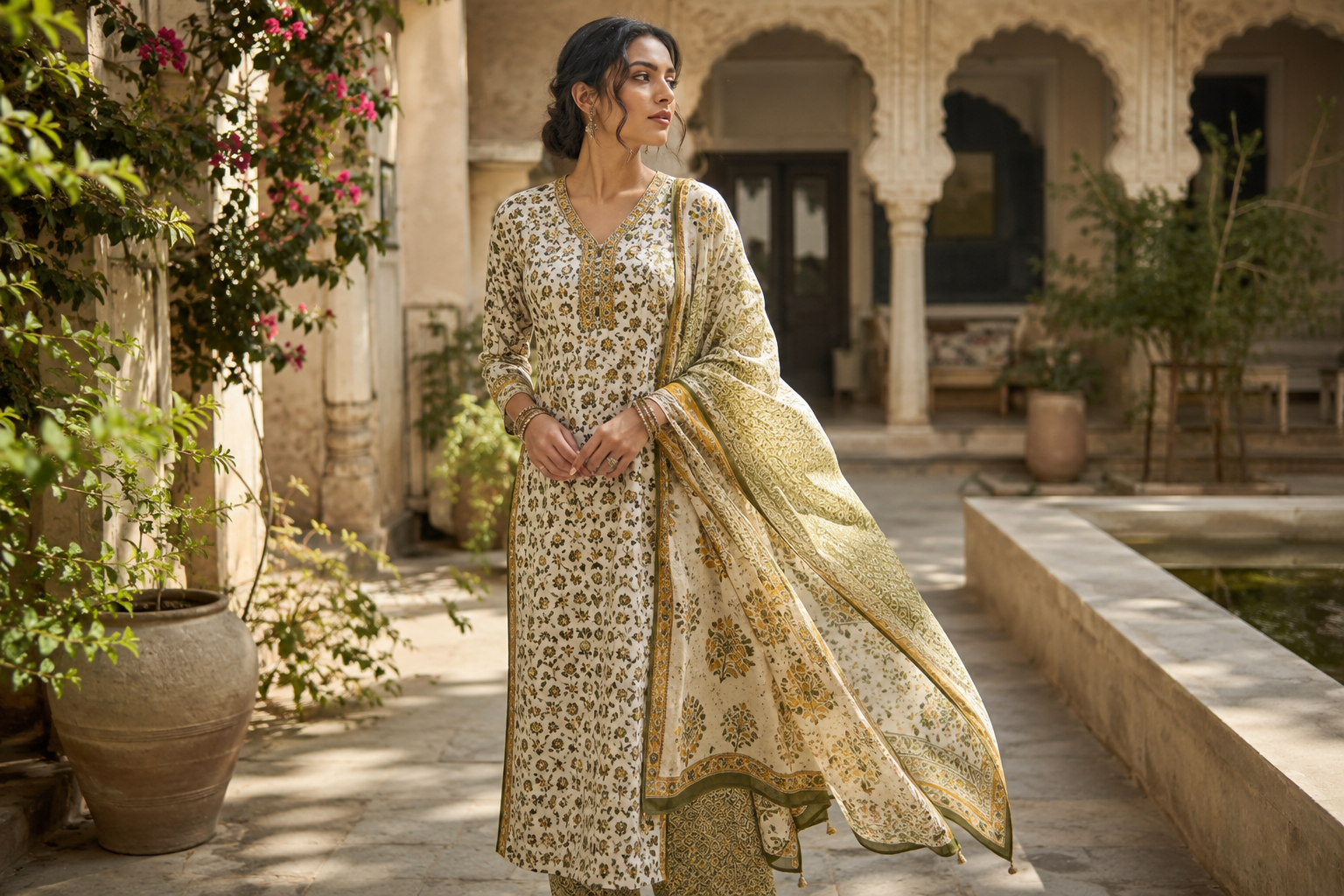
There is a particular quiet that belongs to a fabric freshly lifted from a dye vat damp, weighted, smelling faintly of earth and indigo. Not the quiet of absence. The quiet of something made slowly, with full attention, by hands that have learned to read the grain of a teak block the way a musician reads a score.
In Jaipur, this quiet has been practiced for more than half a century. When block printing in Rajasthan had fallen to a near-murmur artisans dispersed, workshops shuttered, the market moved on to faster certainties Anokhi chose to sit inside that silence and ask what it still had to say.
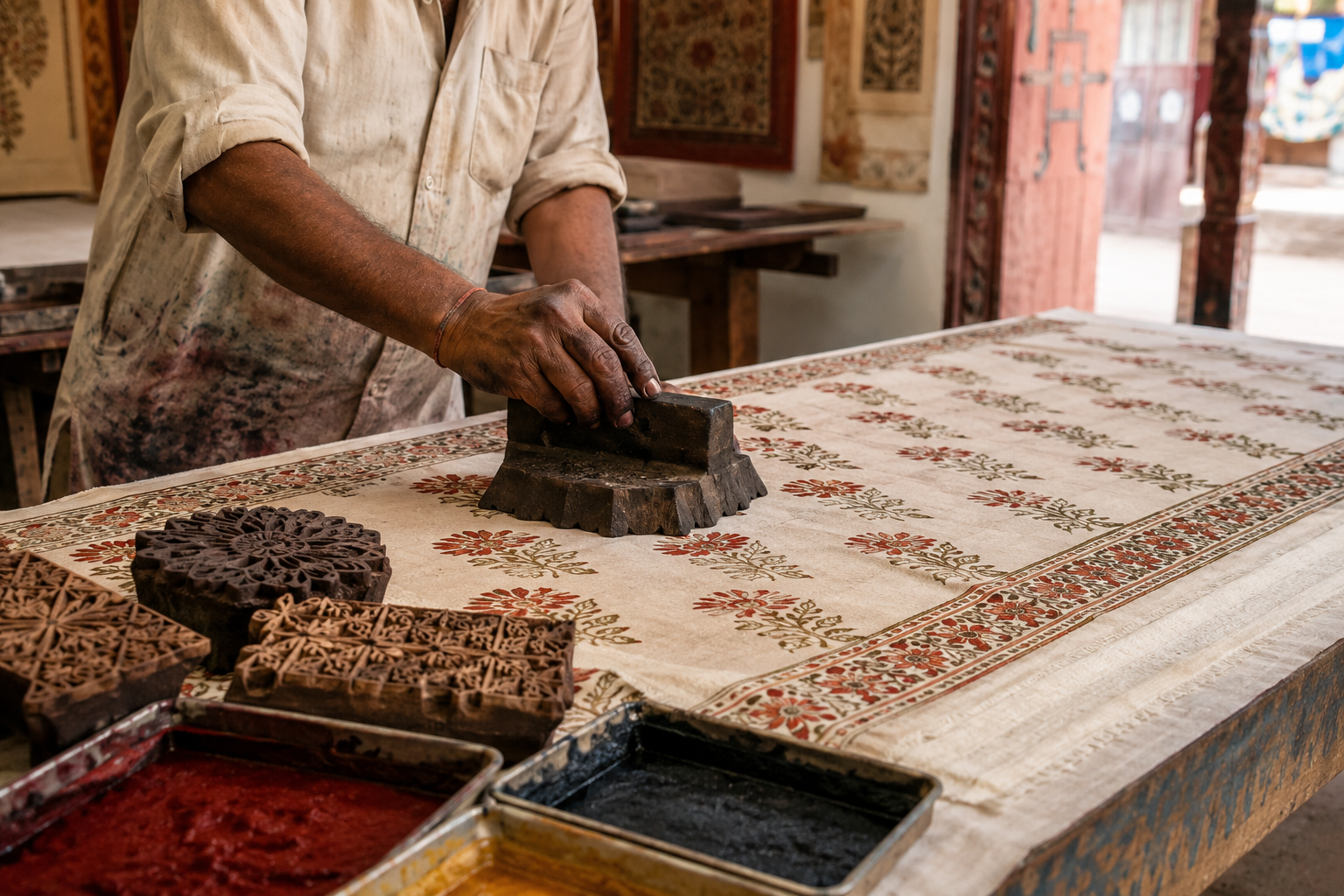
The answer came in cotton. Each Anokhitextile begins with a block carved from teak a wood chosen for its density, its resistance to the repeated impact of printing, and its ability to hold a fine edge without splitting over thousands of impressions. The blocks are carved by hand in workshops on the outskirts of Jaipur, using chisels of different widths to cut the motif in reverse into the wood's face: the lotus, the vine, the scalloped arch, the repeating boteh. A single complex block can take a master carver three days to complete. It will then print for years.
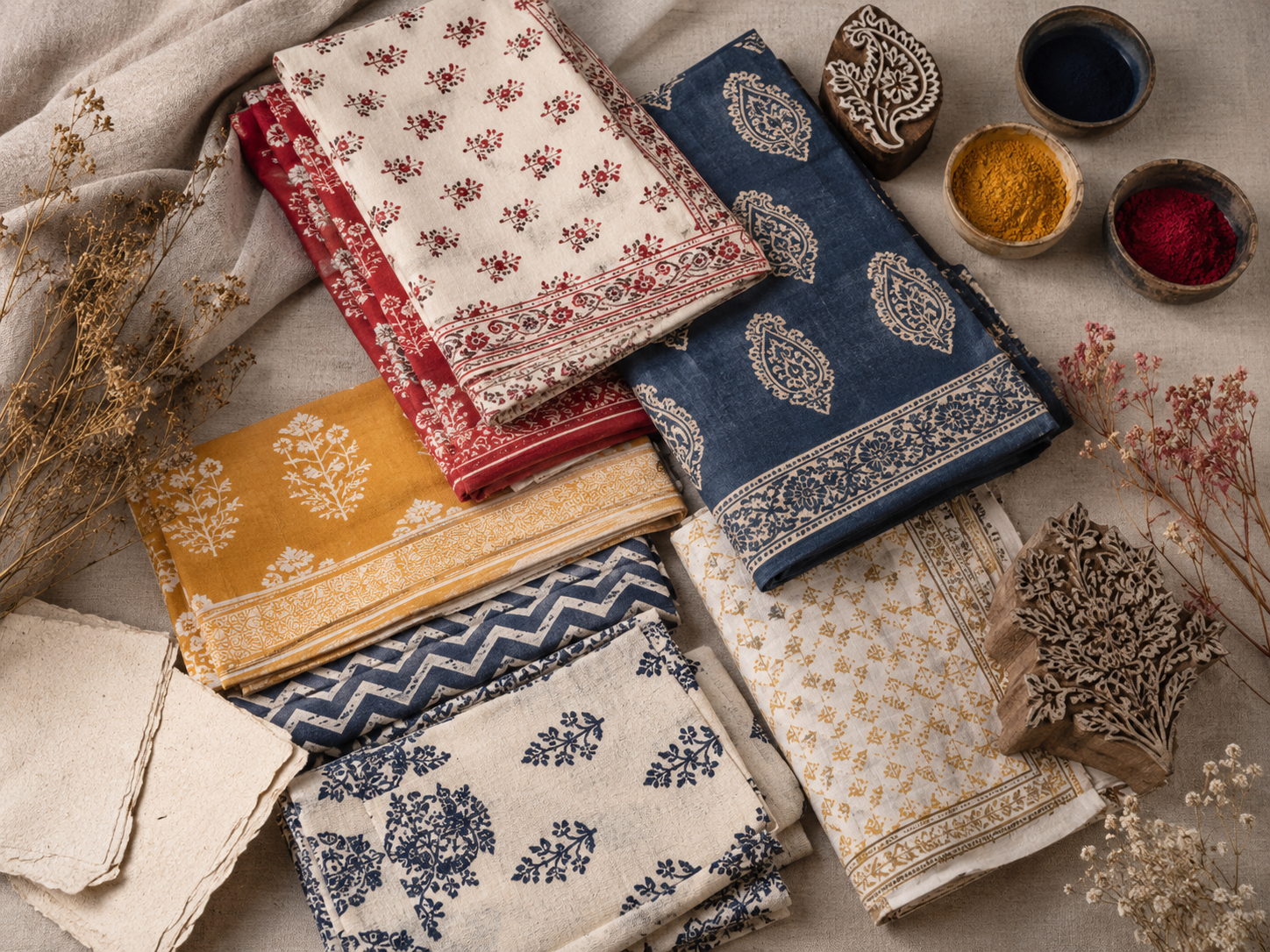
The cloth itself is prepared before the block ever touches it. Cotton is washed in a solution of harda myrobalan powder which opens the fibres and creates a tannin-rich ground that allows the dye to bond permanently rather than fade with the first wash. This step is invisible in the finished garment. It is entirely the point.
Printing is done on low tables, the karigar crouching, loading the block with colour on a padded ink pad and pressing it to cloth with a single sure motion, aligning the repeat by eye and by the ingrained memory of having done exactly this for twenty years. The motion is not mechanical. The block must be read each time its weight, the consistency of the ink, the absorbency of the cloth on that particular day and the impression adjusted accordingly. A print made by a machine is identical. A print made by a karigar is consistent the way a trained voice is consistent: unmistakably the same person, across thousands of performances, never quite the same twice.
Natural dyes indigo, pomegranate rind, turmeric, iron mordant are used wherever the formulation allows. The colour changes slightly over time, deepens, softens, grows more particular to the body that wears it. This is not a flaw the brand apologises for. It is the reason the brand exists.
There is a conversation underway in global luxury about what fashion is actually for. The question being asked this season quietly, persistently is not whether a garment is expensive, but whether it was worth the time of the person who made it. In that reckoning, Anokhi has always been ahead. Their collections do not announce themselves. They arrive the way a good letter does: precise, considered, already certain of what they mean to say.
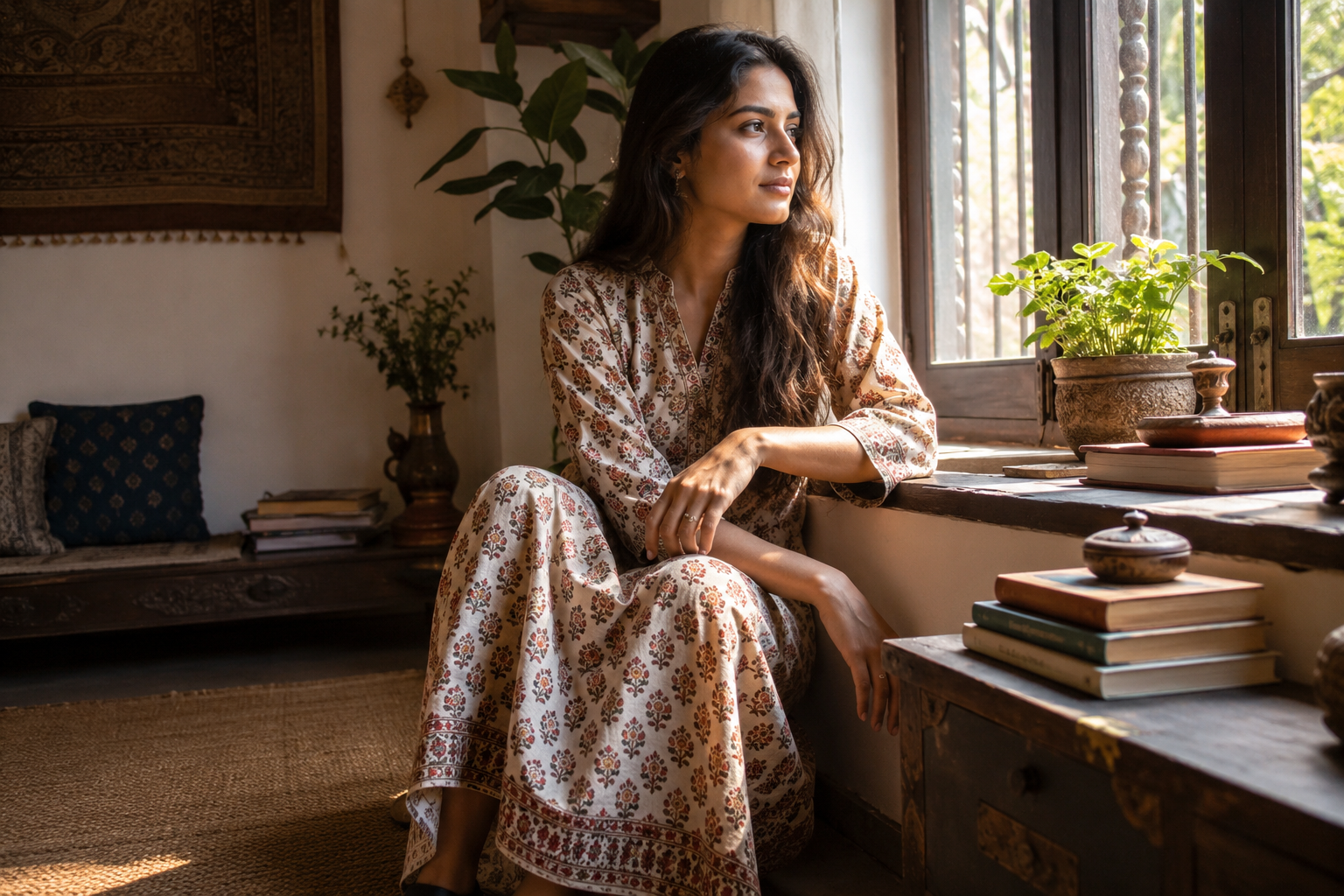
To walk into an Anokhi store there are now more than twenty-five, from Jaipur to London is to be reminded that the decision made in 1970 to print by hand and pay fairly and make slowly was not an act of nostalgia. It was an act of confidence.