
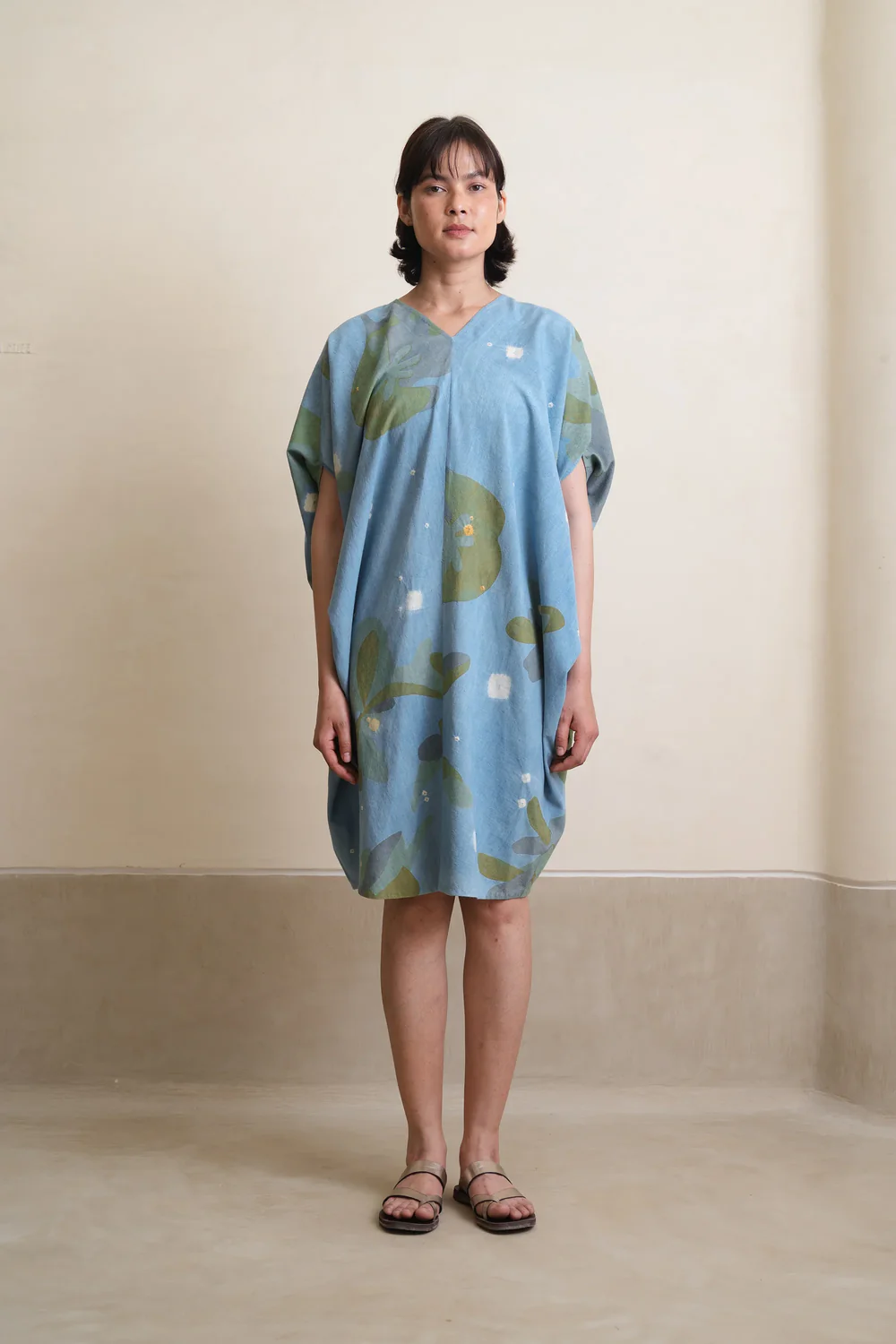
At the centre of what Shani Himanshu and Mia Morikawa built when they founded eleven eleven is a question about time: how long does a garment take to make, and does that time change what the garment is?
Their answer, worked out across collections made entirely from hand-spun, hand-woven textiles using natural dyes, is unambiguous. The cloth that took three months to produce from field to finished fabric the cotton grown without pesticides in Gujarat, hand-cleaned, hand-spun into yarn on a charka, woven on a handloom by a weaver in Kutch, dyed with indigo cultivated in Karnataka is a different cloth from the one a power loom produces in minutes. The difference is not merely in texture, though the texture is different. It is in the quality of the information stored in the material.
eleven eleven works with heritage techniques: hand spinning, handloom weaving, miniature tie-dyeing, hand painting, and quilting, using natural dye ingredients drawn from India's botanical tradition. Indigo. Turmeric. Madder root. Pomegranate rind. These dyes produce colours that evolve with washing and light in ways that synthetic dyes do not the indigo deepens and softens simultaneously, the turmeric's yellow becomes more golden over years, the madder's red shifts toward a warmth that was always latent in it. The garment you wear in ten years will be a different garment from the one you bought, and it will be more itself.
"The garment you wear in ten years will be a different garment from the one you bought and it will be more itself."
The silhouettes eleven eleven produces wide-cut trousers, long shirts, layered jackets, dresses with the particular falling quality that only handwoven cloth achieves are designed to work with the material rather than impose structure on it. Handwoven cloth has opinions. It falls in directions that reflect its weave. eleven eleven's designs let those opinions express themselves rather than fighting them with interfacing and synthetic structure.
The brand's engagement with its makers is not a supply chain footnote. Himanshu is a textile designer who came to the work through practice through years of working with weavers, understanding the relationship between warp and weft, between the decisions made at the loom and the quality of the cloth that emerges from them. Morikawa brings a Japanese design sensibility that finds natural alignment with Indian craft: the Japanese concept of mottainai the grief over waste, the sense that every material deserves to be used with care maps closely onto the slow-fashion philosophy eleven practices.

The traceable supply chain the brand has built means that each garment comes with the capacity for the wearer to know, specifically, where their cloth came from. This is not a marketing exercise. It is a claim about accountability the claim that fashion made with this level of transparency cannot be made irresponsibly, because the people who made it are too close to the people who wear it for irresponsibility to hide.
eleven eleven's price points reflect the reality of what their production costs. A hand-spun, hand-woven shirt dyed with indigo in a small workshop in Kutch costs more to make than a power-loom equivalent. The customer who understands what they are paying for is paying for a material culture that has survived industrialisation by finding wearers who could see the difference. Every purchase is a small act of preservation. The cloth remembers how it was made. The only question is whether the person wearing it is paying attention.