

The first appointment is not about the garment. It is about the body, the particular geometry of the person standing before the karigar, the way she holds her shoulders, where her waist actually sits versus where a standardised size suggests it should, the length of her arms from shoulder to wrist, the way she moves when she turns. A made-to-measure fitting has always begun this way, in every tailoring tradition in the world. What Rashika Mittal has done is insist that this beginning cannot be rushed, that the measurement is not a preliminary to the work but the first act of it.
Rashika Mittal is a Jaipur-based made-to-order label whose practice is built around the karigar as a named collaborator, not an anonymous producer. The embroiderers and fabric specialists who work with the studio are credited — their names visible in the label's communication, their skills described in specific terms rather than aggregated under the phrase "handcrafted." Tone-on-tone embroidery is the signature technique: intricate work executed in thread that matches or closely approaches the base fabric's colour, so that the embellishment is perceptible first as texture, only later as pattern. At a distance, the garment appears unadorned. Close up, it reveals everything.
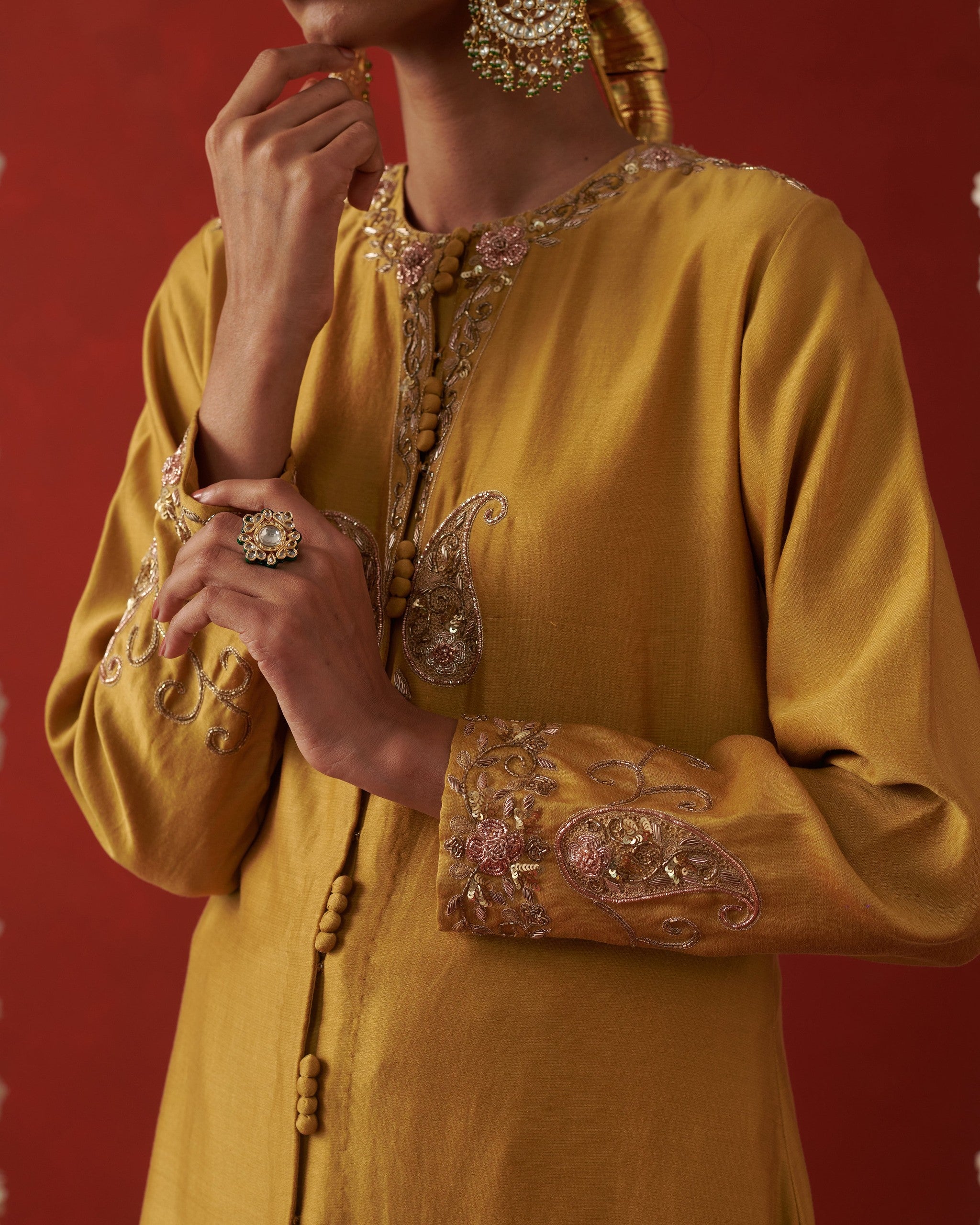
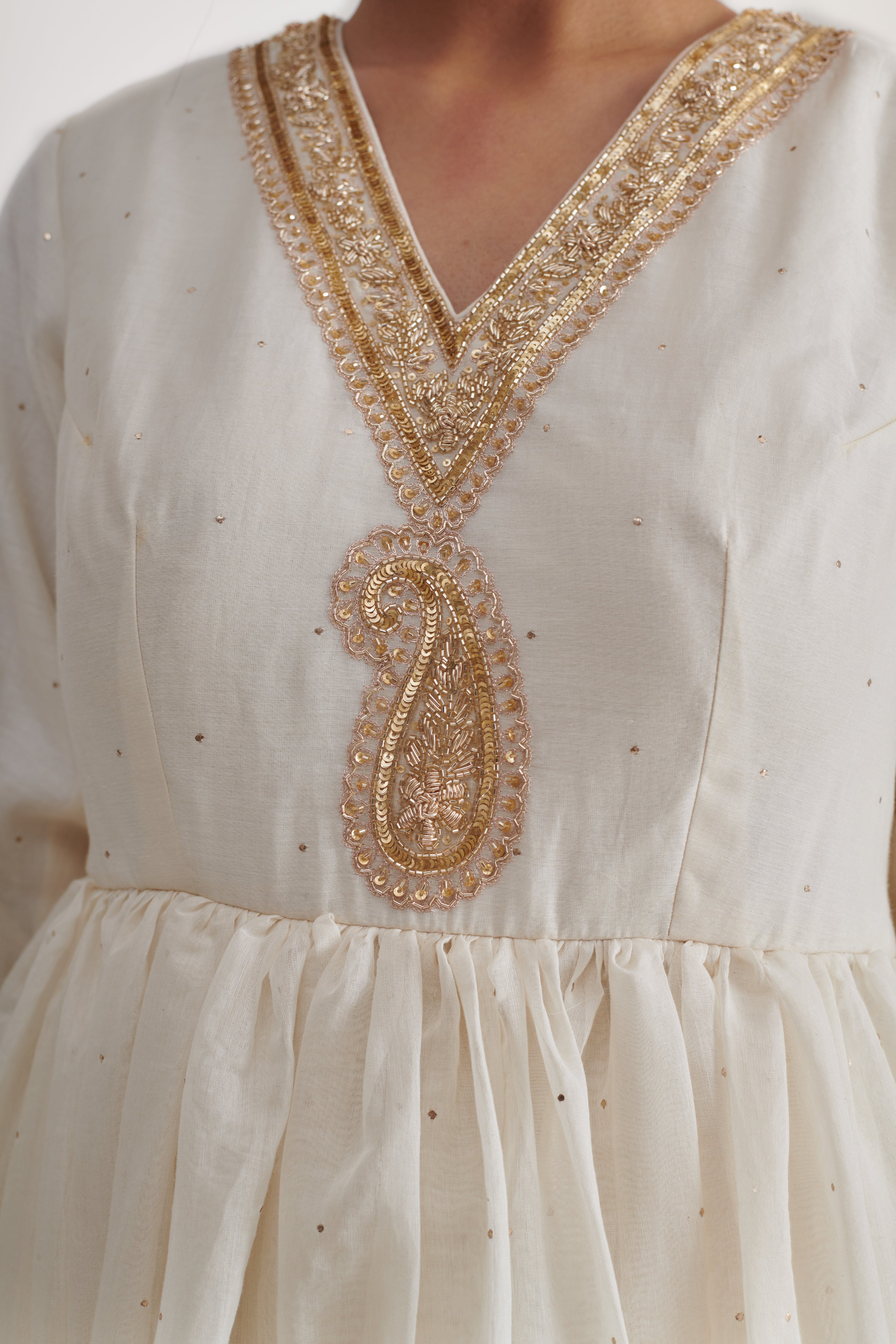
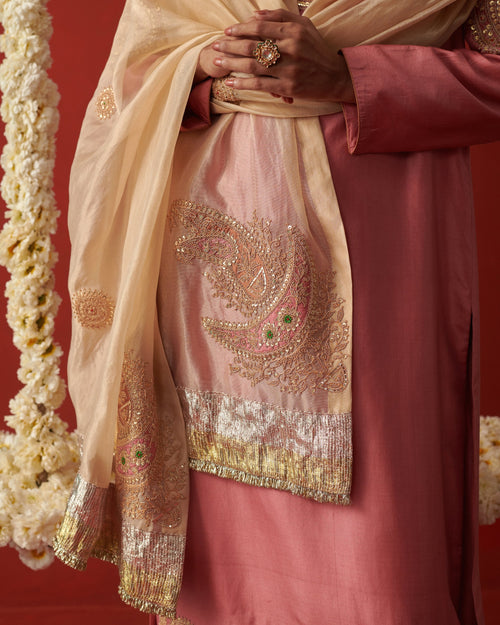
This restraint is a deliberate counter to the prevailing language of Indian festive fashion, which has long been organised around visible opulence embellishment that announces itself, that makes the garment's value legible from across a room. Rashika Mittal's garments require the wearer to invite proximity, to ask to look. The embroidery does not perform. It waits to be read.
The made-to-order model that governs the label's practice has implications that extend beyond fit. A garment ordered to a specific body and delivered in three to four weeks is a garment that cannot be returned to a rack when the season changes, that was never held in a warehouse absorbing the costs of overproduction, that required a karigar's hands only after a specific commitment had been made. The economics of made-to-order are the economics of sufficiency to make what is needed, for whom it is needed, when it is needed.
The global fashion conversation in 2026 has turned decisively toward karigar transparency the demand, from buyers across India and internationally, to know specifically who made a garment and what that person's name and skill is. This is not a new principle but it is newly mainstreamed, and Rashika Mittal's practice has anticipated it without requiring the conversation to arrive first. The karigars were credited before the crediting was fashionable.
The embroidery at the level produces tone-on-tone work in silk thread on silk or crepe, the stitches so fine they read as woven pattern takes several weeks for a single garment. A heavily embroidered kurta set may represent forty to sixty hours of work by a skilled hand. The final fitting, when the garment is adjusted to the body for which it was made, takes perhaps an hour. The three weeks of embroidery preceded it. The body the garment was made for stands at the centre of all of it.