
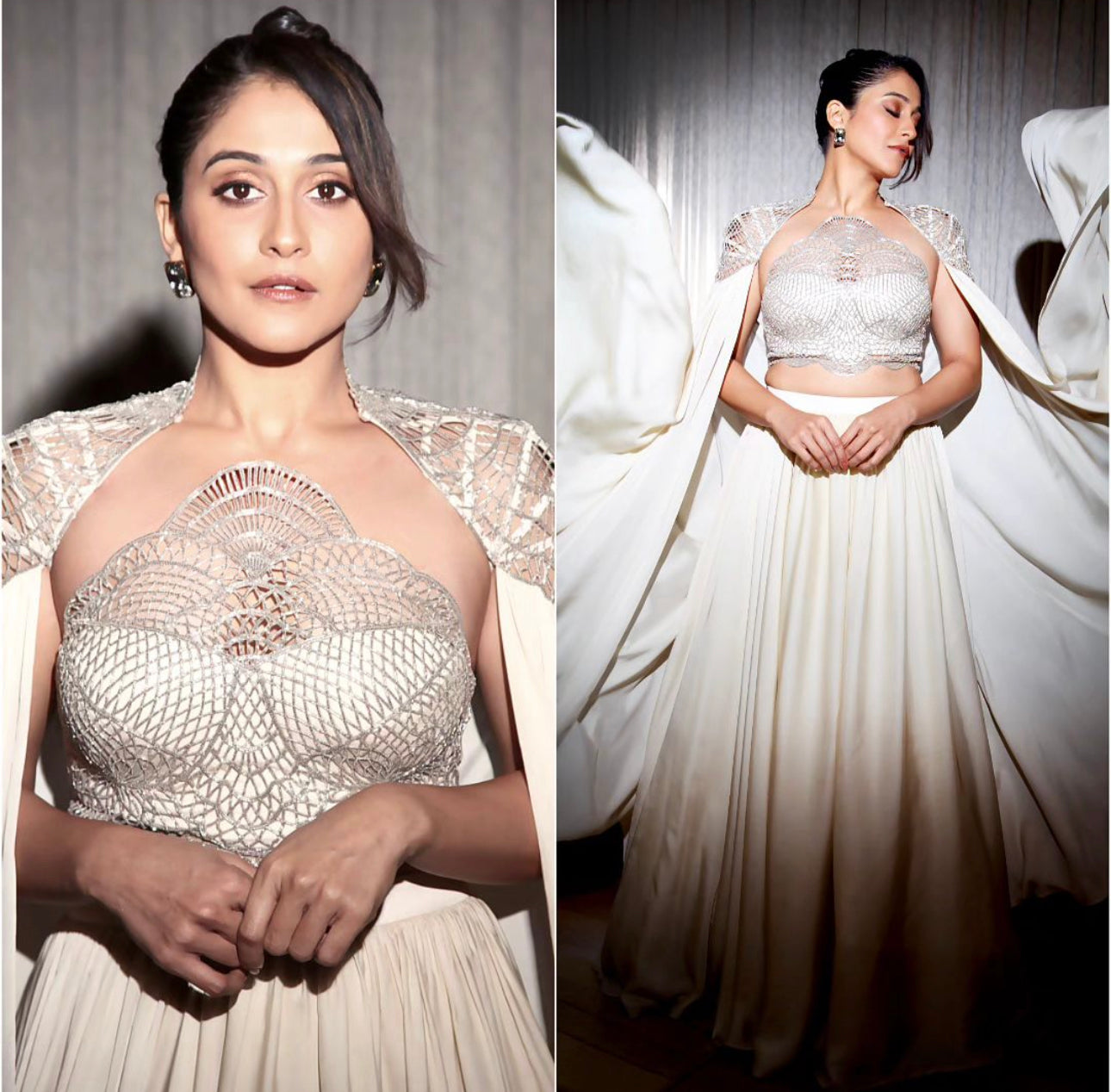
Gunjan Arora founded Aggunj on a premise that is deceptively simple and operationally demanding: that the inside of a garment matters as much as the outside.
The philosophy manifests in the way the brand's pieces are finished the seams, the linings, the interior construction that a wearer encounters only when dressing and undressing but it extends beyond the technical into the ethical: the women artisans whose hands produce the work are as visible in the brand's narrative as the garments they make.
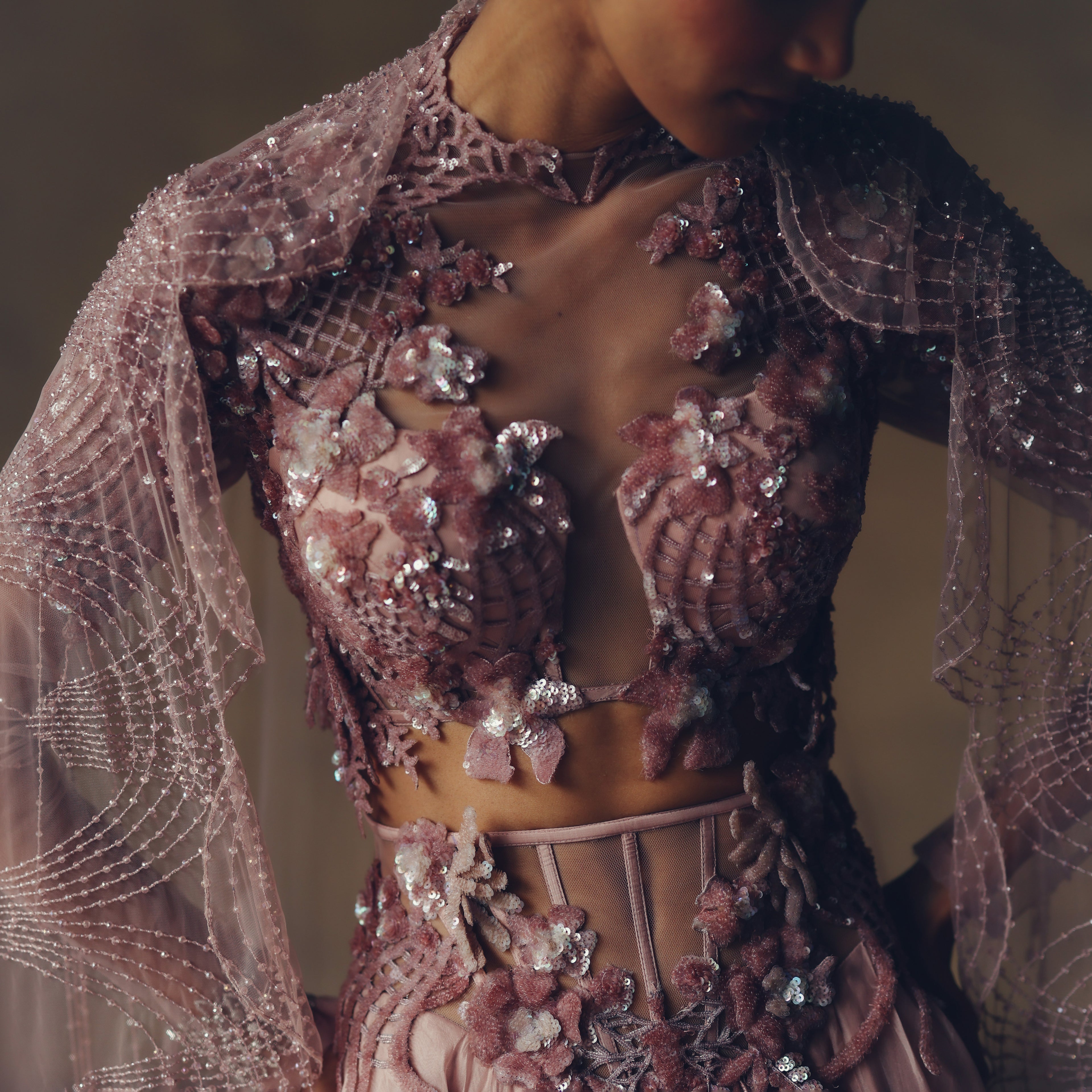
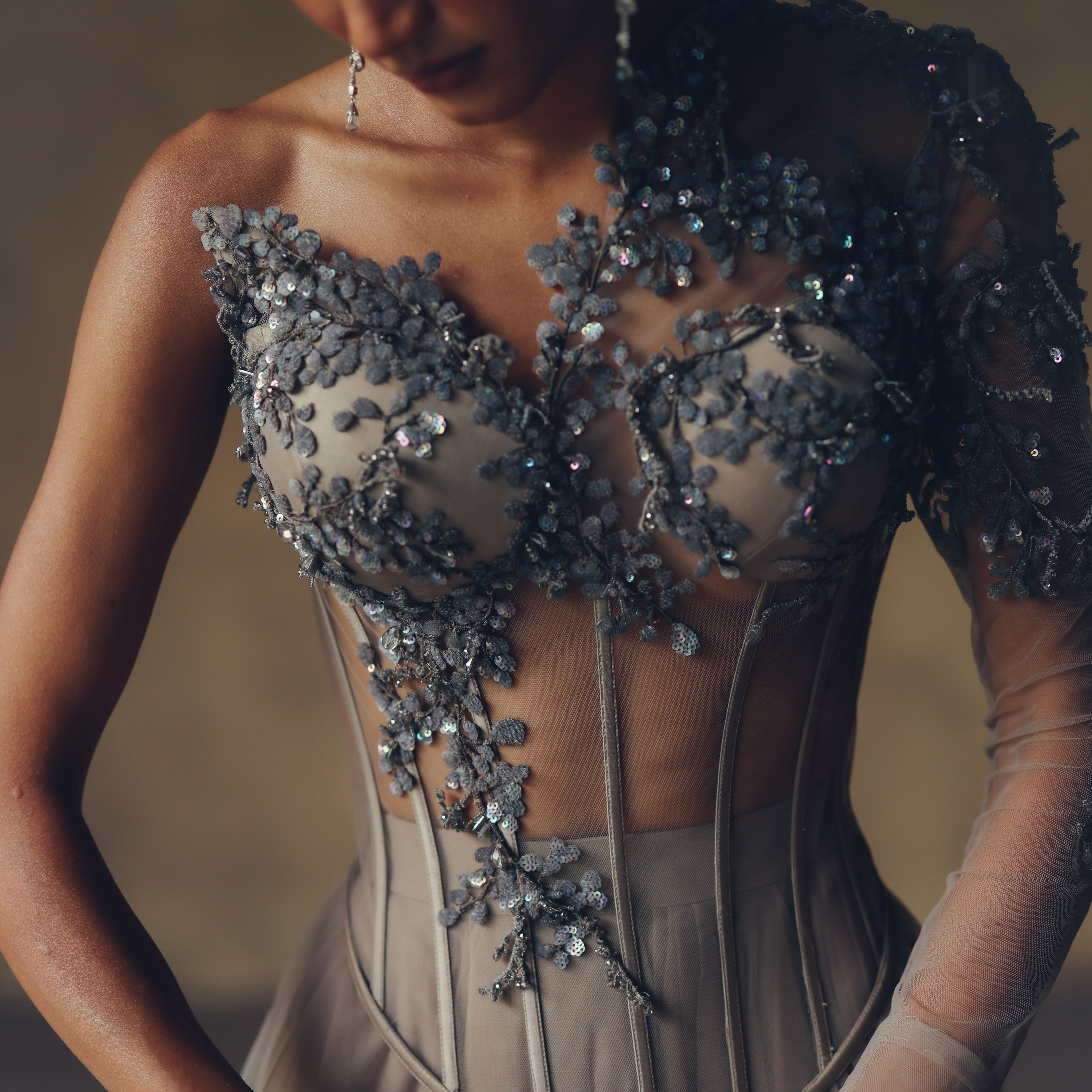
The signature technique is a floral appliqué produced from leftover sequins and fabric offcuts material that most production processes discard as waste and that Aggunj treats as raw material for a parallel creative layer. The appliqué flowers that appear on the brand's pieces are not decorative in the ornamental sense. They are structural decisions: each one placed at a specific point on the garment to shift the eye, to create a break in the field of embellishment that makes the rest of the piece more legible. They are also, given their origin in waste material, a statement about what luxury can be made from.
"To buy Aggunj is to buy into a relationship with making that extends the intelligence of the atelier into the wardrobe and then outward into the world."
The aesthetic language of the pieces richly layered, quietly bold, designed for the woman Arora describes as passionate, spiritual, dynamic, and deeply rooted occupies a space between ceremonial and contemporary that is genuinely difficult to sustain. Most Indian luxury fashion collapses toward one pole or the other: either it becomes costume, all reference and no wearability, or it becomes contemporary to the point where its Indian identity is vestigial. Aggunj does neither.
The craft involved in producing this balance is significant. The embellishment on each piece is hand-applied by a team of women artisans whose relationship with the work is not that of factory workers meeting a quota but of craftspeople applying specific skills to specific creative problems. The sequin-work, the thread-work, the appliqué: each technique requires the kind of trained fine-motor attention that develops over years of practice, and that produces results a machine cannot replicate not because machines cannot lay sequins on fabric, but because the decision about where each sequin goes requires a form of spatial intelligence that remains stubbornly human.
The brand's ethos of female empowerment is expressed here not through a campaign but through employment terms. The artisans who produce Aggunj pieces work in conditions that acknowledge their skill as a professional specialisation. The finishing work they do is valued not as cheap labour but as the expensive, rare capability that it is.
A well-made Indian luxury garment carries three timelines simultaneously: the timeline of the raw material, the timeline of the making, and the timeline of the wearing. Aggunj's pieces are notable for the density and integrity of the first two the appliqué flowers carry the memory of the offcut fabric from which they were made the hand-stitching carries the time of the artisan who placed it. The third timeline, the wearing, is where the wearer adds her own duration to the object.
What Arora has built is a brand that asks its wearer to understand a garment as a record of the hands that made it, the materials that went into it, the decisions about what to do with what was left over. Finishing the inside is the beginning. Everything else follows from there.