
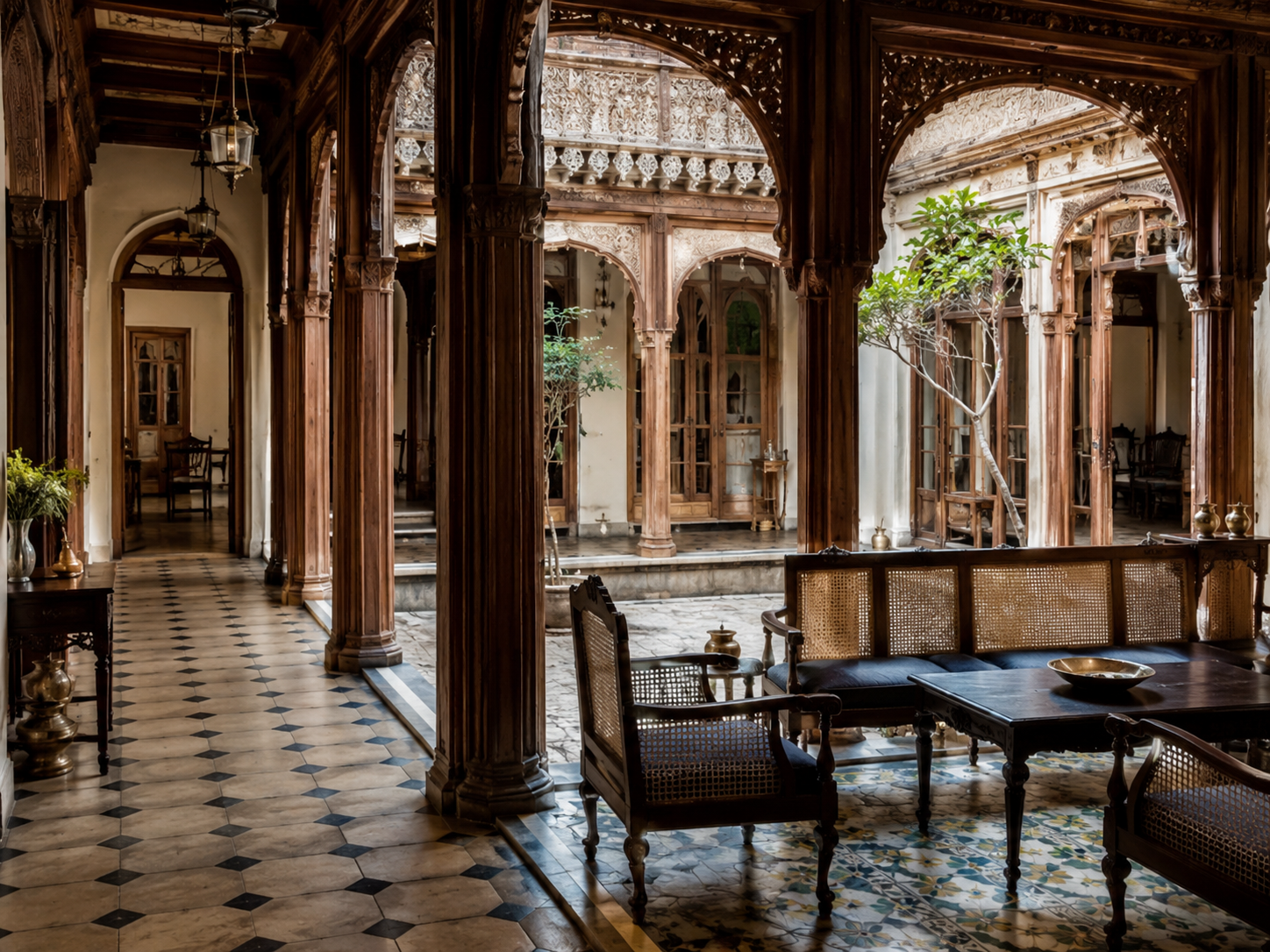
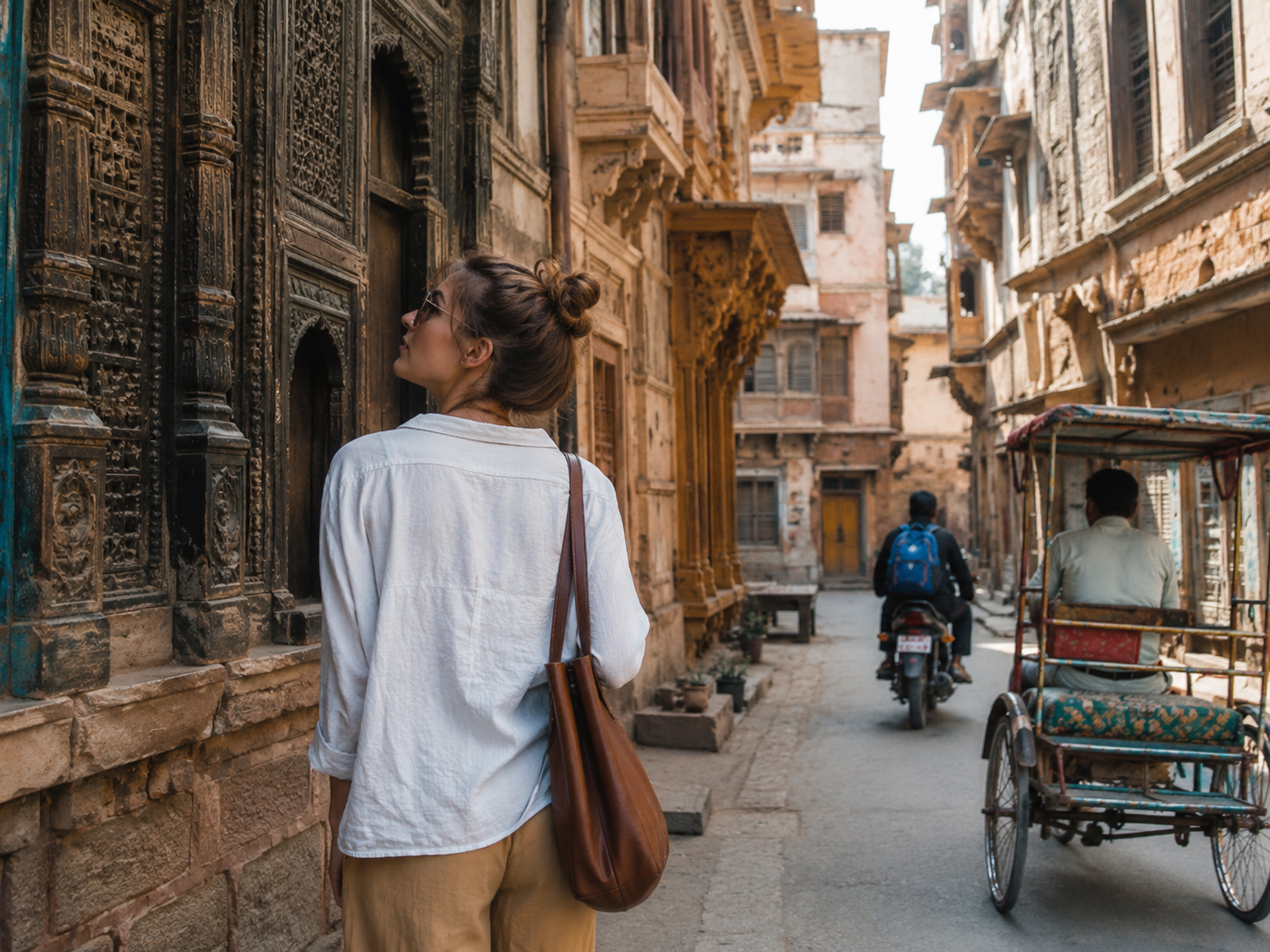
Ahmedabad moves. The city of merchants and mills, of Gandhi and the great textile industry, of the old walled city that UNESCO spent a decade recognising it has always moved, accumulated, added new floors to old buildings, widened its lanes into highways. Ahmedabad moves the way successful cities do: forward, and fast.
Against this, on a quiet stretch of road in the old city, stands a house that has chosen not to. Built in 1924 for a wealthy textile magnate of the Mangaldas Girdhardas family, The House of MG has been in continuous occupation for over a century first as a private residence, then as a hotel, always as a place where the particular pace of Gujarati domestic life is preserved rather than accelerated.
The house was restored with a principle that guided every decision: nothing new that could not have been made by an Ahmedabad craftsman. The furniture is handmade, primarily from reclaimed timber and repurposed architectural elements rescued from demolished havelis in the old city.
The textiles are handwoven, the bed linens block-printed, the cushion fabrics sourced from weaving clusters in Patan and Ahmedabad itself. Among the craft traditions represented in the property is Patola silk, the double ikat weave for which Patan is famous, and which is among the most technically demanding textiles produced anywhere in India.
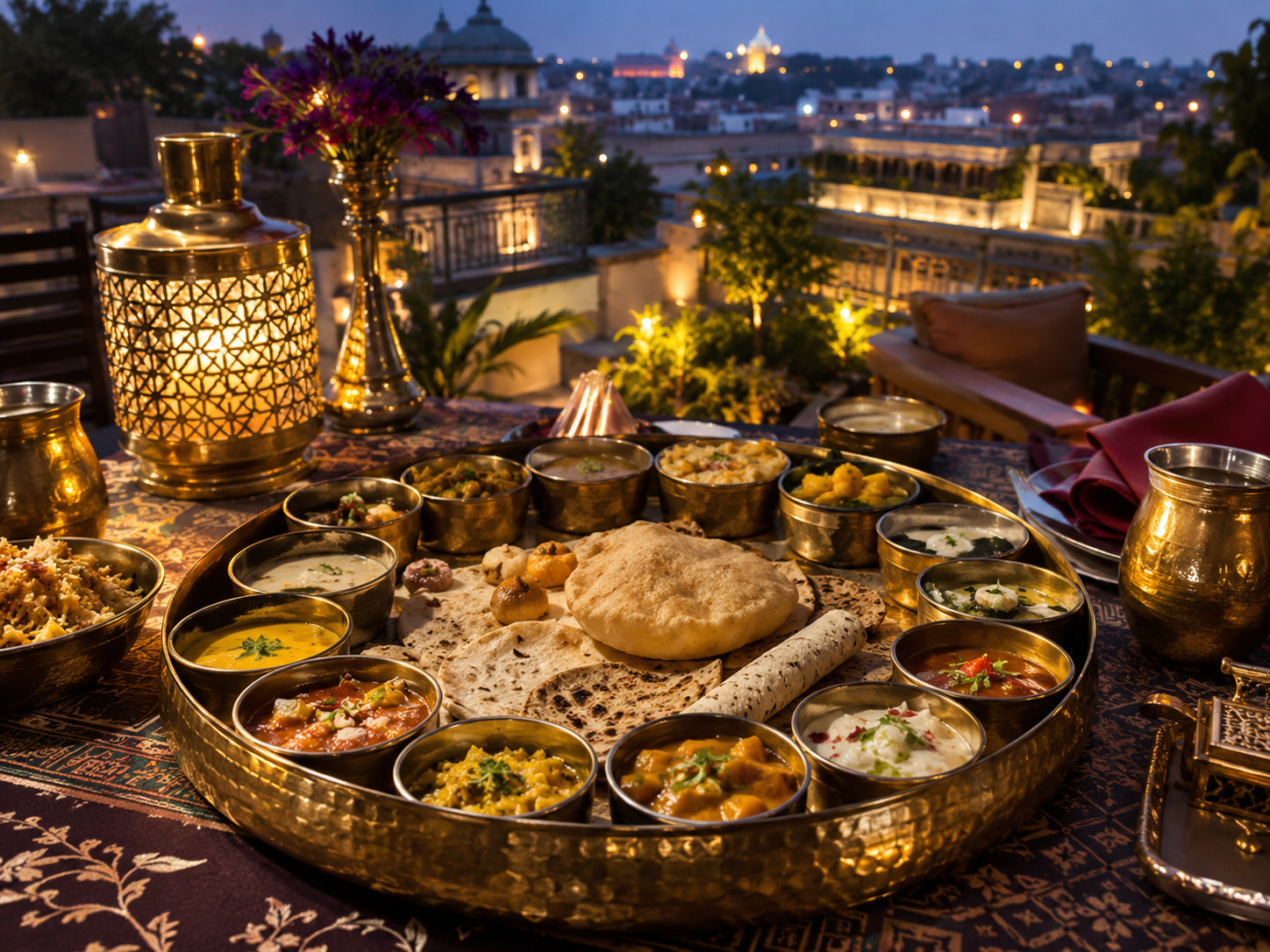
Agashiye, the rooftop restaurant, has served Gujarati thali for decades with the same commitment to doing the thing properly. Not tradition as nostalgia but tradition as argument: that this cuisine, at this pace, eaten in this order, is worth doing well.
As India rises to the top of global heritage travel rankings, the question for every considered traveller is no longer which hotel is finest, but which one is best itself. The House of MG has never had to answer that question.