

In 1975, in the Ajmer district of Rajasthan, two institutions not normally associated with village artisans the Indian Institute of Management in Ahmedabad and the National Institute of Design began a project that would spend several years working with the Regar community of Jawaja. The Regar are hereditary leather workers, a community whose traditional occupation involved processing hides for agricultural use making the leather shoes, water vessels, and harnesses that the farming communities of rural Rajasthan required. Their skill was functional and invisible, sustaining the local economy without participating in the urban market economy that was reshaping the country.
What the Jawaja Project did slowly, over years, through design workshops and market research and the kind of honest failure that large institutions usually edit out of their reports was attempt to understand what the Regar leatherwork could become if the gap between its skill and the urban market were bridged. Not what the urban market imagined rural artisans could make, which tends toward the decorative and the souvenir-like, but what a community of highly skilled leather craftspeople, working in their own tradition, could produce that would carry value in a world they had not yet accessed.
Jawaja Leather Craft, which continues this work, produces objects whose quality reflects this lineage: bags and belts and small goods in vegetable-tanned leather, with the hand-stitching that is one of the most durable forms of leather joining available, produced by craftspeople whose relationship with the material goes back further than living memory. The leather used is locally sourced and traditionally tanned vegetable tanning rather than chrome tanning, a slower process that produces leather which ages differently, developing a patina that chrome-tanned leather cannot produce.
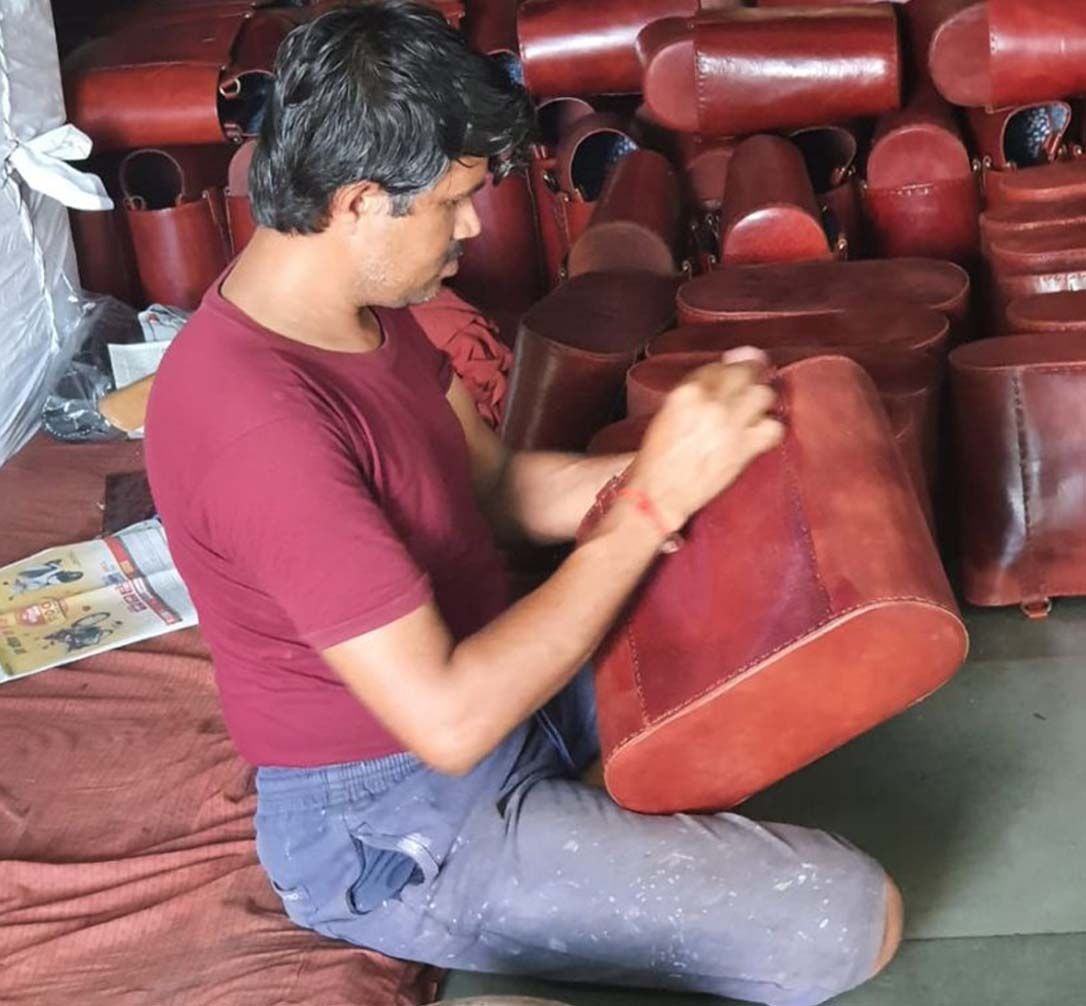

The contemporary market's turn toward provenance and the traceable maker the demand, now mainstream across global luxury, to know where an object came from and whose hands made it is not a new idea to the Regar community of Jawaja. Their craft has always been signed by the hand that made it, the specific stitching pattern that identifies one craftsperson's work from another's. They did not need the provenance movement to tell them their work had an author.