

There are jewellers, and then there are custodians of a tradition. Birdhichand Ghanshyamdas, established in Jaipur in the 19th century, belongs unambiguously to the second category. For generations, the house has been the preferred jeweller of Indian royalty, its uncut polki diamonds and enamel work representing the apex of a craft tradition that has no peer globally. In the contemporary luxury market, the Birdhichand name carries the weight of provenance that new money cannot purchase.
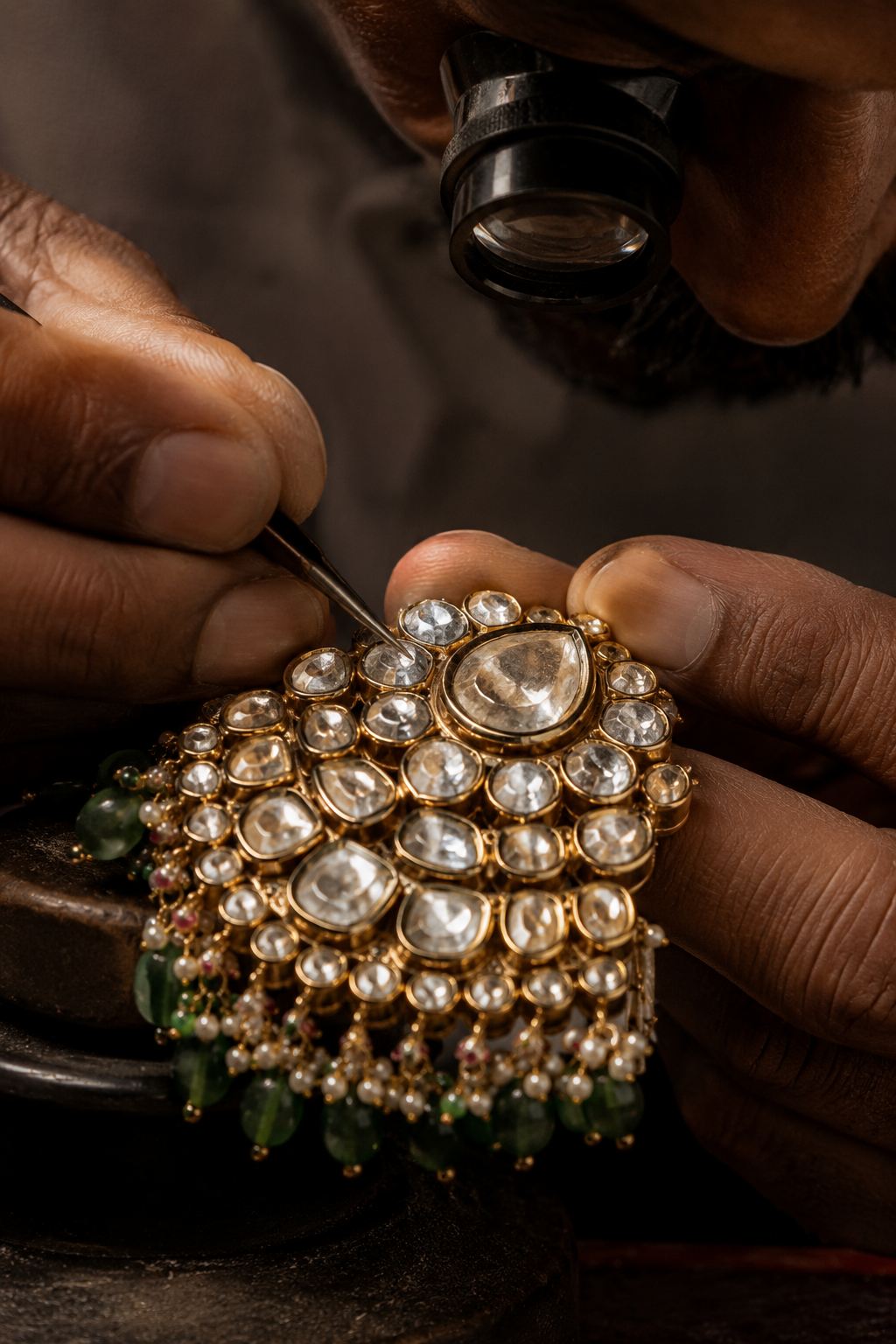
The house's philosophy has not changed in two centuries, because it does not need to: polki diamonds uncut, set in gold with the natural surface of the rough stone preserved carry a warmth and luminosity that modern brilliant-cut diamonds cannot replicate. The kundan-meenakari technique applying enamel to the reverse of a gold setting while securing uncut diamonds in the front is among the most technically demanding in the world's jewellery traditions, and Birdhichand's craftspeople are among its last masters. Sustainability, for a house of this age, is inherent: the tradition is itself the practice, and preserving it is the most important environmental act the brand can undertake.
Birdhichand's collections are not seasonal in the fashion sense they are accumulations of mastery, released when they are ready. Parure sets that might require eighteen months of craftwork; individual pieces where the polki diamond arrangement is itself the design. The bridal collections are legends in Indian luxury: necklaces, maangtikkas, and haath phools that are commissioned by families who understand that a Birdhichand piece is not bought but inherited. International collectors, museum acquisitions, and the bridal jewellery of some of India's most prominent weddings attest to the house's continued authority.
Birdhichand Ghanshyamdas is a reminder that the deepest luxury is not novelty but continuity the transmission, across centuries, of the highest human skill. In preserving the polki and kundan-meenakari tradition at its most exacting level, the house performs an act of cultural stewardship that transcends commerce.