
Perfume capsules are small, single-use pods of scents designed to replace the glass bottle altogether, and are becoming the default way a certain kind of traveler and desk-bound professional carries fragrance. They solve three problems at once: spillage, TSA anxiety, and the dead weight of a 100ml bottle in a bag built for a laptop. That's not a trend prediction, that is already happening in carry-ons across Delhi airport security lines.
Perfume capsules solve a problem the industry never quite fixed
Glass bottles were never designed for movement. They were designed for the dressing table. The moment perfume started traveling, in totes, gym bags, the outside pocket of a backpack next to a phone charger, the format started failing like leaks ruin laptops and atomizers jam. A 50ml bottle takes up space that a boarding pass and a passport already claim. Capsule formats, small individually sealed pods that snap or twist open for a single application can remove the fragility entirely. Here, there is nothing to shatter and nothing to leak, because each capsule holds one use and nothing more. It's a packaging problem solved by shrinking the unit and not by re-engineering the juice inside it.
Anyone who has cleaned Chanel No. 5 out of the lining of a suitcase understands the appeal instantly. It's not a hypothetical inconvenience. Airline baggage handlers, temperature swings in a car boot, a toddler grabbing a bottle off a bathroom counter glass fails in a dozen small, specific ways that a sealed capsule simply can't. Editors on our Travel & Living desk have started packing capsules by default for any trip under a week, the same way they'd pack a phone charger. It has become that unremarkable.
The distinction that matters: Capsule versus Rollerball versus Travel Spray
People conflate these three, and they shouldn't, because the differences change how you'd actually use each one.
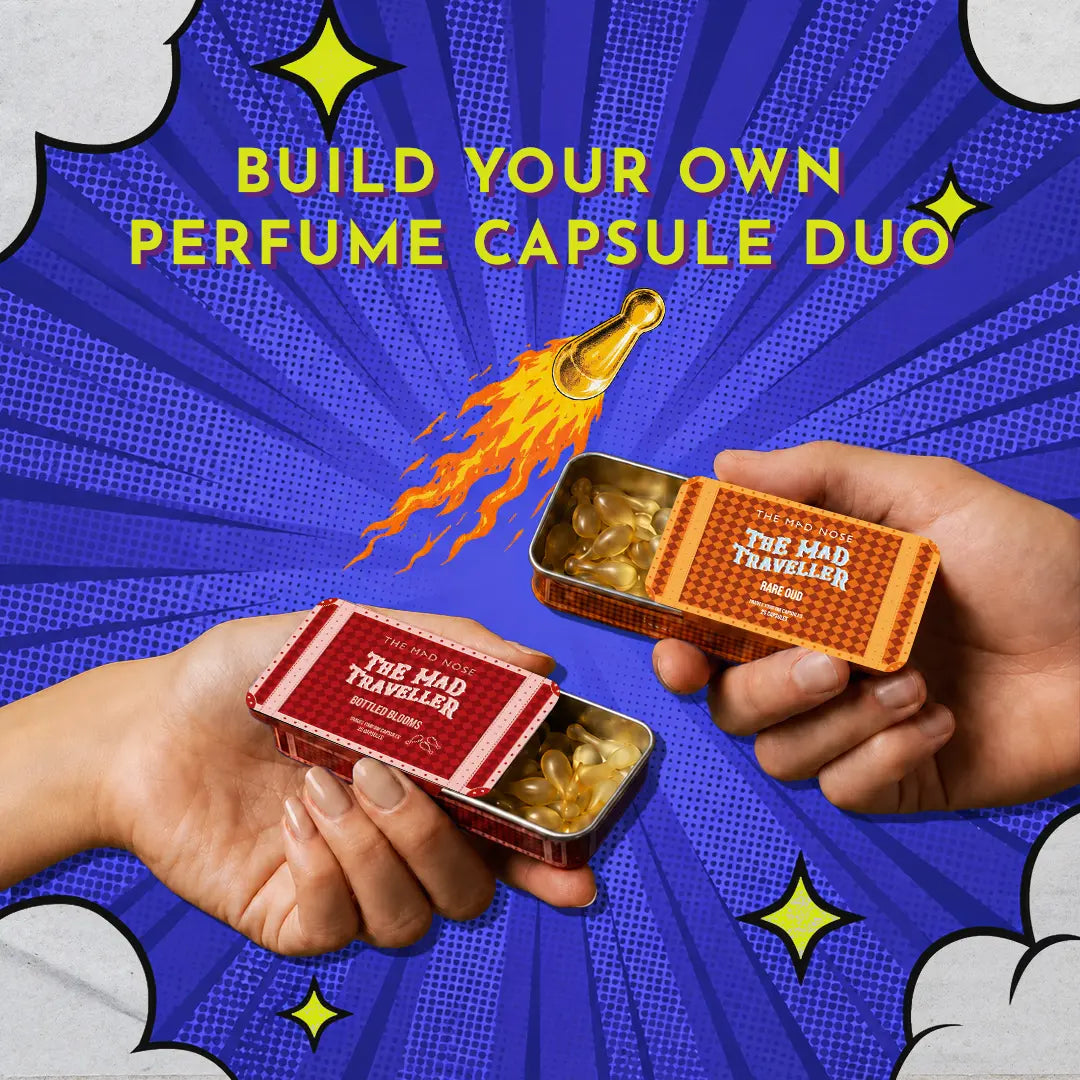
Perfume capsules: single-use, sealed pods (often biodegradable), no re-application possible from the same unit, zero cross-contamination between scents, TSA-friendly because there's no liquid volume in the traditional sense to declare.
Rollerball: Refillable, reusable, but prone to oxidizing once opened repeatedly and are exposed to air over weeks
Travel Atomizer Spray: refillable and familiar, but still glass or plastic, still spillable, still subject to the 100ml liquid rule if not decanted carefully
If the criterion is "will this leak in my bag between now and Thursday," capsules win outright. If the criterion is cost-per-use for someone who wears the same scent daily for months, a full bottle still wins. Different tools, different jobs.
The category is being built by brands, not just consumers
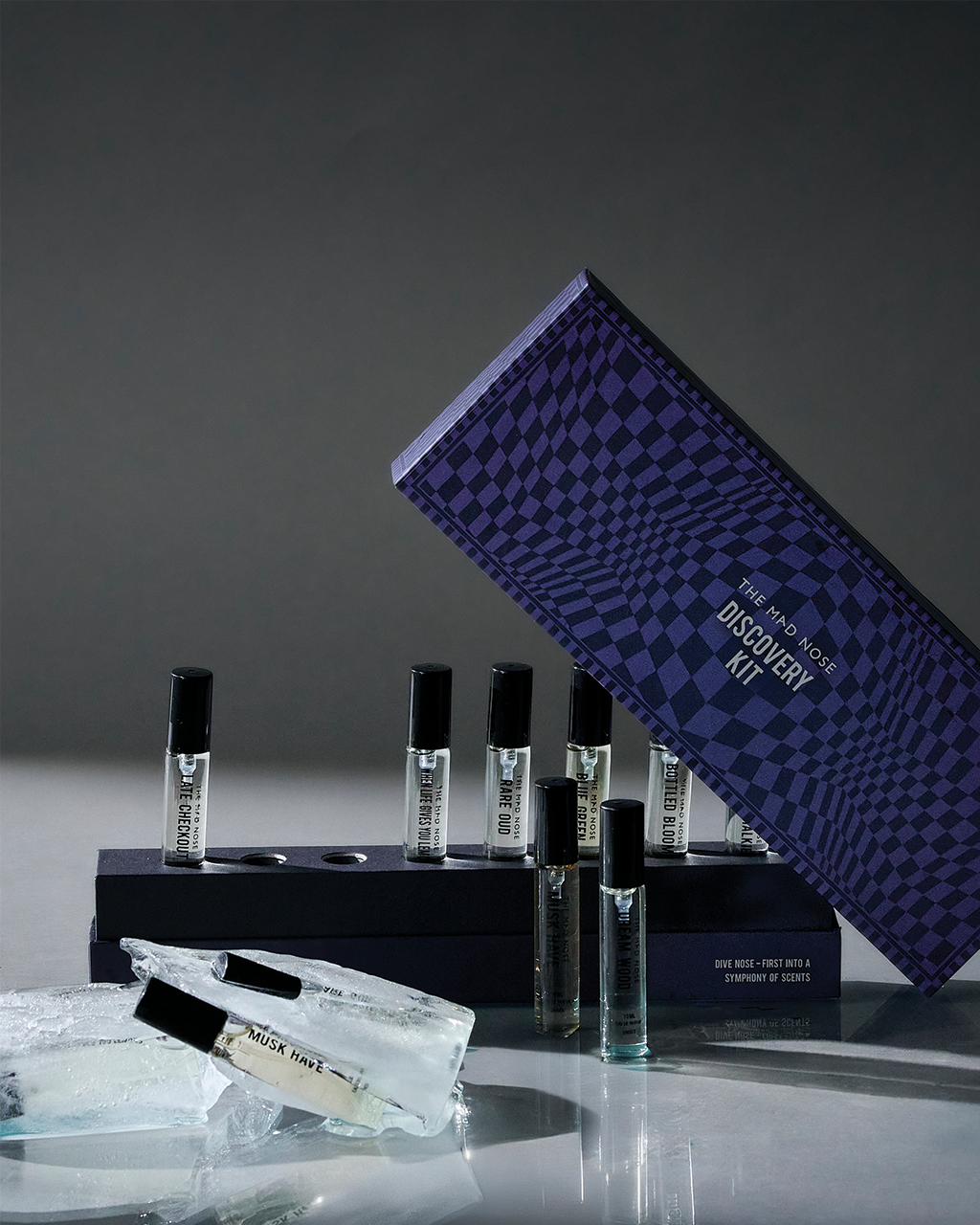
We've watched this shift happen in real time on the shelves of The Vantage's own beauty desk. This isn't a fringe DTC gimmick anymore.Delhi-based label The Mad Nose has built its entire identity around being, as they put it, the world's first perfume-in-a-capsule brand, shipping sets of 25 biodegradable, leak-proof capsules alongside its standard 50ml EDPs. That a brand can now run a full product line. EDPs, discovery kits, a "signature edit," and capsules, off this format alone tells you the category has moved past novelty. It's a shelf now, not a stunt.
The economics work in the brand's favor too. Capsule formats let a house sample fragrance families cheaply, eight scents in a discovery box for the price of testing two full bottles at retail. That lowers the cost of discovery for the customer and lowers the cost of customer acquisition for the brand. Everyone wins except the traditional 100ml bottle, which starts to look like overkill for anyone who isn't fully committed to one scent for the season.
Look at what's actually stocked next to these capsule lines and the pattern gets clearer: 25-capsule travel packs sitting beside 50ml EDPs, discovery sets running from 2ml to 10ml, and a curated "signature" tier for people who've already decided what they like. That's not a single product, it's a full funnel sample cheap, commit later, travel light either way. Retailers from Nykaa to Blinkit have picked it up fast, and the format now shows up in gifting categories too, since a seven-capsule set solves the "I don't know their exact scent" problem that a single 50ml bottle never could.
Sustainability is the argument that will outlast the convenience one
Convenience gets people to try capsules. Sustainability is what will keep the format growing after the novelty wears off. A biodegradable capsule generates a fraction of the packaging waste of a glass bottle, an atomizer pump, and a cardboard box: three separate manufacturing chains collapsed into one pod. Perfume houses have been slow on sustainability compared to skincare or food packaging; fragrance still leans hard on heavy glass and elaborate boxing as a signal of luxury. Capsules break that association. A scent doesn't need a 200-gram bottle to feel considered. It needs to smell right and show up when you need it, which for most people is somewhere between a client meeting and a dinner reservation, not at a vanity table at 7am.
This is the argument our Style desk keeps circling back to whenever we cover fragrance: luxury signaling through packaging weight is starting to read as dated rather than aspirational, especially to buyers under 35.

Where the format still has to prove itself
No format is without tradeoffs, and it's worth naming them plainly. Longevity on skin varies more with capsule concentrations than with a well-calibrated eau de parfum from a bottle, because formulation consistency across thousands of tiny sealed units is a harder manufacturing problem than filling one large batch. Scent complexity the way a fragrance unfolds over three hours from top notes to base can also get compressed in single-use formats optimized for a quick, strong initial impression rather than a slow reveal. And there's the obvious one: you can't decant a capsule back into a bottle if you fall in love with it and want the full experience at home. For now, capsules work best as a travel companion and a discovery tool, not necessarily as a full replacement for the bottle sitting on your dresser.
A closing thought from The Vantage desk
We don't think perfume capsules kill the bottle. We think they finally give fragrance a format built for how people actually move through a day likeinto a bag, through security, onto a wrist before a meeting, gone by evening. thevantagemag.com will keep tracking which houses get the formulation right as the category matures, because right now the packaging innovation has outpaced the scent innovation, and that gap is exactly where the next interesting fragrance house gets built. If you're testing the format for the first time, start with a discovery set before committing to a signature, the whole point of capsules is that you're allowed to change your mind.
We'll keep an eye on this for The Vantage Beauty & Wellness desk over the coming year. Watch pricing especially: as more houses enter the perfume capsule category, per-capsule cost should fall, and that's when the format stops being a travel accessory and starts being how a lot of people buy fragrance, full stop.