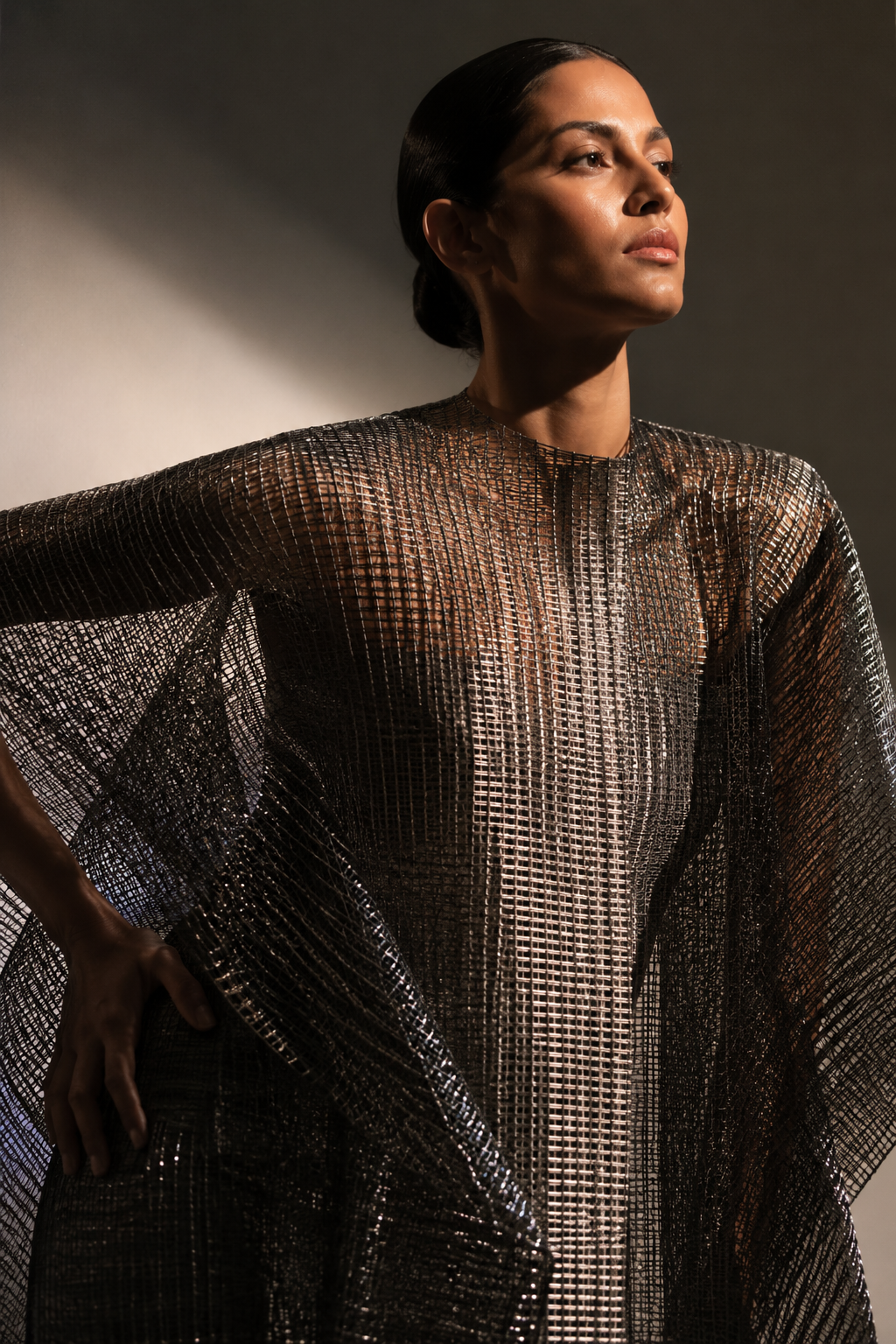
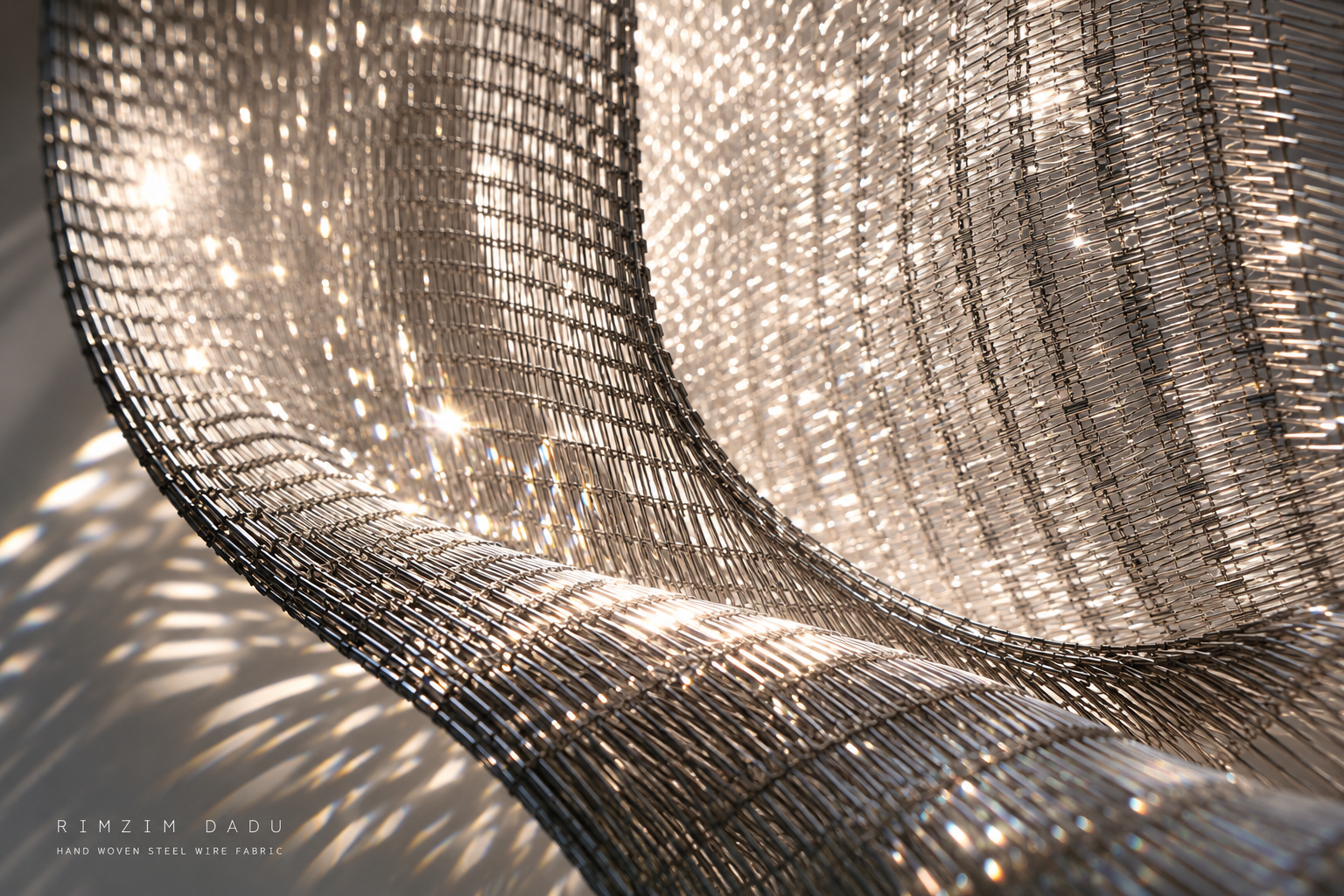
Rimzim Dadu does not believe that fashion's material vocabulary has been exhausted. Working from a studio that feels more like a research laboratory than a conventional atelier, she has spent two decades developing textiles that have no precedent in Indian or global fashion fabrics made from steel wire, from industrial thread, from materials that challenge every assumption about what can be worn and how. Her work is not experimental in the sense of provisional; it is experimental in the sense of rigorous and fully realised.
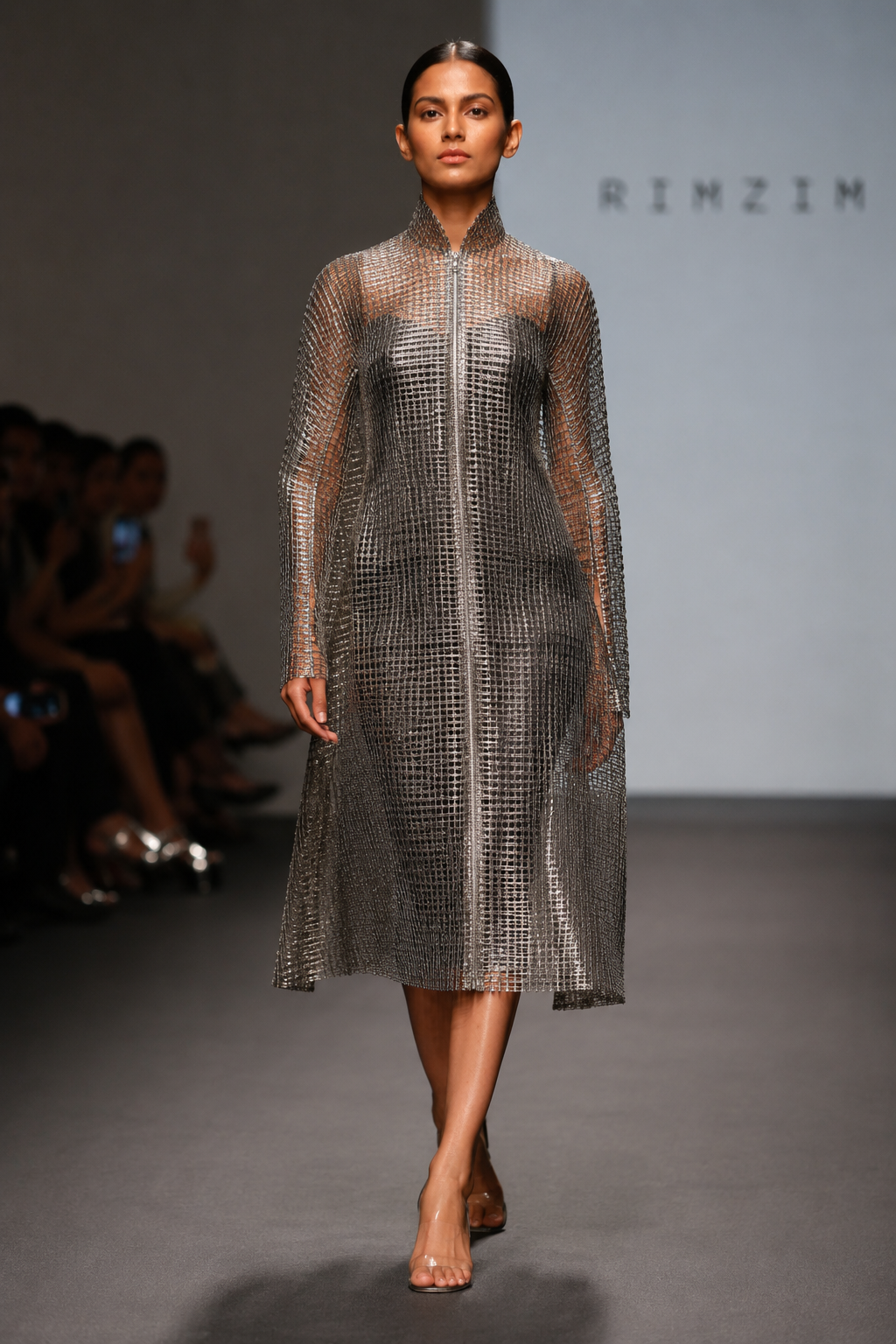
Trained at the National Institute of Fashion Technology, Dadu identified early that her interest was less in the garment as social object and more in the garment as material proposition. Her studio functions as a textile development facility: new fabrications are researched, tested, and refined before a single pattern is cut. The signature steel wire fabric for which she has become internationally recognised is produced by artisans trained specifically in its construction, a process that is part weaving, part metalwork, part engineering. The philosophical framework is one of deliberate rupture: Dadu is not working within the tradition of Indian textiles, she is extending it into territory where no tradition yet exists.
Dadu's collections shown at Lakmé Fashion Week and internationally operate as research presentations: each one testing a new material hypothesis, each piece a proof of concept. Her work has been acquired by museums and private collections, occupied the editorial pages of international fashion publications, and dressed figures who understand fashion as cultural production rather than consumption. The metallic volumes of her structured pieces jackets that hold their shape independent of the wearer, skirts that catch light like armour have a presence that is deeply uncommon in contemporary Indian fashion.
Rimzim Dadu represents the future of Indian fashion's material intelligence a designer asking questions that the industry will take years to fully answer. Her contribution to craft is not preservation but expansion, not homage but invention. In a market often pulled toward the decorative and the familiar, her insistence on the genuinely new is both bracing and essential.