
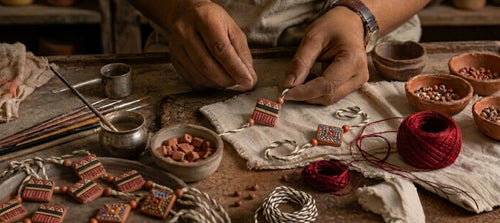
An iTokri drop arrives in the inbox with the kind of anticipation that has largely been edited out of modern commerce. Not the anticipation of whether the thing will come delivery is reliable but the anticipation of whether the thing will still exist. The pieces that move through iTokri's curated platform are, in many cases, singular: a single Patola saree in a particular colour combination from a Patan weaver who produces three a year; a set of rogan-painted cushion covers in a composition that will not be repeated because the artisan works without a pattern, each piece made in response to what the previous one became; a collection of hand-knotted rugs in a natural-dye palette that can only be replicated when the same plants yield the same dye in the same season, which is to say: never exactly.
iTokri, operating since 2012 and serving a global community of buyers who have found in its curation a reliable path to the real thing, has built its platform around a principle that is, in the context of contemporary e-commerce, almost subversive: the limitation is the product. The fact that there is one, or five, or twelve of a thing not because demand is being artificially constrained to manufacture desirability, but because the artisan's hands can produce no more than this is not a constraint to be overcome. It is the essential character of the object.
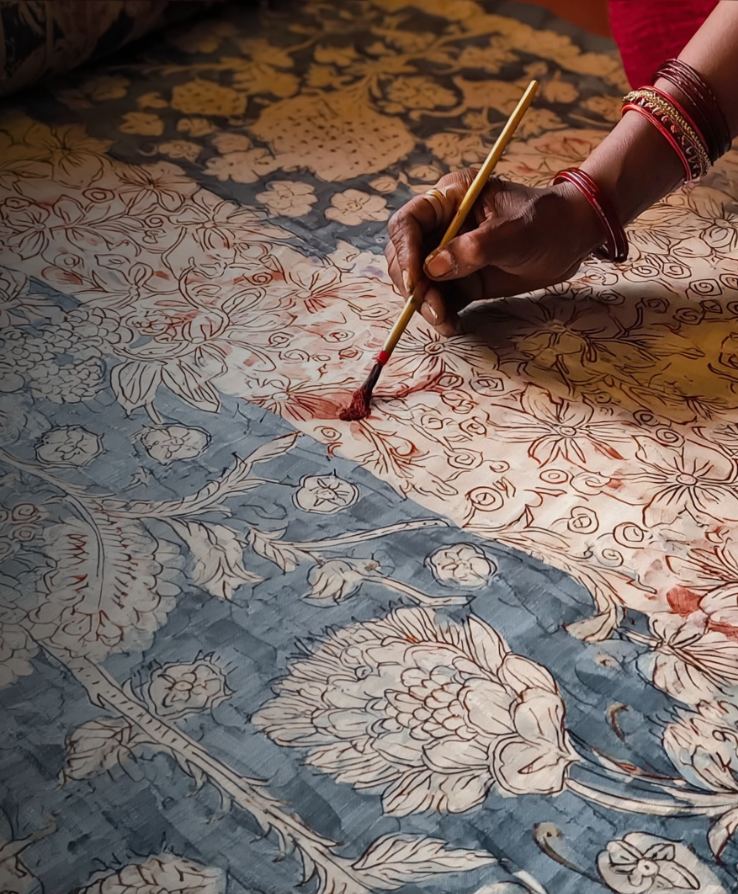
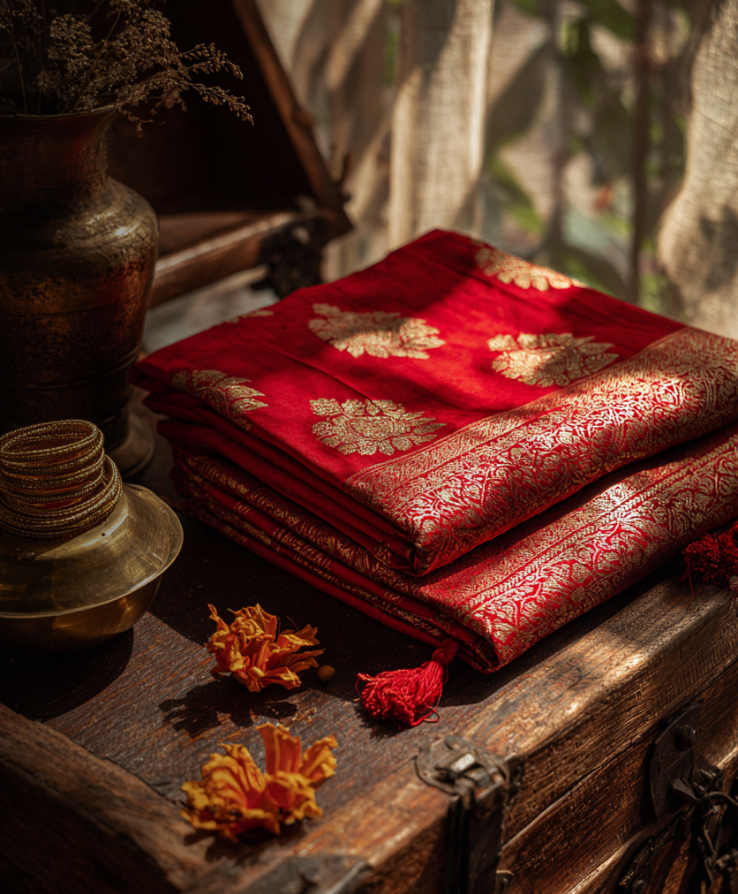
The artisans in iTokri's network work across India, with a particular density in the craft geographies of Gujarat and Rajasthan Kutch, Patan, Jamnagar, Bagru, Sanganer, Barmer. The platform's editorial process is slow: pieces are sourced through ongoing relationships with artisan clusters, photographed in the workshop where they were made, and described in language that accurately conveys the technique and the time involved. A single Patola saree listing may require a day of photography and a paragraph that accurately describes the double-ikat technique the resist-dyeing of both warp and weft before weaving, so that the pattern forms at the intersection of threads rather than being woven or printed afterward. The buyer who reads this does not need to be told the saree is valuable. She understands the value.
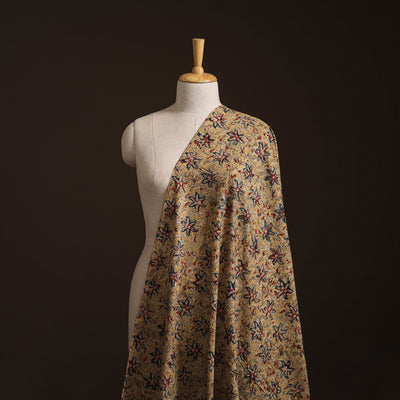
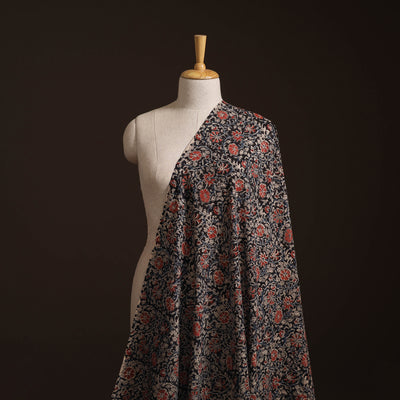
The platform does not sell objects. It transfers knowledge of objects and the objects themselves, which are different things, come along.
In a year when global luxury's pivot away from mass production toward genuine craft singularity has been comprehensively documented, iTokri has been practicing this model for more than a decade. It did not change to meet the moment. The moment has arrived to meet it.