
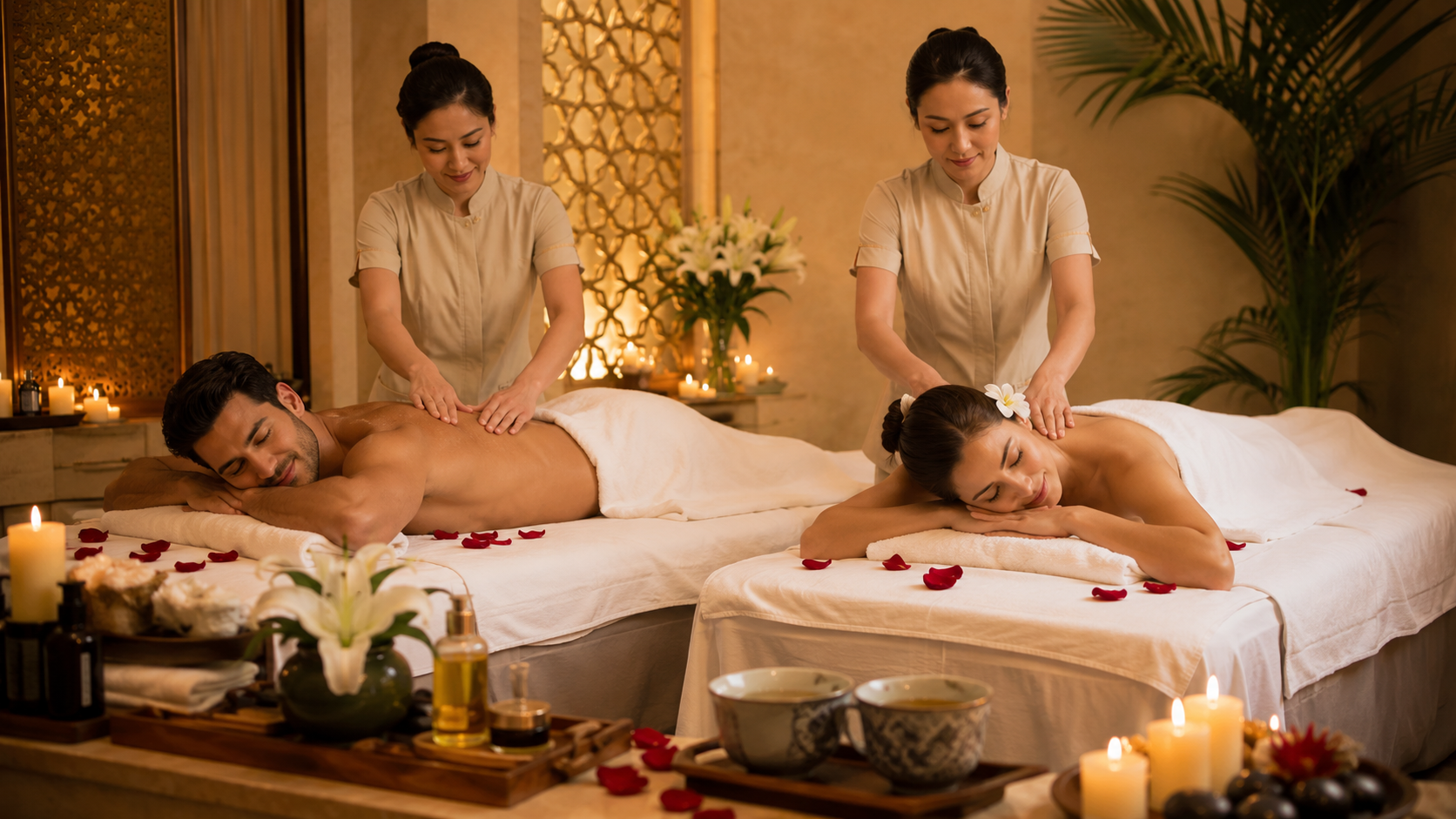
Before the treatment begins, there is a question. Not a questionnaire on a tablet, not a checklist administered at the front desk, but a genuine question asked in person by the therapist who will spend the next hour with you: what is it that your body is carrying today?
The answer changes everything that follows.
Tattva Wellness Spa has built India's most extensive network of Ayurvedic wellness spaces in more than a hundred outlets across forty-five cities, from Jaipur to Gandhinagar on a principle that is both ancient and radical: that treatment cannot be standardised, because the body it is treating is always specific. Ayurveda's foundational premise that a person's constitution, or prakriti, is unique, and that imbalance manifests differently in different constitutions makes the menu-driven spa model fundamentally incompatible with serious Ayurvedic practice. Tattva has chosen seriousness.
The oils used in Tattva treatments are blended in-house to respond to the eight primary constitution types recognised in classical Ayurveda. A Vata constitution characterised by qualities of air and space, prone to dryness, irregularity, and anxiety receives oils heavy in sesame and ashwagandha, warm in temperature, applied in slow, grounding strokes that move from the periphery inward, from the extremities toward the core. A Pitta constitution receives cooling oils coconut and brahmi and rose applied with lighter, more deliberate pressure, the treatment designed to release heat rather than generate it. The strokes, the temperature, the oil, the pressure, the duration: all of it changes based on what the therapist reads in the person before her.
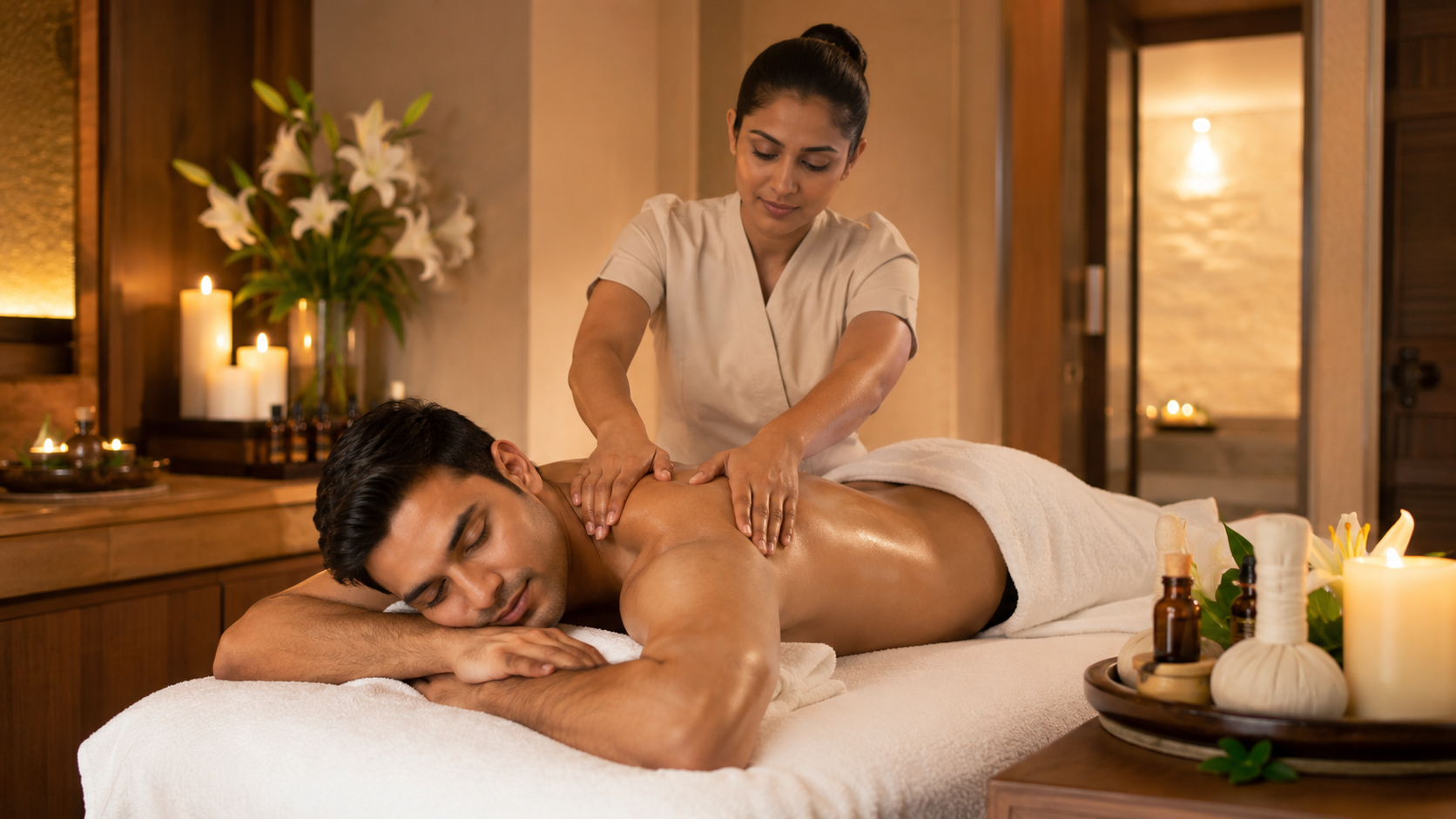
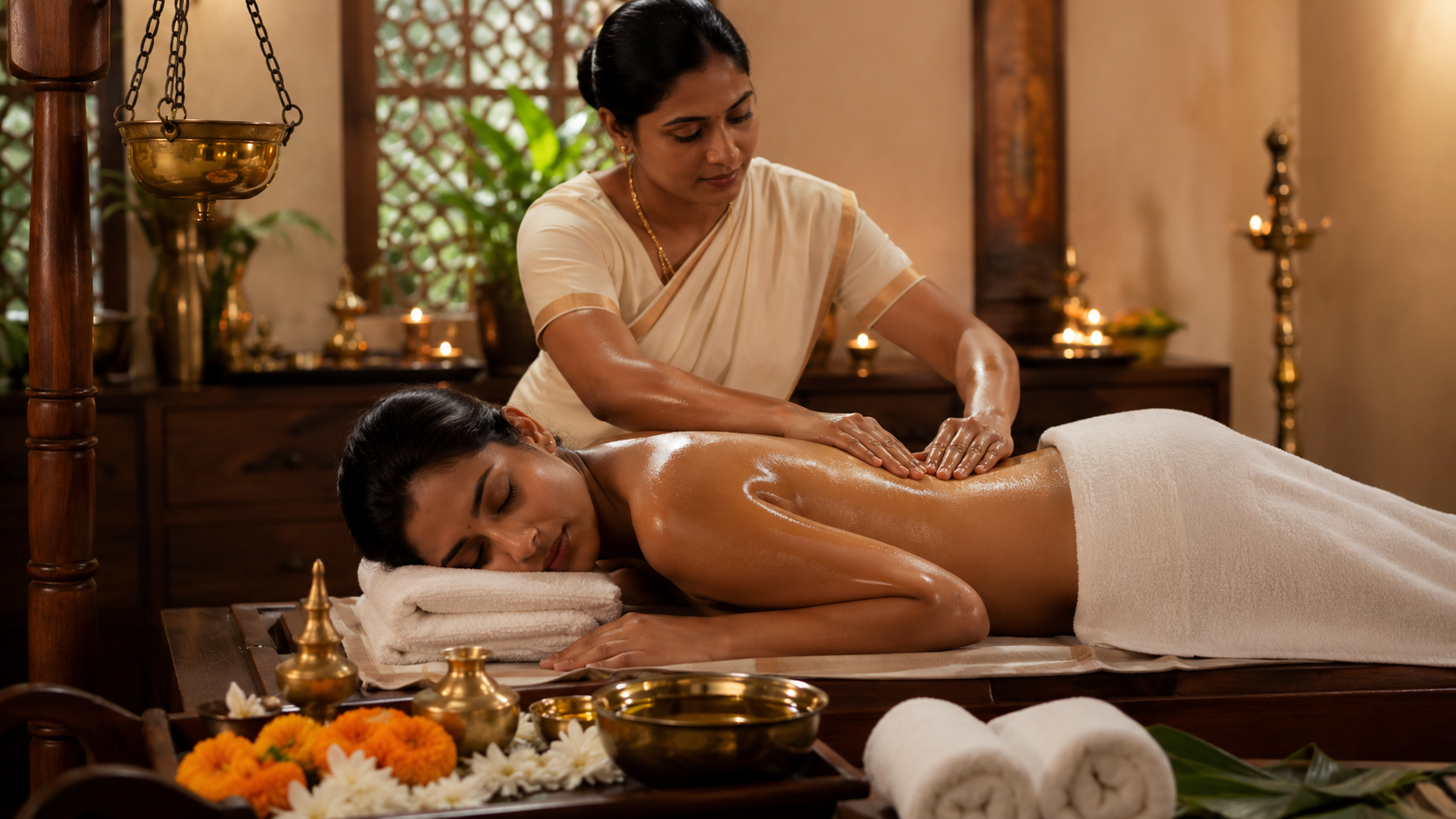
This responsiveness requires a different kind of training. Tattva's therapists are not trained to deliver a protocol. They are trained to read a body its temperature, the quality of its musculature, the way it holds or releases tension under pressure and to adjust accordingly. The training period is longer than at most spa chains. The result is a treatment that cannot be replicated anywhere else, because it was designed specifically for that person on that day.