
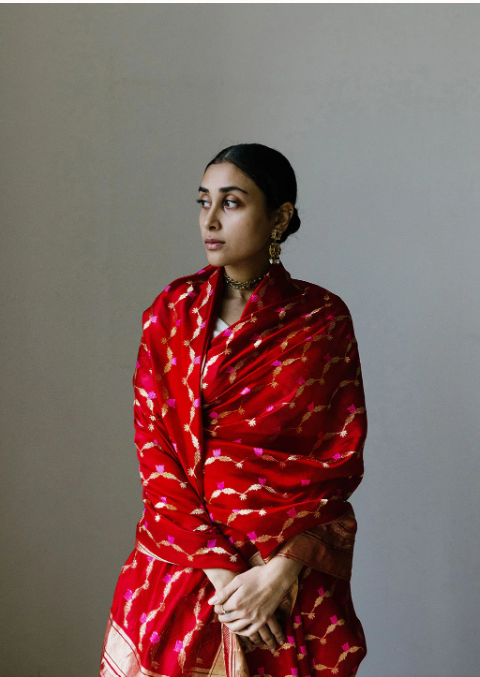
Sanjay Garg grew up in Mubarikpur, a village in Rajasthan, in the kind of proximity to textile craft that most design school education can only approximate. When he founded Raw Mango in 2008 working first in Chanderi, Madhya Pradesh, with weavers who had been producing the region's distinctive translucent silk for centuries he brought to the enterprise a textile designer's technical precision and a village child's intuitive understanding of what fabric is for.
The brand's foundational argument, stated plainly on its own website, is this: we do not believe our designs need to be kitschy to be Indian. This sentence is more radical than it appears. It refuses an entire tradition of luxury Indian fashion that uses ornament, embellishment, and historical reference as signals of value that believes the way to make something feel expensive and Indian simultaneously is to make it louder. Raw Mango makes the opposite argument: that the heritage of the Indian textile tradition is so profound and technically complex that it requires no decoration to announce itself.
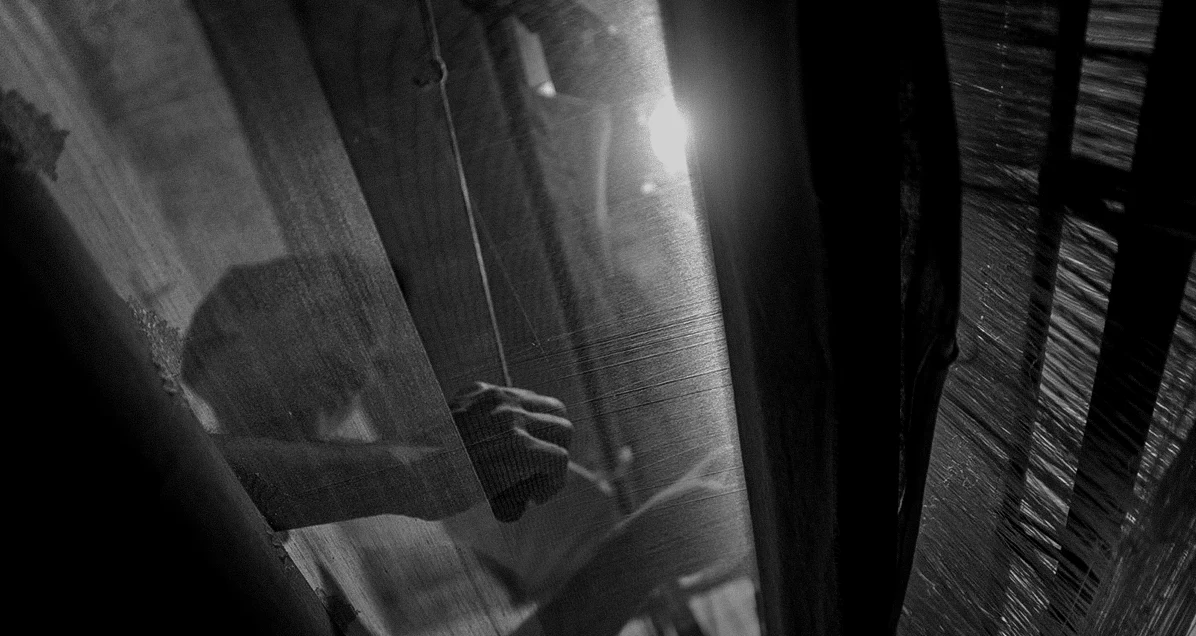
A Raw Mango Banarasi sari in midnight blue with a silver border does not need embroidery to tell you it was made by a master weaver in Varanasi. The weave structure itself the way the silk catches the light at the precise angle the weaver intended, the weight of the fabric as it falls across the body communicates everything. This is textiles as a precision art, where the visual outcome is determined entirely by decisions made at the loom.
"Raw Mango's colours are drawn from the philosopher's palette chosen for their specificity, for the quality of attention they reward over time."
The colour language is one of the most distinctive aspects of the brand's vocabulary. Garg draws from the philosopher's palette deep ochres, restrained reds, the particular green that Mughal manuscripts used for botanical illustration, grey-blues that carry the temperature of morning light on stone. These are not colours chosen for market appeal. They are chosen for their specificity, for the quality of attention they reward when you look at them over months and years.
The garments extend beyond saris into lehengas, kurtas, blouses, jackets, and stoles all produced from the same commitment to handwoven technique. A Raw Mango kurta in Chanderi cotton sits on the body with the lightness that only handloom fabric achieves: it moves differently from commercially woven cotton, holds differently, breathes differently. The karigars whose hands made it work across Rajasthan, Madhya Pradesh, West Bengal, and Varanasi, each bringing the specific technical tradition of their region to the garment.
To wear Raw Mango is to inherit a chain of decisions that extends backward from your dressing room to a weaver's loom, and further back from there to centuries of accumulated textile knowledge that took exactly this much skill to produce. The sari or the kurta is not the end of the story. It is a chapter in it.
What the brand asks of its wearer is not merely money though the prices reflect the true cost of handmade luxury but attention. A Raw Mango piece rewards the wearer who takes the time to understand what they are wearing, who holds the fabric up to the light, who notices the way the pattern changes as the cloth moves. Garg built Raw Mango as an act of love for the Indian textile tradition. The discipline with which he has pursued that love, without compromise and without trend, is what makes the brand not merely successful but genuinely important.