
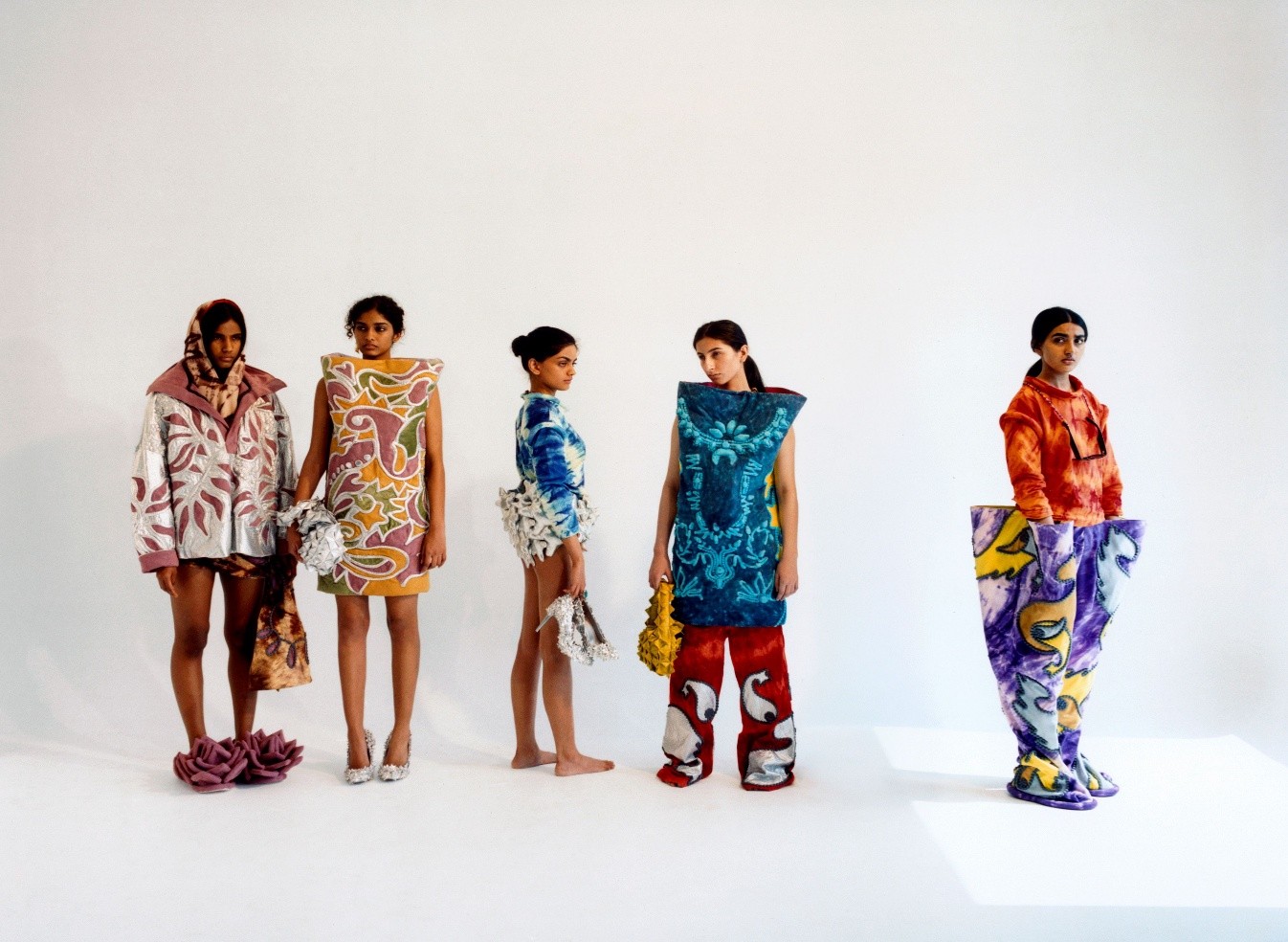
The Kakanmath temple, near Morena in Madhya Pradesh, has been eroding for a thousand years. The wall sculptures apsaras, yakshinis, celestial dancers caught between one gesture and the next have lost edges, faces, fingers. They exist now in a state of beautiful incompletion, arrested in the act of almost. It took a twenty-something designer from that same town, working in a studio in central London with bolts of deadstock fabric and a consciousness shaped by both temple visits and club nights, to understand that this incompletion was not a loss. It was the brief.
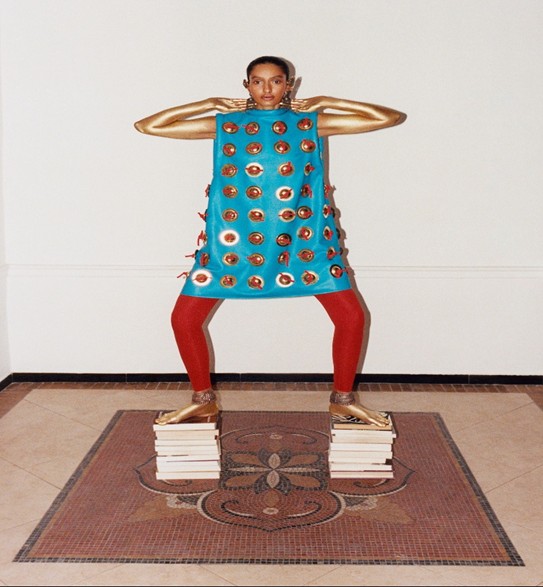
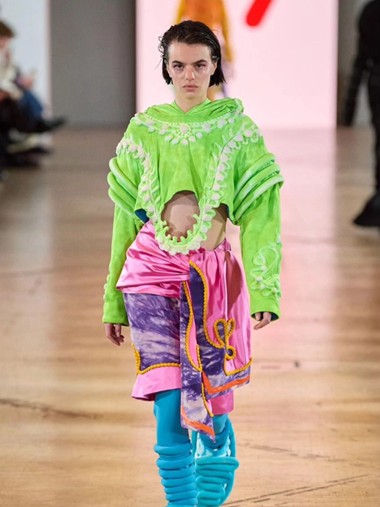
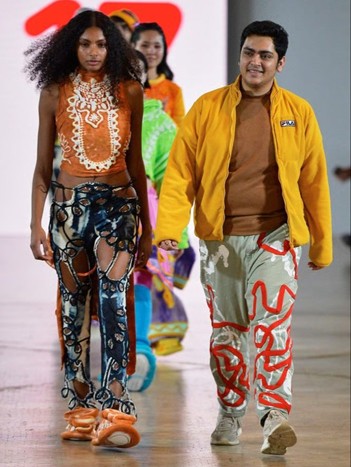
Dhruv Bandil's graduate collection, 'Awakening Kakanmath Kalavatis,' arrived at London Fashion Week in 2024 trailing deadstock fabric dyed in lime green, aggressive orange, and the kind of pink that ancient devotional paintings sometimes accidentally achieve. The silhouettes were hyperbolic bodies extended, padded, cossetted, and then released into something that moved between sporting uniform and sacred sculpture. The clothes were not dressed down for the runway. They came out fully formed, already knowing what they were.
Fantasy is not the opposite of rigour. In Bandil's world, it is the method.
The Jamini Roy reference is embedded in the graphic flatness of the colour work Roy's Bengali modernism, that marriage of folk form and post-colonial visual language, echoes in how Bandil handles colour as architecture rather than decoration. The bodysuit inspired by the dancing girl of the Indus Valley Civilisation bangles of that figurine echoed in the garment's construction does not quote its source so much as inhabit it. The historical is not borrowed. It is reborn.
Bandil researched the Muria tribe of Chhattisgarh alongside images of 90s London club kids, of Leigh Bowery's kaleidoscopic nights, of Björk in something that could only exist in the space between costume and garment. The collision produced clothes that are simultaneously the most Indian and the most London things in the room and that are, remarkably, wearable. Björk now wears them. Stylists dressing Tyla have come knocking. The designer, meanwhile, operates from Morena, a town not typically listed in fashion's geography, building his next collection.
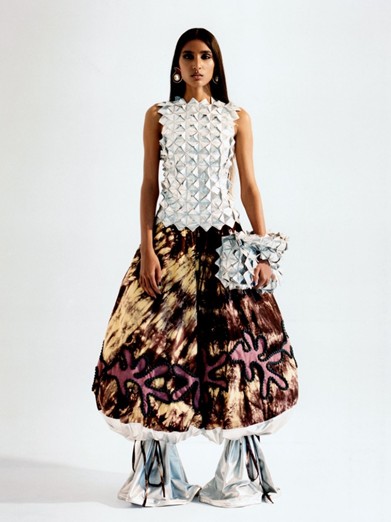
There is a particular quality to designers who grew up elsewhere and came to fashion sideways through temples, through a mother's sari-draping, through painting their own bedroom walls as a child because the walls were the closest canvas available. Bandil's consciousness, as he describes it, is inherited rather than constructed. He did not choose to be obsessed with Kakanmath. He simply found himself returning, in drawing and in drape, to a structure that was falling apart and nonetheless held everything together.
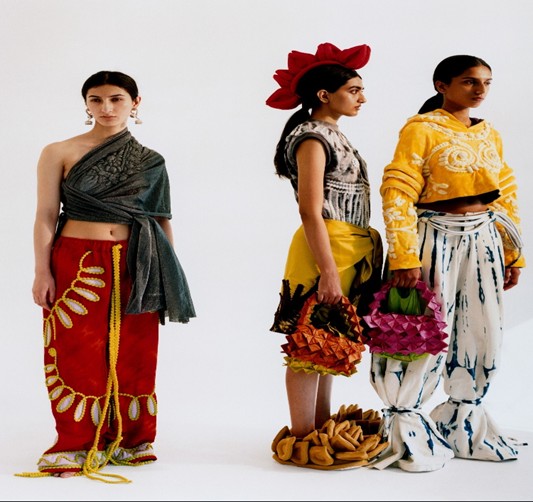
The L'Oréal Professionnel Creative Award one of three given annually across UK fashion students named him the 2024 recipient. Grazia India ollowed. The critic Katie Grand, founder and editor of Perfect Magazine, judged. All of this happened while Bandil was still making things in a small town in central India, cutting up deadstock, thinking about the incomplete figures on ruined temple walls, and working toward a perspective not just a brand, as he has always insisted that people could step inside and inhabit.
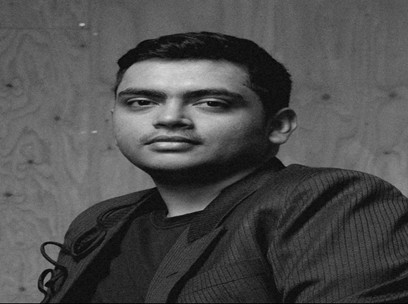
What Dhruv Bandil is making across every lime-green bias cut and every padded shoulder shaped by a 1,000-year-old wall is an argument that fashion's most interesting territory is not trend but memory. Not memory as nostalgia, but memory as a force that moves through the body and demands, eventually, to be worn.