

There is a particular quality of light that belongs to polki to the flat, uncut diamond crystals that have been set into Indian jewellery for centuries, predating the faceting techniques that the modern diamond trade depends on. Polki is not a rough stone. It is a natural octahedral diamond crystal, cleaved along its crystal planes and set with its flat face upward, so that the light entering from above does not refract in the calculated, prismatic way of a brilliant-cut stone, but disperses instead, scattered, warm, a little unpredictable. The stone looks like frozen candlelight.
Raniwala 1881 has been setting polki for one hundred and forty-five years. Established in Jaipur in the final years of the nineteenth century, when the city's workshops supplied the courts of the Rajput kingdoms and the collectors of the Indian princely states, the house practised the jadau kundan-and-polki system of goldsmithing that was already ancient when they began it. What Raniwala brought to it was a sustained commitment to quality that has remained across six generations of the family.
The jadau process begins with structure. A piece of a necklace, a pair of earrings, or a maang tikka is built first in pure gold, shaped by hammering into the intended form. Into this gold form, a core of lac, the hardened resin of the lac insect, warmed until pliable, is poured and allowed to harden, giving the piece mass and stability without adding the weight of solid gold throughout. Then the polki diamonds are set: each stone placed individually by a karigar using a thin burnishing rod to press gold foil kundan around the stone's perimeter, securing it against the lac bed without prongs or claws. No prongs. No claws. Just gold, foil, stone, and the karigar's patience.
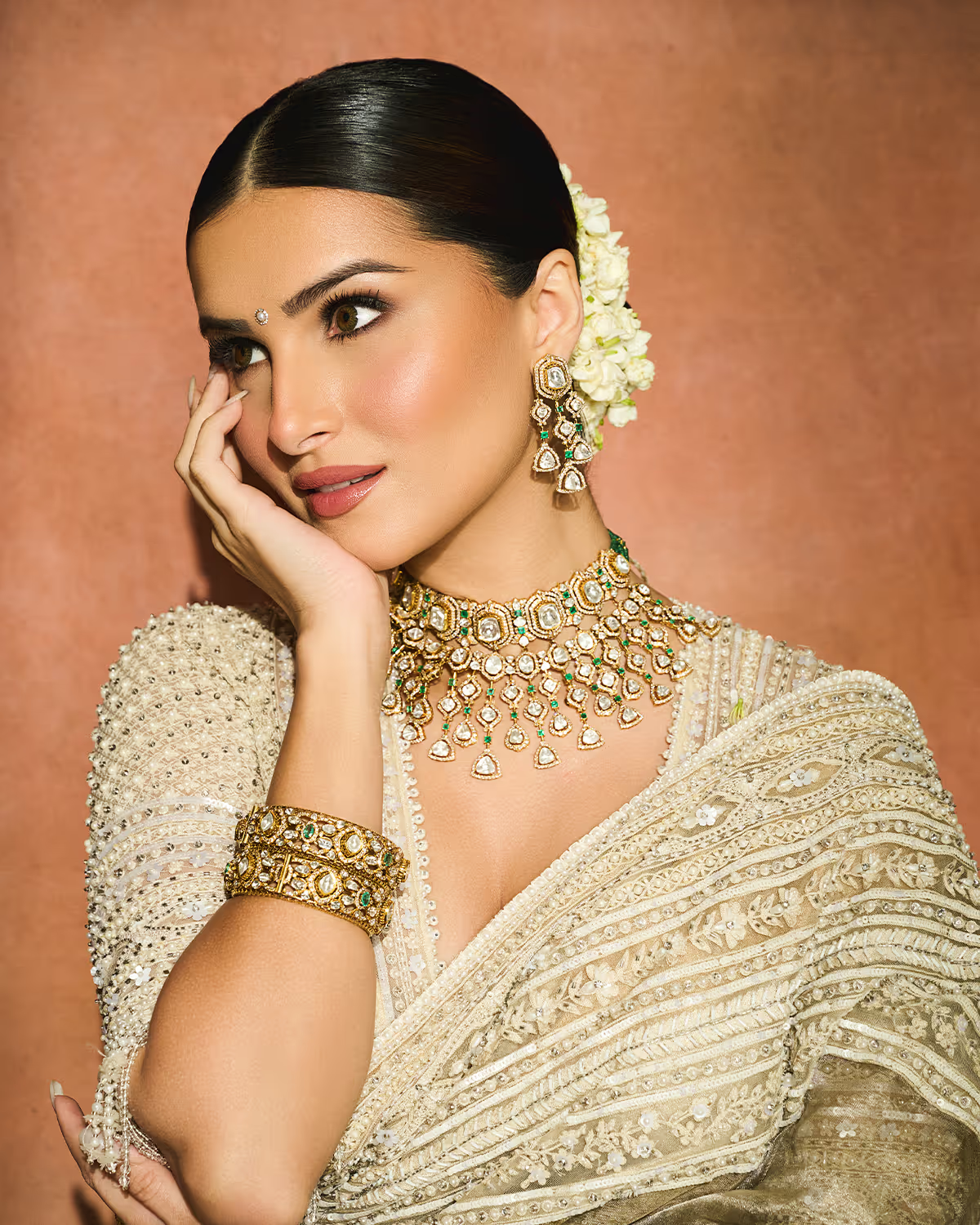

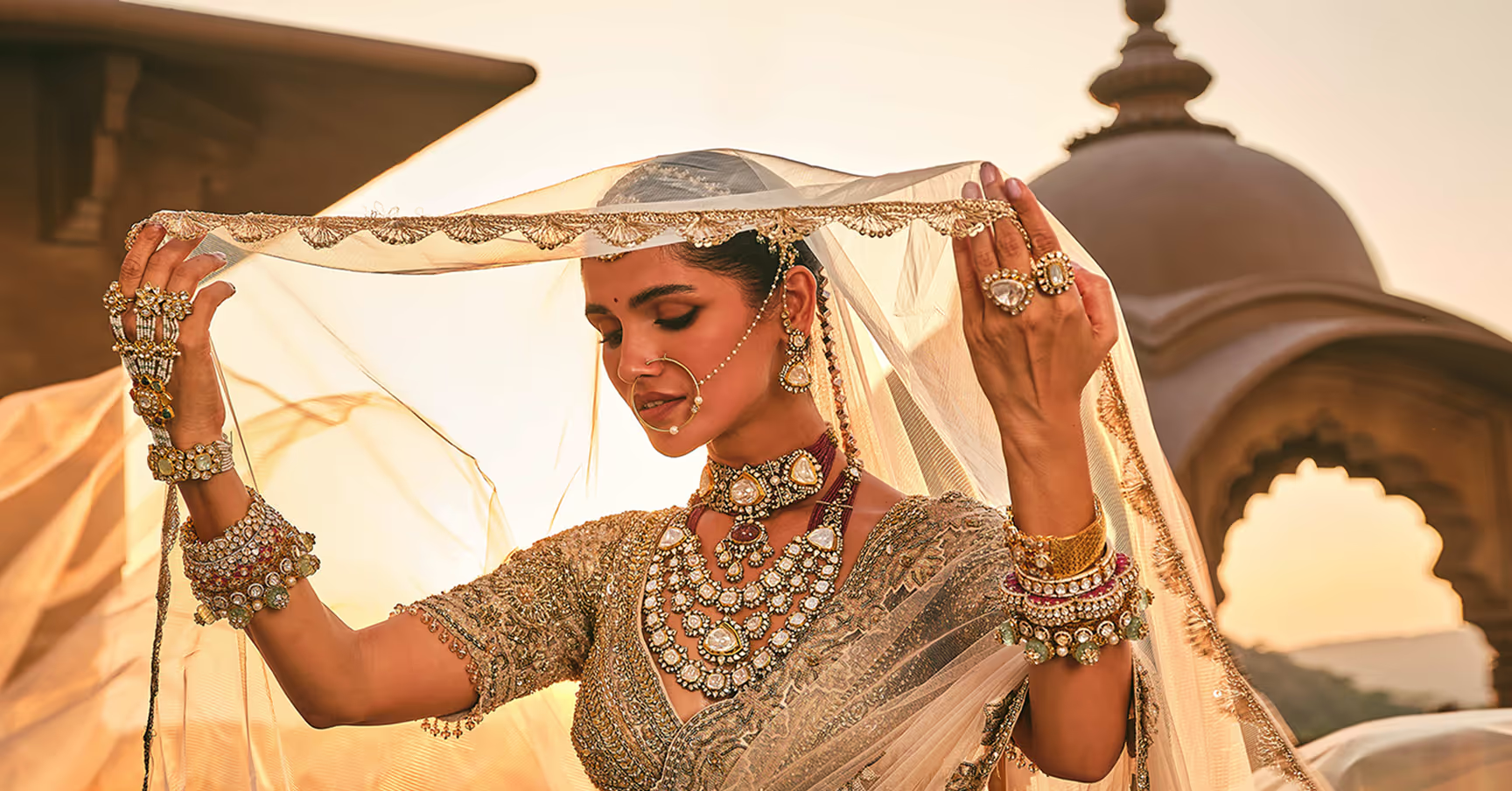
The precision required for this work is not the precision of a machine. It is the precision of a person who has spent years learning where the gold yields and where it resists, what thickness of foil holds a heavy stone versus a delicate one, how to seat an irregular polki, no two natural crystals are identical in shape without leaving gaps that darken over time. A jadau karigar in a Jaipur workshop handles perhaps eight to ten stones in a working day. A complex bridal necklace may take several months.
In 2026, as bridal jewellery moves toward what the trade calls "modular luxury" pieces designed to disassemble and be worn in multiple configurations, the conversation about craft has become more acute. The question is not only how a piece looks on the wedding day, but what it becomes afterwards: whether the craft is durable enough, considered enough, to have a life beyond the occasion for which it was made. Raniwala has always understood this. Their pieces are not made for one wearer. They are made for inheritance.

Polki does not compete with the faceted diamond. It proposes a different relationship to light entirely, not brilliance, but warmth; not precision, but depth. It is the stone that suits candlelight over electric, the haveli over the hotel lobby, the old city over the new one.