

In Rajasthan, the women of Shekhawati have been stitching gold into cloth for longer than the written record keeps. The technique is called gota patti gota for the ribbon of metallic thread, patti for the way it is applied: folded, cut, sewn flat against the fabric's face in petals and paisleys and the precise geometric borders that frame a lehenga's hem. It is an embellishment of economy and excess at once thin as foil, bright as morning, achieved by hands that can produce no more than a few inches in an hour. Anita Dongre understood something about this craft that most commercial fashion has not: gota patti is not decoration. It is language. The specific arrangement of petals at a neckline, the weight of the border at a dupatta's edge, the choice of a trailing vine over a repeating lattice each carries a regional inflexion, a reference to a tradition of dress, a way of signalling occasion and identity that the wearer does not need to articulate. The craft already speaks. Her label has built its identity around this inherited grammar. Working with artisans in villages around Jaipur, Dongre's studio sources gota patti work that is still done by hand, the ribbon threaded through a needle, the fold made with the thumb, each petal stitched at its points and allowed to stand slightly away from the surface so that it catches light from multiple angles simultaneously. Machine-applied gota lies flat against the cloth. Hand-applied gota lifts. The difference is visible from across a room.
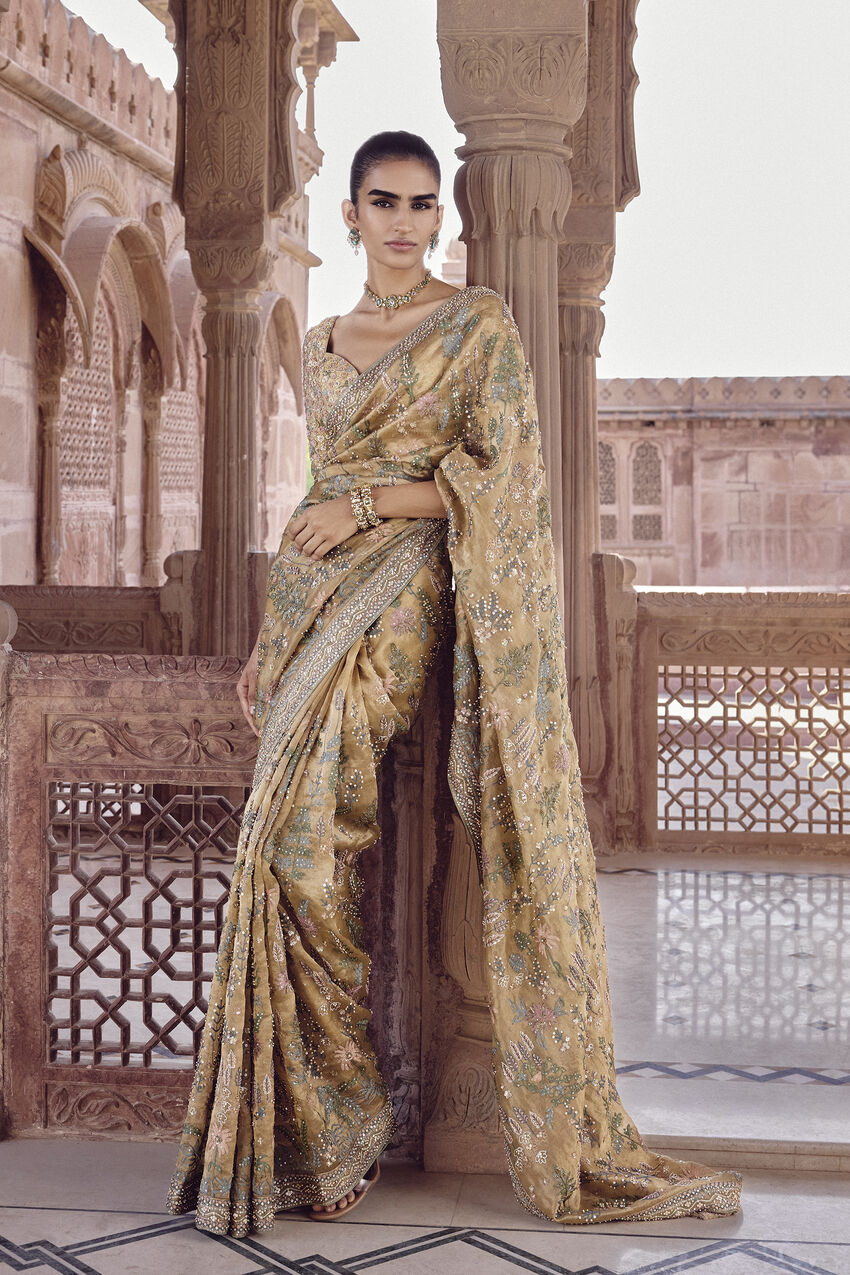
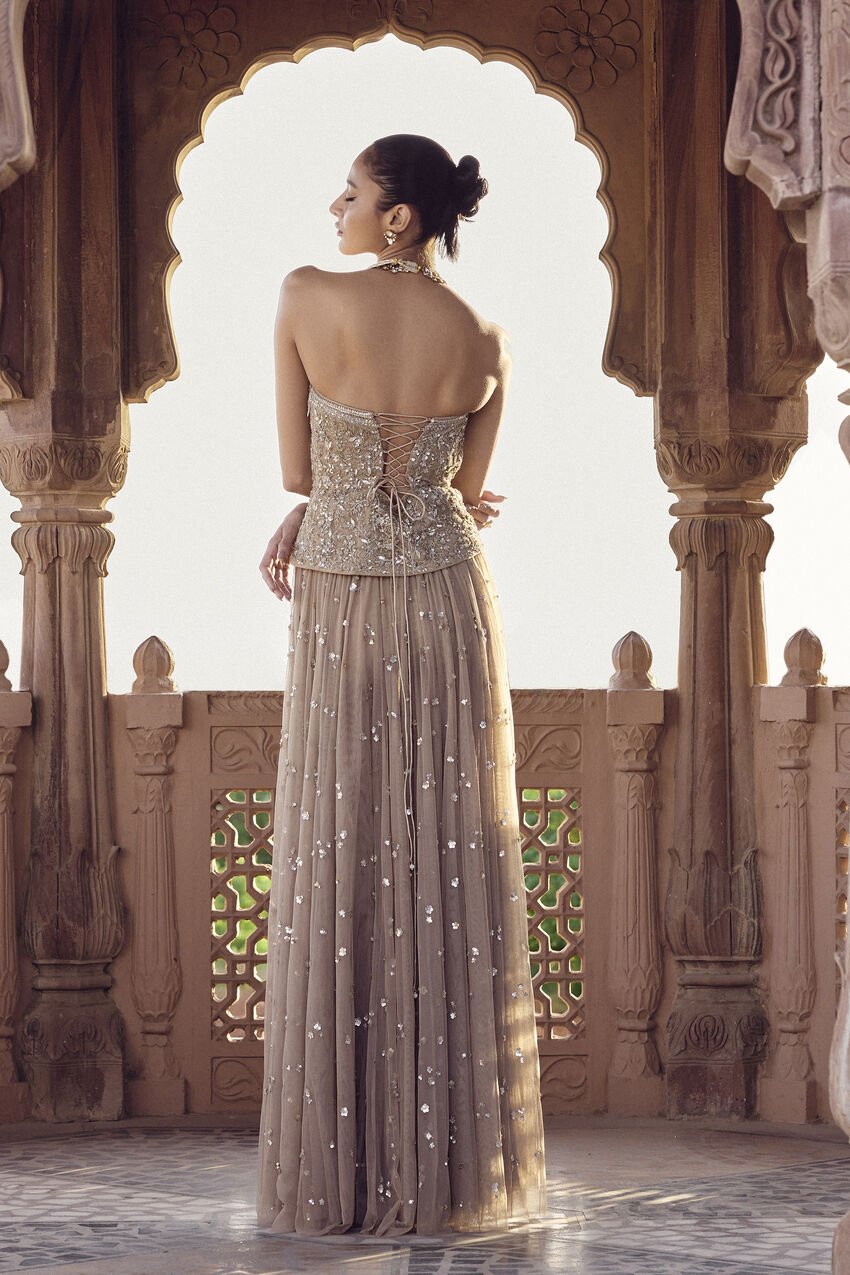

Gota patti originally appeared on the garments of Rajput royalty and on the bridal trousseaux of the aristocracy; it was not a craft for everyday wear. Dongre has extended its vocabulary without diluting it: her gota appears on kurtas and dupattas and co-ord sets as well as bridal lehengas, but the quality of the work does not change based on the garment's price. The same artisan hands, the same thread, the same slow stitch, regardless of whether the piece will be worn to a wedding or to a lunch. In 2026, the global conversation around Indian fashion has turned toward what Harper's Bazaar calls the "new guard" designers, who take traditional Indian craft not as a historical reference but as a living system applicable to any silhouette, any occasion, any audience. Dongre has been doing this for decades, without seeking the imprimatur of the international fashion calendar. She stores more than a hundred, from Jaipur to New York, and carries the work to whoever is looking for it. What makes a gota patti arresting in a well-made garment is not its shimmer. It is the density of decision it contains. Every petal is a choice: this size, this placement, this proximity to the next. A heavily gota-worked border contains thousands of such choices, made sequentially, by hands working fast enough to be productive and slow enough to be exact. The fabric underneath, usually chiffon or organza, matters as much as the gota itself, because it determines how the ribbon behaves, how far it lifts from the surface, how the light travels across it. To wear a gota patti is to wear the accumulation of those decisions. This is what distinguishes embellishment from embroidery: embellishment is applied; embroidery is built. Gota patti sits at the threshold between the two, neither entirely surface nor entirely structure, asking you to look closely enough to understand what you are looking at.