
The first step is the gathering of the cloth into the tiniest possible fold between the thumb and the first finger a pinch so small that what is being held is perhaps two millimetres of fabric. The thread is wound around this pinch fourteen, twenty, thirty times depending on the dot size required, then tied off with a knot that must hold through immersion in the dye bath and subsequent washing.
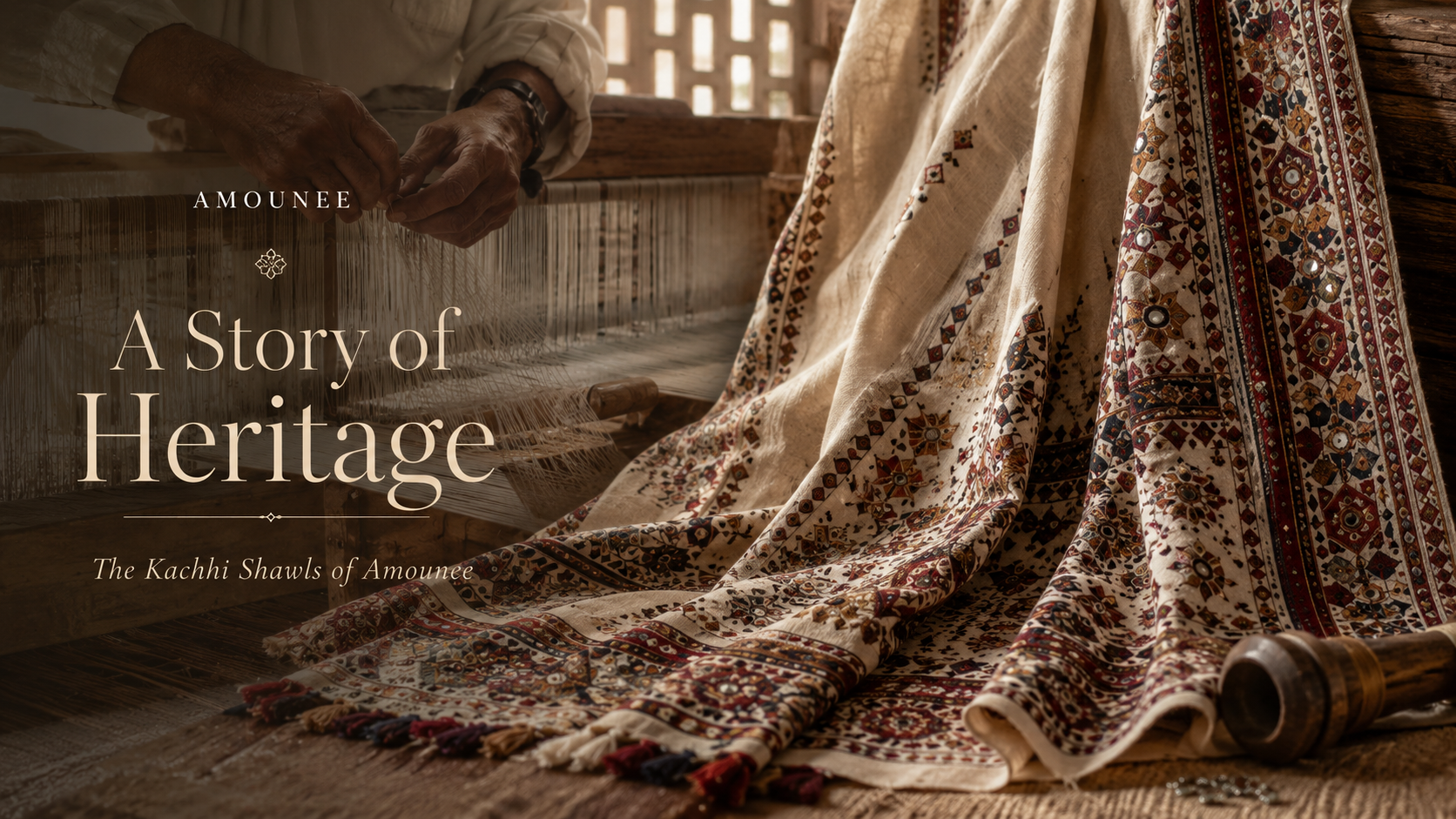
This is bandhani, and it is only half the story that Amounee, working from Kutch in Gujarat, is telling.
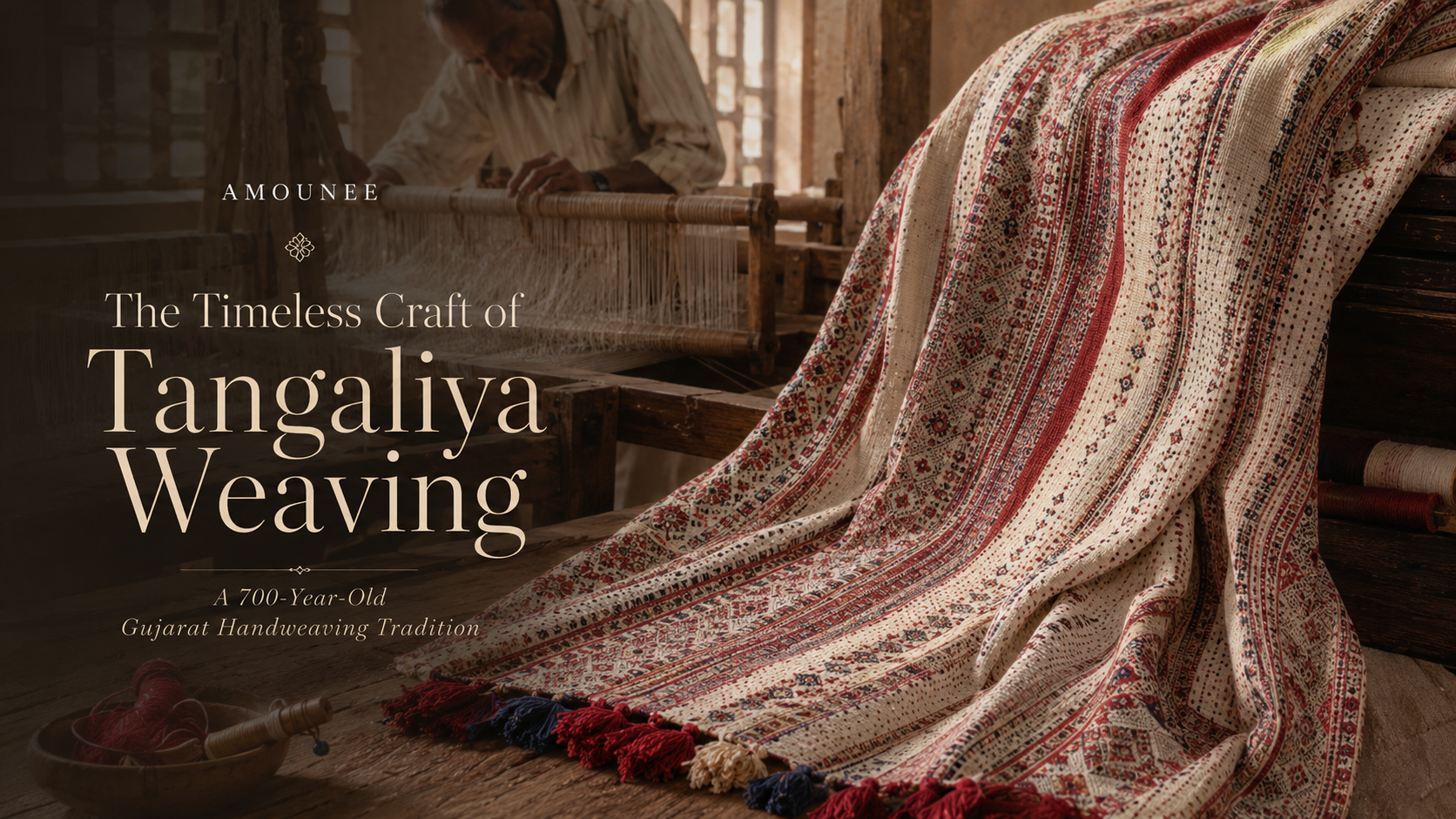
The label practices both bandhani and the hand embroidery traditions of the region in a single body of work an unusual decision, since the two crafts come from different communities. Bandhani is traditionally associated with the Khatri community; the embroidery traditions Ahir, Rabari, Mutwa belong to the pastoral and farming communities of the interior.
The result is a textile that carries two kinds of time: the time of the tying, which precedes the dyeing and determines the ground colour relationships, and the time of the embroidery, which comes after, working over and into the coloured cloth with threads that add a third layer of pattern and depth.
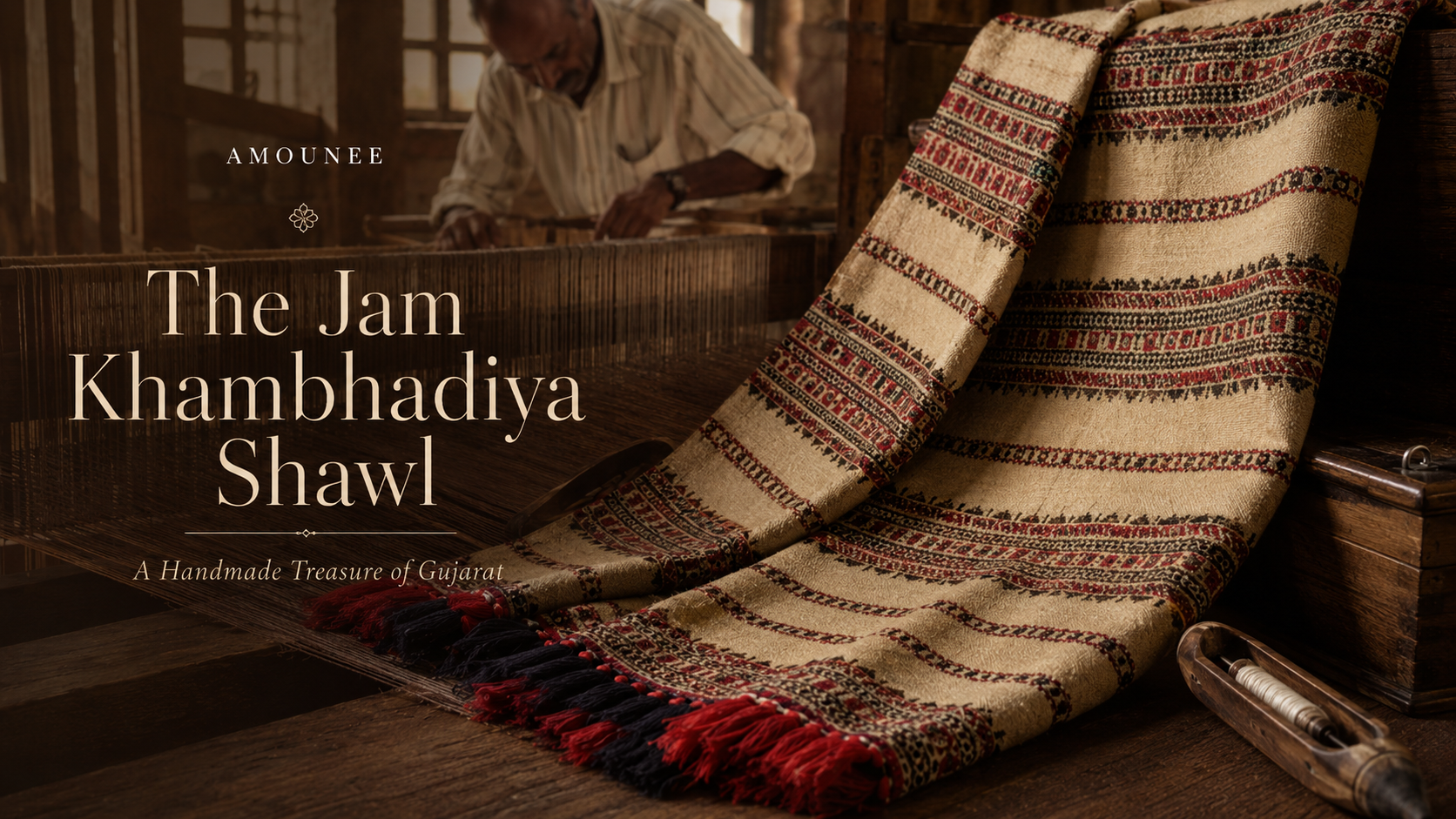
Kutch has been understood, since the earthquake of 2001, as a living laboratory for the sustained coexistence of craft and commerce. The extraordinary concentration of distinct craft traditions in a single district ajrakh, bandhani, rogan, Rabari embroidery, Mutwa embroidery, Ahir embroidery is matched nowhere else in India.
The cloth that two crafts made together carries twice the conversation. In Amounee's hands, that conversation is respectful, unhurried, and deeply rooted in the Kutch landscape that produced both.