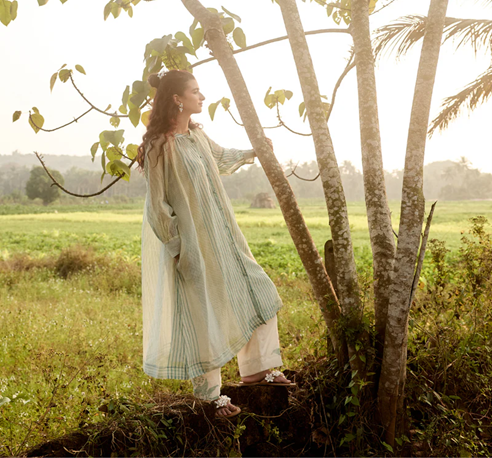
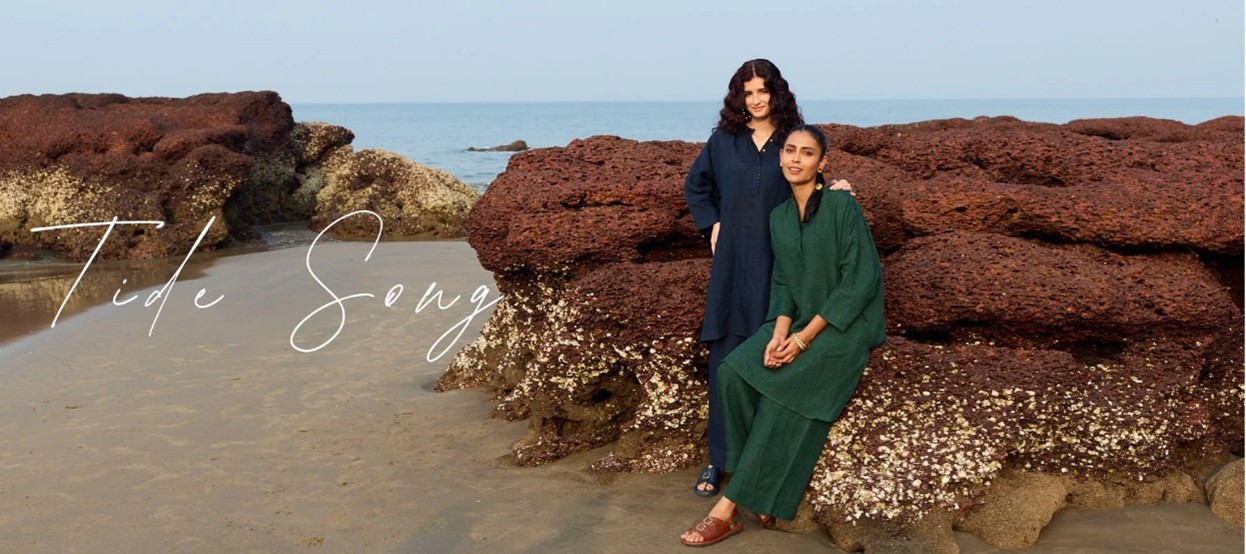
There is a certain intelligence that lives in old cloth. The weavers who worked the looms of Chanderi and Maheshwar understood it that fabric carries more than the body it covers. It holds memory: the particular shade of indigo deepened by a specific mineral-rich water source, the hand-block print pressed with a pressure that no machine has ever fully replicated, the loose weave of linen that breathes because someone decided, deliberately, to leave space for air. Bagh India begins from this understanding and does not waver from it. The result is clothing that feels, from the first touch, like it belongs to a different kind of time.
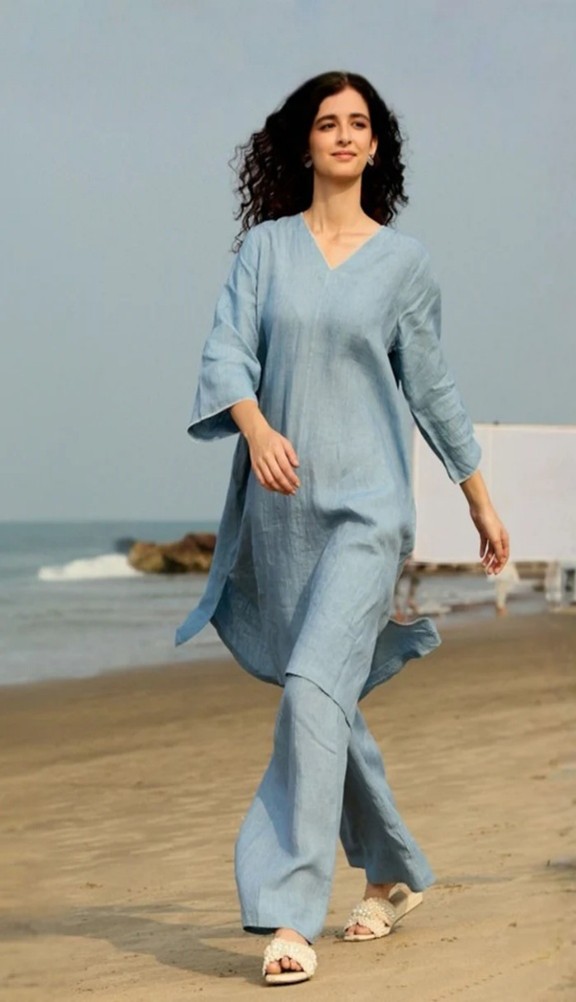
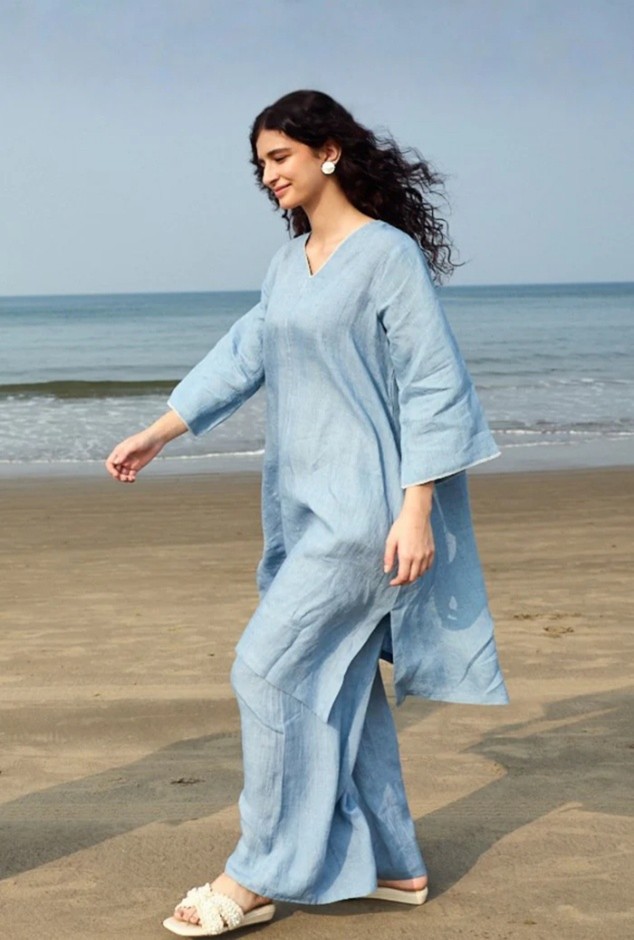
The Blue Linen Parallel is a garment that understands what the body needs before the body has finished asking. Wide through the leg, tapered by gravity rather than cut, it moves with a quality that is almost aquatic the fabric finding its own level with each step. This is linen at its most honest: not stiffened, not over-processed, not forced into a shape that requires the wearer to maintain it. It simply falls. And in that falling, something very close to elegance arrives without being arranged.
The most considered Indian fashion today is learning to breathe.
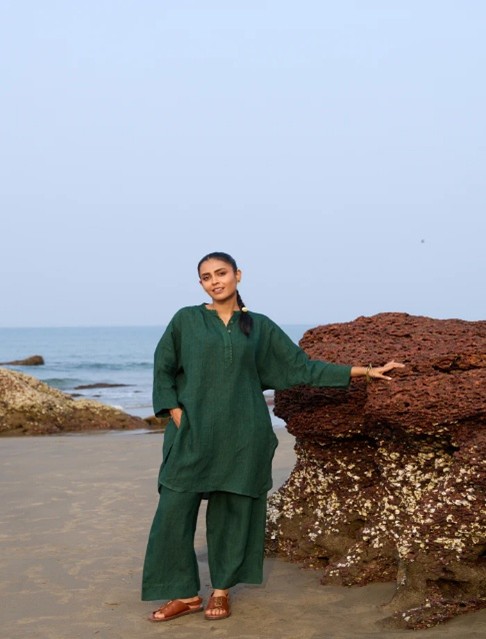
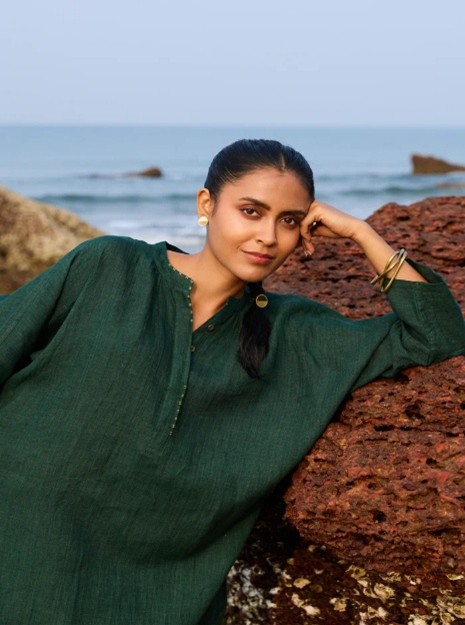
On the Green Hand-Embroidered Linen Tunic, the embroidery does not decorate so much as annotate small motifs placed with the considered restraint of someone who understands that the eye needs somewhere to rest between statements. The linen ground carries the thread without competition: the two materials have reached an agreement about who speaks and when. It is the kind of craftsmanship that reveals itself in stages, asking for proximity rather than distance, which is to say it has been made for living in rather than looking at.
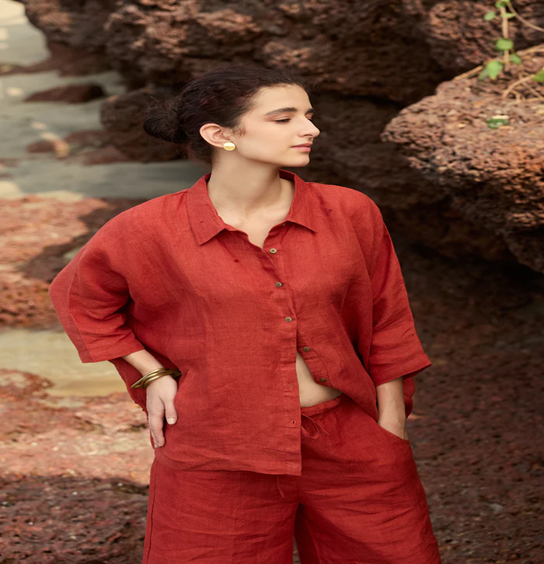
The Rust Oversized Linen Top exists in a colour that India has always known: the particular red-brown of sun-dried earth, of temple walls in afternoon light, of the terracotta cups that appear at roadside chai stalls and are broken without ceremony and without regret. It is a colour that carries no anxiety. Worn oversize and loose, this top is not concerned with what it reveals it is concerned, entirely, with how it makes the wearer feel. Which is the whole argument, and the oldest one in craft.
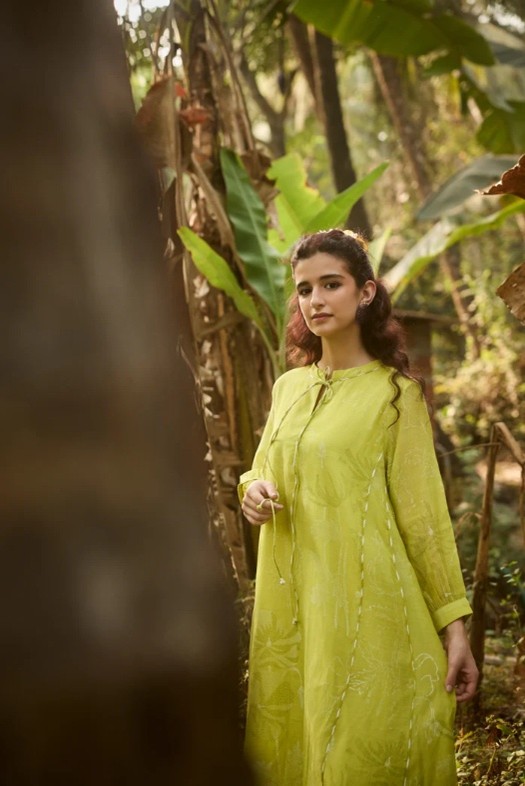
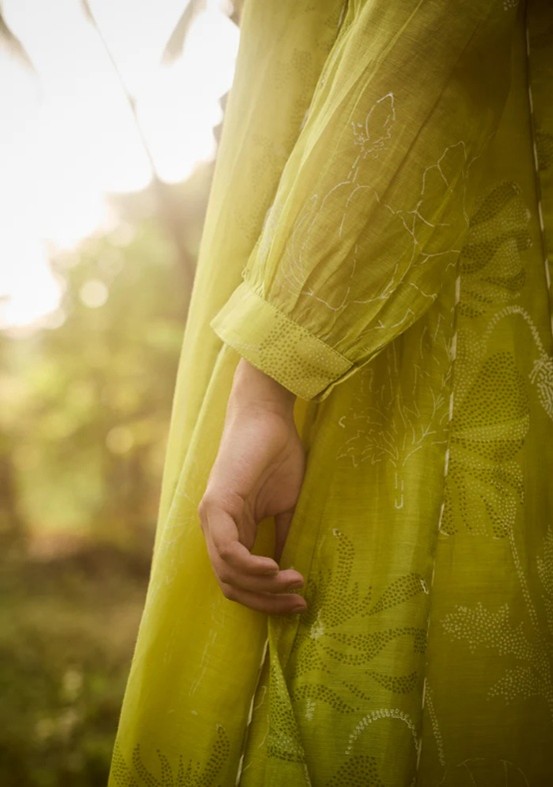
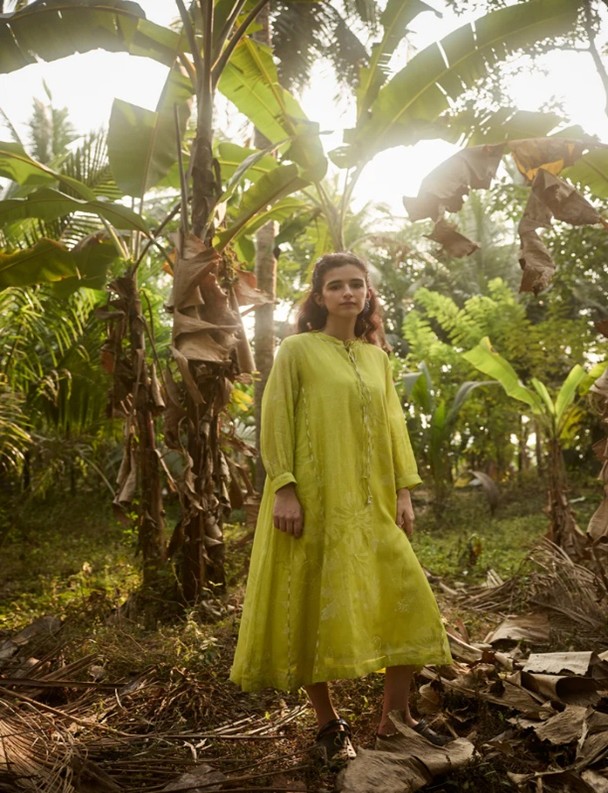
The Green Hand-Block Printed Chanderi Silk Dress brings a different material into the conversation lighter, more luminous, with the particular quality of a fabric that shifts between matt and sheen depending on how the light arrives. Block-printed by hand, the pattern carries the slight variation that is the signature of the made-by-person as opposed to the made-by-machine: no two repeats are exactly identical, which means the dress is, in the most literal sense, one of a kind. Bagh India understands this not as an imperfection to be corrected but as the point from which the design begins.
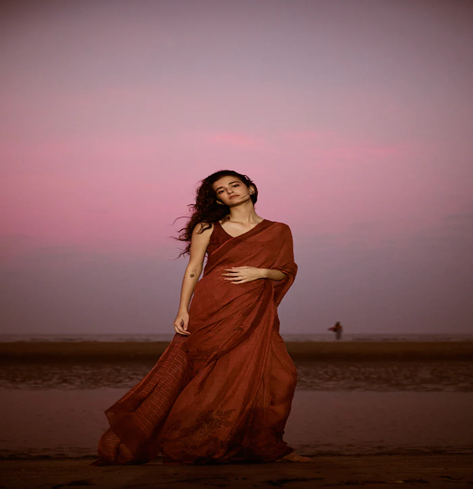
The Maroon Linen Saree is, in some ways, where all of Bagh India's threads converge. The saree as form carries centuries of accumulated meaning but linen removes the weight of occasion, makes the garment wearable on a Tuesday, in a life that does not stop for ceremony. Draped, it moves. Held in the hand, it has the coolness and body of something that has already outlasted the afternoon and will outlast many more. Alongside it, the Verdant Vines Printed Modal Silk Stole adds the final note the print folding over itself in greens that reference the garden the label is named for, completing a picture that was never about trend, only about how cloth can become, quietly and over time, part of who someone is.