
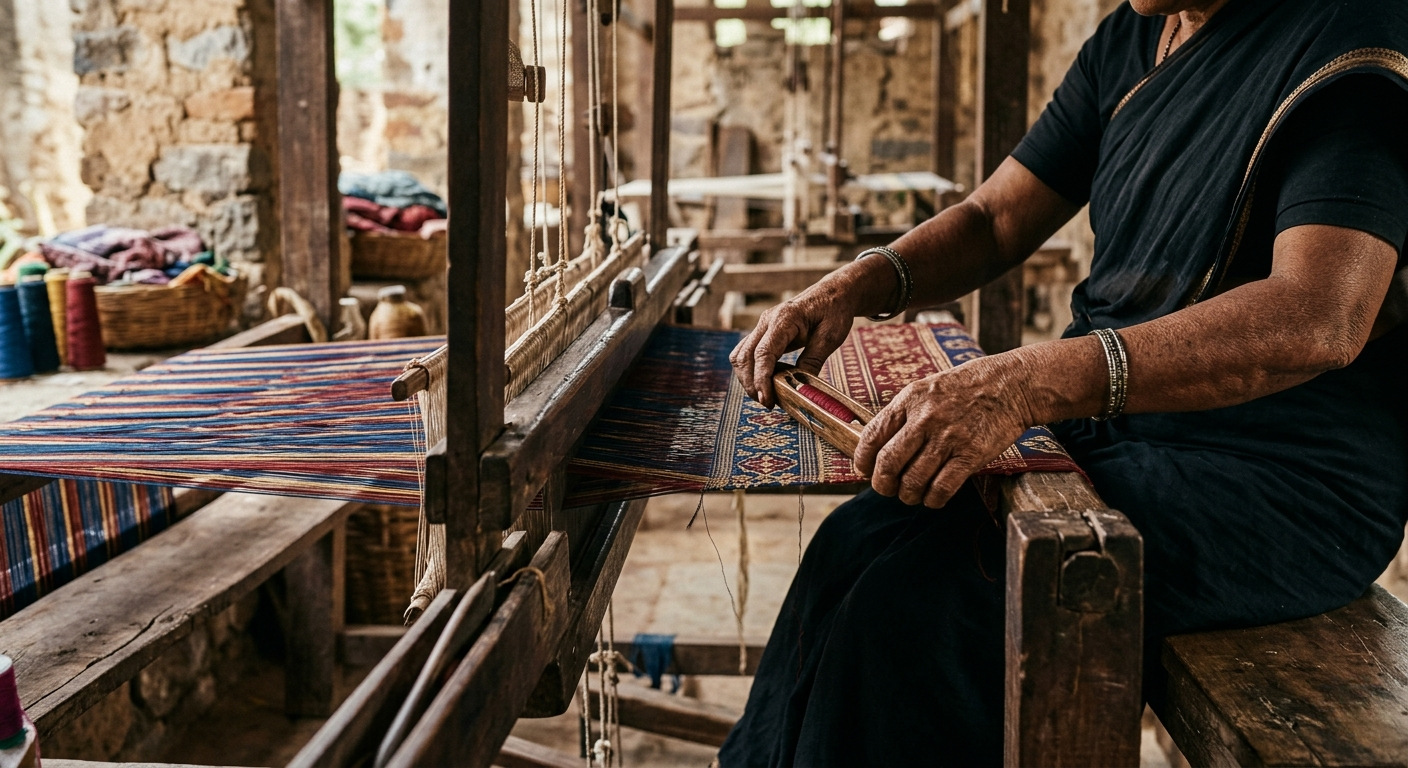
Strip away the logos. Remove the price tags. Set aside the marketing architecture that surrounds so much of what the world calls luxury, and what remains is a single, irreducible question: was this made with complete attention? If the answer is yes, you are in the presence of something real. If the answer is no, you are holding an expensive object with an empty centre. Indian craftsmanship has always understood this distinction, which is why it has always been, at its finest, among the world's most profound luxuries.
The weavers of Varanasi, the dhokra casters of Bastar, the kalamkari artists of Andhra Pradesh, the zardosi embroiderers of Lucknow these are not heritage luxury India's charming footnotes. They are its living argument. Each tradition represents centuries of accumulated knowledge: of material behaviour, of geometric logic, of the precise relationship between pattern and meaning that only emerges when a craft is practised across generations.
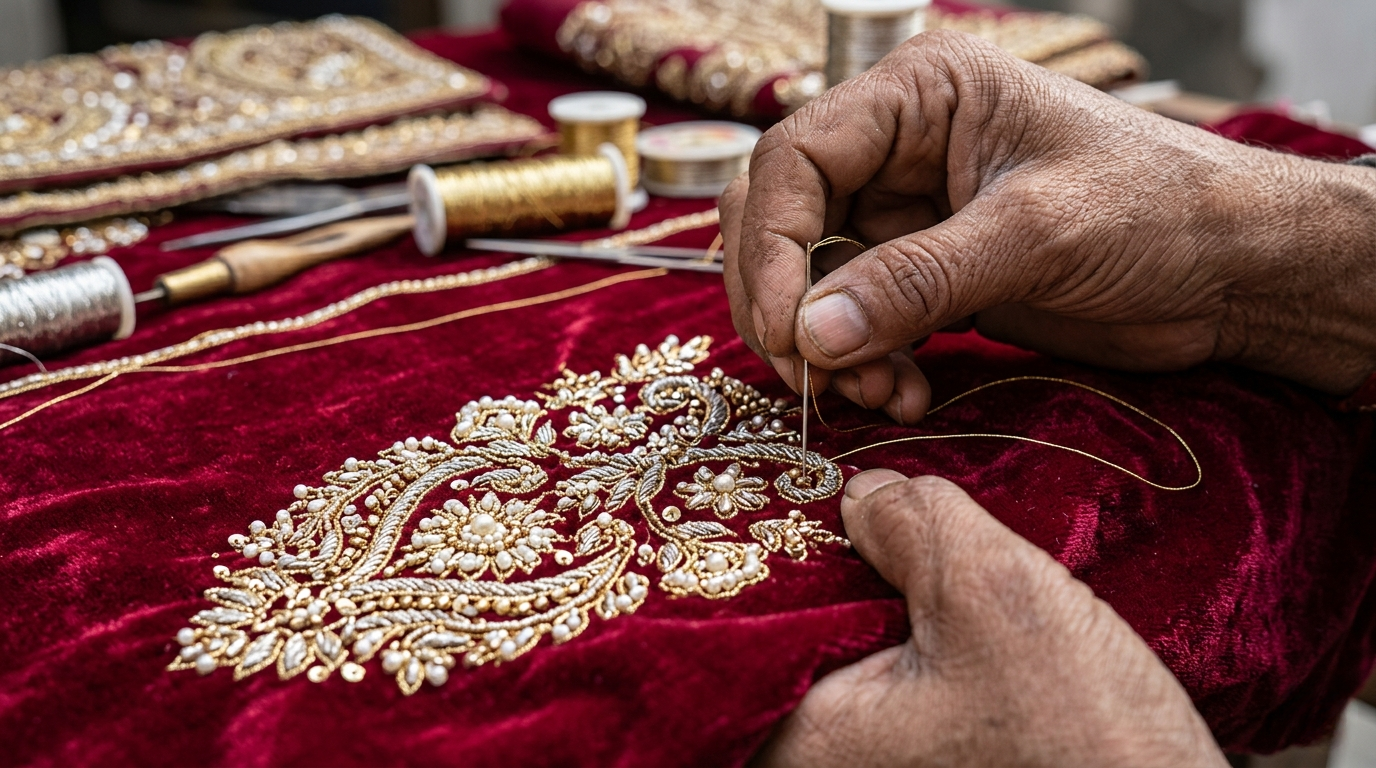
The premium Indian brands now building their identity around this inheritance are making a philosophical claim as much as an aesthetic one. To ground a luxury label in artisan culture is to refuse the logic of speed and scale, to insist that the time a thing takes to make is not a cost to be engineered out but a value to be celebrated. It is, in the truest sense, a counterculture position one that happens to produce objects of ravishing beauty.
Handcrafted luxury, understood in this way, is not a category within the luxury market. It is the original definition of luxury the one that existed before mass production created the possibility of its opposite. When a craftsperson spends three months completing a single textile, they are not being inefficient. They are being faithful to a standard that no machine can meet.
The most luxurious object in any room is the one that carries within it the full and patient attention of a human being
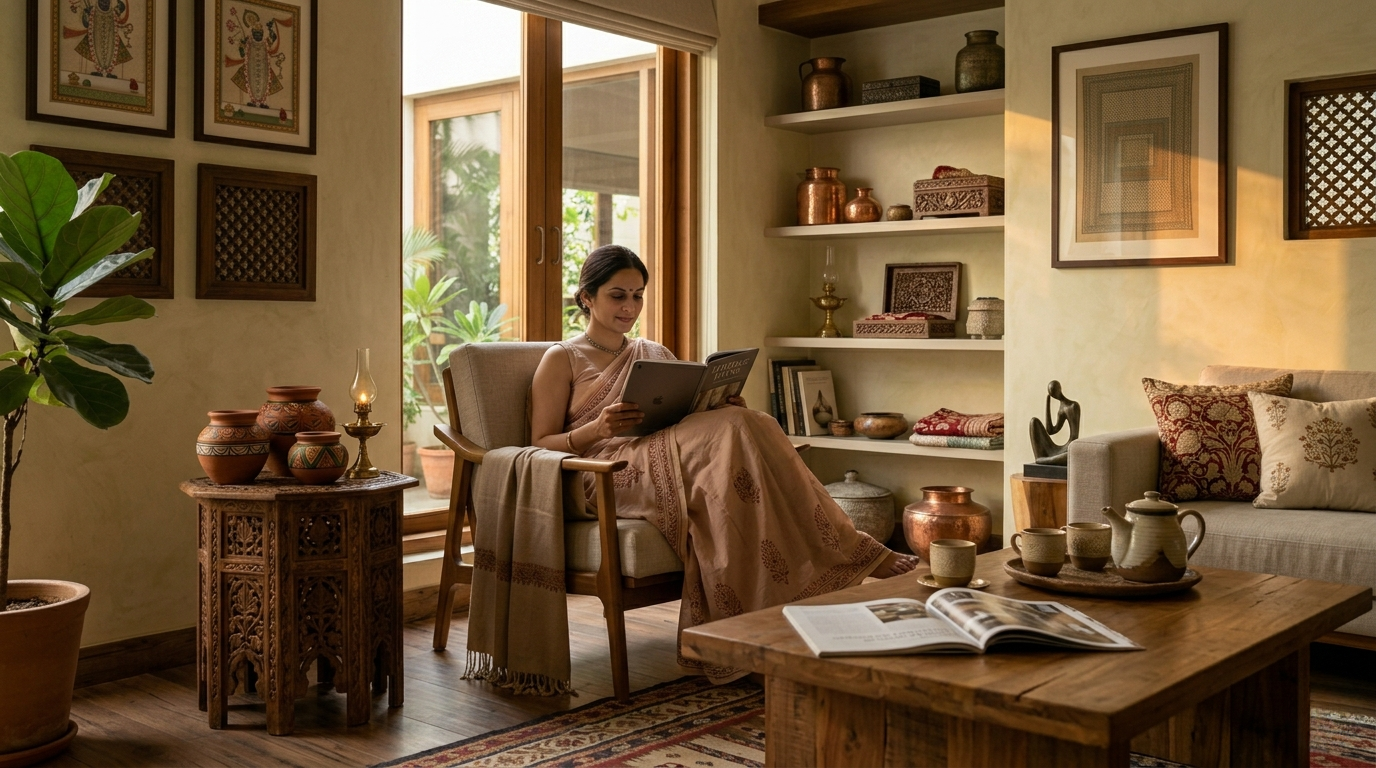
India's extraordinary advantage in the global luxury conversation is precisely this: it possesses living craft traditions of a depth and variety unmatched anywhere in the world. The invitation, for those who understand what true luxury means, is not merely to collect these things but to comprehend them to know the tradition behind the object, and to honour, through that knowledge, the hands that made it.